

Israel-Palestine: Where is the Hope?
By John Duffy, parishioner of the Good Shepherd, Mytholmroyd
"I hadn't expected to be inspired, but I was!" said an attendee at this event.
About 30 people, including several from outside the parish, came to this talk at Good Shepherd, Mytholmroyd by Janet Symes, who has lived in Palestine and worked there as Head of Region for both CAFOD and Christian Aid.
 Janet Symes
Janet gave us a brief history of the decline of hope and trust following the the Oslo Agreement in 1993, with Palestinians in Gaza and the West Bank experiencing growing restrictions and disruptions, affecting civil society, community cohesion and family lives. Strong resilience helped them cope and kept hope and resistance alive, but lack of international support and sympathy led to greater reliance on armed resistance, which lead to more Israeli repression.
Janet Symes
Janet gave us a brief history of the decline of hope and trust following the the Oslo Agreement in 1993, with Palestinians in Gaza and the West Bank experiencing growing restrictions and disruptions, affecting civil society, community cohesion and family lives. Strong resilience helped them cope and kept hope and resistance alive, but lack of international support and sympathy led to greater reliance on armed resistance, which lead to more Israeli repression.
The atrocities carried out by Hamas on October 7th shocked Palestinians and led to the genocidal campaign in Gaza, and the growing assaults on the West Bank. There are powerful international forces, from USA to Gulf oil states, whose influences critically affect the Palestinian people, and the entrenched Israeli government ignores calls for restraint and peace from within Israel.
So where is the hope?
In the spirit of resilience within Palestine, in international solidarity – demonstrations, boycotts, pressure on politicians, discussions, aid and prayer.
Two participants summarised the spirit of this meeting:
"What I took away from Janet's clear, calm, balanced and compelling talk was that hope is kept alive when people resiliently work together for peace, for mutual understanding, and in providing care for their neighbours but that such hope is vulnerable to the fear and/or reality of finding oneself forgotten, abandoned, isolated. We have a moral obligation to maintain focus on the conflict in Israel Palestine and to demand fair dealing from our political leaders and attention to international law."
"The talk was inspirational, it's so easy to feel anger at the atrocities that are happening in Gaza (and the West Bank) but Janet talked in such a calm and reasoned way giving real examples of the day to day lives of all people in this troubled part of the world. She made made a big impression on me."
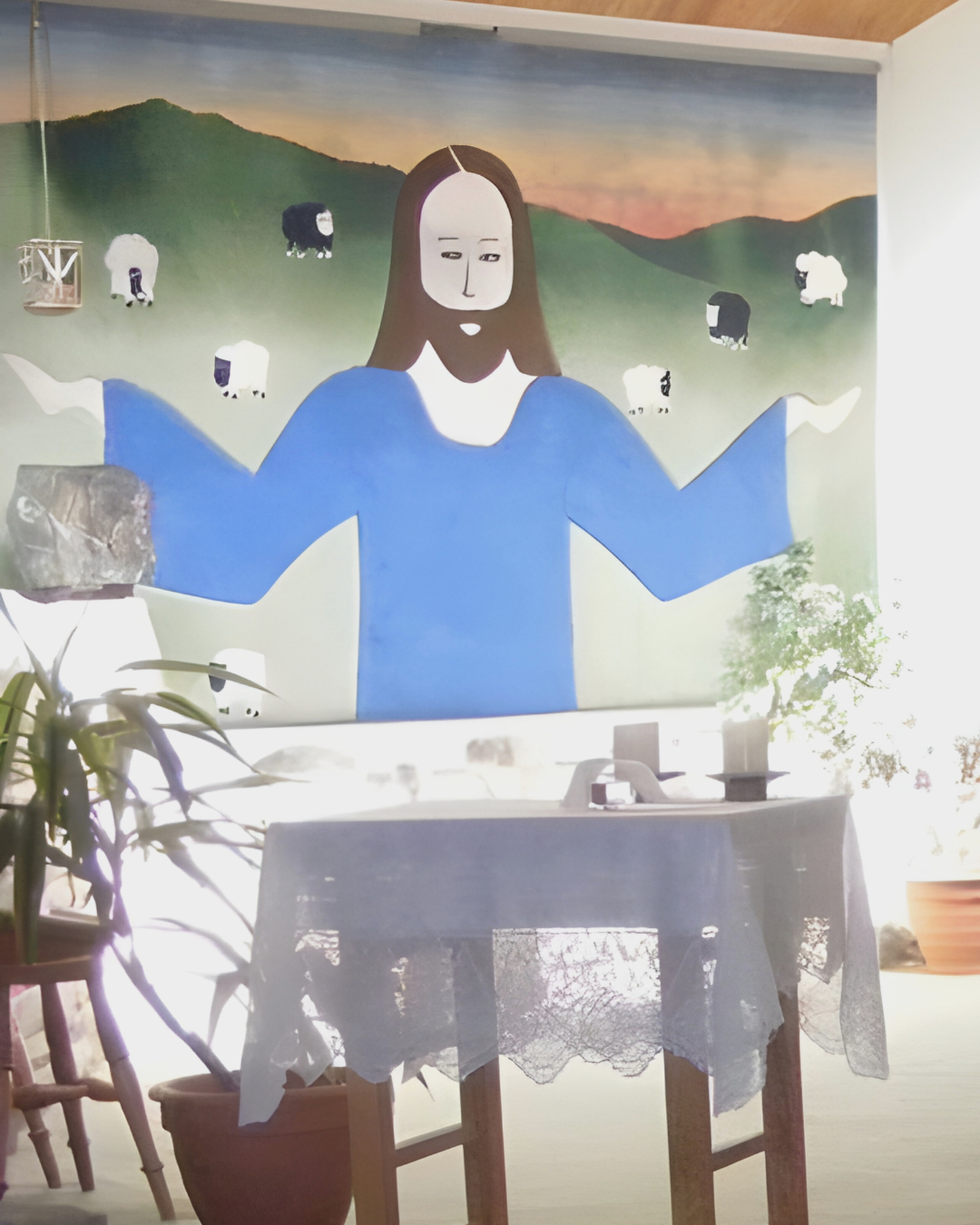 The Church of the Good Shepherd, Mytholmroyd
By John Duffy, parishioner of the Good Shepherd, Mytholmroyd
"I hadn't expected to be inspired, but I was!" said an attendee at this event.
About 30 people, including several from outside the parish, came to this talk at Good Shepherd, Mytholmroyd by Janet Symes, who has lived in Palestine and worked there as Head of Region for both CAFOD and Christian Aid.
Janet Symes
Janet gave us a brief history of the decline of hope and trust following the the Oslo Agreement in 1993, with Palestinians in Gaza and the West Bank experiencing growing restrictions and disruptions, affecting civil society, community cohesion and family lives. Strong resilience helped them cope and kept hope and resistance alive, but lack of international support and sympathy led to greater reliance on armed resistance, which lead to more Israeli repression.The atrocities carried out by Hamas on October 7th shocked Palestinians and led to the genocidal campaign in Gaza, and the growing assaults on the West Bank. There are powerful international forces, from USA to Gulf oil states, whose influences critically affect the Palestinian people, and the entrenched Israeli government ignores calls for restraint and peace from within Israel.
So where is the hope?
In the spirit of resilience within Palestine, in international solidarity – demonstrations, boycotts, pressure on politicians, discussions, aid and prayer.
Two participants summarised the spirit of this meeting:
"What I took away from Janet's clear, calm, balanced and compelling talk was that hope is kept alive when people resiliently work together for peace, for mutual understanding, and in providing care for their neighbours but that such hope is vulnerable to the fear and/or reality of finding oneself forgotten, abandoned, isolated. We have a moral obligation to maintain focus on the conflict in Israel Palestine and to demand fair dealing from our political leaders and attention to international law."
"The talk was inspirational, it's so easy to feel anger at the atrocities that are happening in Gaza (and the West Bank) but Janet talked in such a calm and reasoned way giving real examples of the day to day lives of all people in this troubled part of the world. She made made a big impression on me."
The Church of the Good Shepherd, Mytholmroyd
 Maria Finnerty, Lead Economist at CAFOD says:

 One of the S V P conferences then listed the different types of help they had given over the previous 12 months. The range of help given surprised parishioners e.g. paying the food pantry weekly subscription of £6 for a young mother of three children when she couldn’t afford it at the end of some months. Information about the S V P Support Centre on York Road, the Food Pantry run from the Tinshill Shop and about the Butcher Hill Shop were also given.
 Excitement built after Mass as parishioners had been invited to bring their pets for a special blessing in the parish grounds. Instead, because of the inclement weather, the parish centre offered welcome shelter, becoming the happy focal point where very well behaved dogs, plus a very young kitten, gathered round Fr Henry to the delight of their families. Fr Henry read St Francis’ Canticle to Creation before blessing all the animals, including all those gathered - the two legged variety!
 The parish CAFOD/LiveSimply group had planned a reflective pilgrimage walk around the parish allotment as a significant part of this special day, but instead produce from the allotment was brought into the church. As we prayed the opening prayer, we were encouraged to be mindful of people who have to leave their homes because of drought, floods, famine, conflict, and climate change.
 As well as giving thanks for the manifold gifts of creation, the liturgy focused on the call to live simply, sustainably and in solidarity with people who are poor. The first ‘station’ celebrated the parish receiving the Livesimply award before moving to a wheelbarrow full of vegetables from the allotment for the second station. The third station was at the baptismal font, its flowing water reminding us not to take for granted the gift of fresh water.
 St Benedict’s primary school had also brought their harvest donations to demonstrate their commitment to give thanks by sharing their gifts. These gifts of food will be given to the St Vincent’s Centre. The children present also had their own quiz enabling them them to explore and discover the different produce from the allotment spread around the church. Afterwards children were invited to colour a leaf and write a prayer of thanks for the hard work of the parish allotment group.
 We were pleased to be able to welcome small group of lay Franciscans who had joined us to celebrate the saint’s feast day. They followed a long-held tradition of displaying a Franciscan habit surrounded by candles and explained how St Francis wanted to free himself of all attachments.
 We ended the mini-pilgrimage at the Creation windows where we were invited to reflect for a moment before gathering again in the parish centre to share friendship and a simple meal of soup and bread. As well as the buzz of conversation there was a quiz that highlighted facts about climate change and people were offered a summary sheet of the key points from Laudato Si. We hope that our mini pilgrimage will encourage us all to reflect and act, as individuals and as a communities, to help reverse the effects of climate change.
 To learn more about becoming a LiveSimply parish follow the link below:
 Jesus showed us how, and we can do this by showing special concern and solidarity for the vulnerable, marginalised and those who suffer. This Harvest,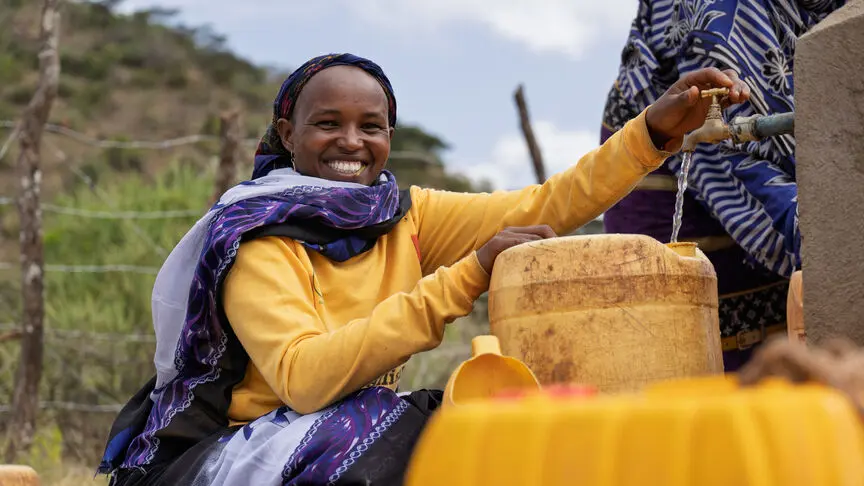
 Pope Leo XIV urges us to recognise those experiencing poverty as “witnesses to steadfast hope", precisely because they embody it in the midst of uncertainty, poverty, instability and marginalisation.

 We covered a lot in 12 minutes, all the time there was before he dashed off to PMQs.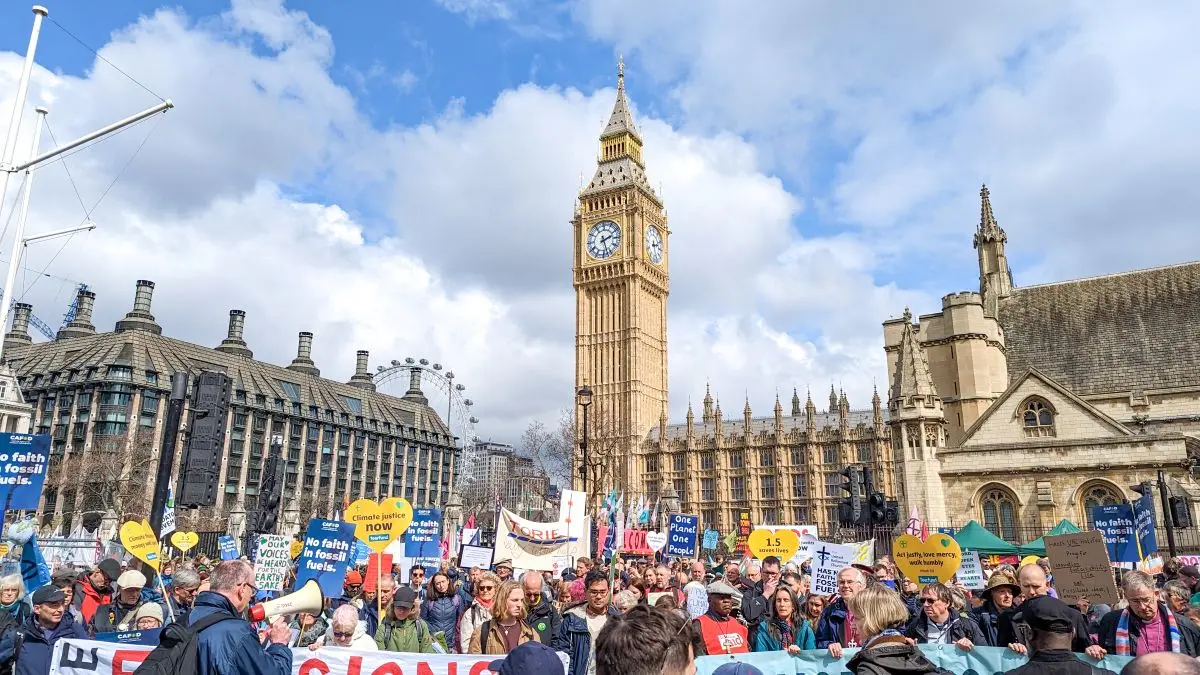
 Our Lady of Kirkstall parish covers quite a large area of NW Leeds and their local MP is Alex Sobel. Michael, Marian and Bronagh were able to meet with him and Michael takes up the story:
 The Debt Relief (Developing Countries) Bill had its scheduled second reading in the House of Commons on Friday 11 July 2025, but it was not debated due to “lack of unanimous consent” – which means that it did not progress. It also means that there is still time to take action!
