Donate
Diocese of Leeds Justice and Peace Commission (1)

The People’s Emergency Briefing Screening with SPARK

SPARK Social Justice and the Leeds Diocesan J&P Commission, with the support of the Diocese, is hosting a community screening of The People’s Emergency Briefing, a vital 50-minute documentary unpacking the latest scientific evidence on the climate and nature crisis. The climate and nature crisis is already reshaping life across the UK, but the solutions are in our hands. Getting involved is about building safer communities, cutting costs, and creating a better future. If you care about
  • local flooding
  • Clean air
  • The cost of living
  • Food prices
You might want to catch this An eye-opening film introduced by Chris Packam featuring leading UK scientists talking us through the impact of the climate and nature crisis on everyday life including:
  • extreme weather
  • food security
  • health
  • cost of living
The screening will befollowed by a short open discussion about what we can do and what this means locally– this film is only shown at in person screenings. Bring a friend or neighbour, book your free seat asap (but please complete registration as numbers are limited). It is suitable for those aged 16+ https://www.eventbrite.co.uk/e/the-peoples-emergency-briefing-tickets-1996041406579

Community Climate Conference

Community Climate Conference 2026: Practical climate action in York and North Yorkshire is a one-day conference in York bringing together community climate groups, change makers, village halls, politicians, community anchor organisations, VCSE organisations and others from across York and North Yorkshire. The event will explore how communities can take practical climate action that supports a more sustainable future. It will feature keynote speakers sharing regional and national perspectives, alongside engaging breakout sessions celebrating local action and success stories from across York and North Yorkshire. There will also be a marketplace session, giving attendees the chance to meet and learn from groups already taking climate action in their communities. Attendees will leave feeling inspired by real stories of success and empowered to bring practical climate action into their own communities. The conference is also a valuable opportunity to connect people, groups and organisations working towards a shared sustainable future, strengthening the growing network of community climate action across York and North Yorkshire. This event is brought to you by North Yorkshire Climate Coalition, York Friends of Earth and Village Green (a project supported by Community First Yorkshire and funded by the National Lottery).

21 Mar – Introducing Carla Stockton-Jones

We are pleased to introduce Carla Stockton-Jones who became a trustee of the Diocese in November 2025 and has taken responsibility for promoting the sustainability agenda within the diocese of Leeds.

Carla Stockton Jones Can you tell us a bit about yourself and your journey into this role?

My career has centred on how organisations can deliver positive change at scale, bringing together purpose, people and long-term responsibility. Alongside my role as Managing Director of Stagecoach and my time at Sky and HomeTree, I’ve seen how leadership on climate and nature can make a real difference.

I was drawn to this role because I believe faith communities have a unique and powerful part to play in responding to the climate and nature crisis. The Church is embedded in communities where environmental and social challenges are often felt most deeply.

Why did you become a diocesan trustee?

I became a diocesan trustee because I wanted to support the Church in responding faithfully and practically to the challenges of our time — particularly climate change, environmental degradation and inequality.

The Diocese of Leeds has significant influence through its buildings, land and community presence. Being a trustee is about helping ensure that our stewardship reflects care for creation, justice for our neighbours and responsibility to future generations.

What can the diocese do to become more sustainable?

Caring for creation needs to be seen as central to the Church’s mission, not an optional extra. Progress comes from practical steps. We are currently working on improving energy efficiency in parishes, investing in renewables and supporting nature-friendly spaces working alongside our Laudato Si diocesan partners, supporting parishes with clear guidance, shared learning and encouragement, so climate action feels achievable and hopeful rather than overwhelming.

What are the main barriers to achieving energy sustainability?

Historic buildings, limited capacity and access to funding or expertise can all slow progress. There can also be a perception that sustainability is mainly about cost, when in reality it’s about long term resilience, lower energy bills and healthier, more welcoming spaces for worship and community life.

Final reflection

The climate crisis is one of the defining issues of our age. The Diocese of Leeds has a real opportunity to lead with hope — showing that faith, justice and care for creation belong together.

22 Dec – Community energy scheme

We are all looking at ways to cut down on our bills, aren't we?

A community in Settle have been slashing the cost of their electricity by giving their neighbours cheap excess power. This works by matching up the residents' energy usage to local generated electricity, whether that's through a community wind turbine or maybe a business with solar panels. And it's usually cheaper than if you were buying it from the national grid. The energy club keeps profits in the local community and helps to encourage more people to get solar panels to help Settle.

Paul Kelly (featured in the BBC article) is part of the St Mary & St Michael church community in Settle and also part of the Climate Action Group of the J&P Commission. He is a part of the Leeds Dioceses’ Laudato Si Management Group (the official sustainability body within the diocese) and is also a member of the environment group of the National Justice & Peace Network.

Paul Kelly

16 Dec – Advent Eco-Fair at Hinsley Hall

Our first ever Diocese Eco Fair was organised by Rowan, Director of Communications and was a resounding success! 

Hinsley Hall was a thoughtful choice with accessible bus routes and free parking right outside, to encourage as many people as possible to enjoy the experience.  One attendee had travelled all the way from Grassington, the Settle area was also well represented as well as more local communities.

20251213-advent-fair-1000px-1 Stalls spilled out into different rooms and attendees and stall holders alike enjoyed the relaxed and positive atmosphere.  The Justice and Peace Commission were there in strength, along with the Laudato Si group.  SPARK, CAFOD and others talked to attendees about our work raising awareness of climate action and encouraging sustainability. 

Climate change is one of the priority areas for action by the Commission and the Climate Action Group within the Commission is very active. It was the Climate Action group that was responsible for the drafting of what is now the Diocesan Environment Policy. Two members of this group are now part of the official Diocesan group for promoting sustainability throughout the diocese: the Laudato Si Sustainability Group. We had various leaflets and information sheets available about, for example, installing solar panels on church roofs or things that individuals can do to reduce their carbon footprint.

20251213-advent-ecofair-1000px-2 Leeds Church Institute shared a thought-provoking display that linked creativity with faith, the local artist showing the beauty to be found in unexpected places and how urban areas offer a lifeline for nature.   Local entrepreneurs set up their baking and craft work for unique and original Christmas stocking fillers.  Rosie was the youngest stall holder at 21 years; her amazing miniature gingerbread houses were a real winner! 

There were all sorts of stalls at the fair including a lovely biscuit stall using fairtrade ingredients, a stall supporting Medical Aid for Palestinians and an impressive plant stall. Climate Action Leeds were also represented with an engaging board game for people to try their luck (prizes were packets of seeds!).

There were a steady stream of visitors who were not all based in Leeds. We noted visitors from Settle, Clapham, Grassington, Mytholmroyd and Bradford – amongst others. It was also a good opportunity to meet with supporters and activists and share information about what each of us has been doing.

Within this beautiful building and peaceful grounds, we were able to reflect on the end of our Jubilee Year.  As Pilgrims of Hope, we were reminded that we are stronger together and the effective networks and partnerships represented in this event will be the building blocks to a brighter new year. 

We are looking forward to Eco Fair 2026!

28 Oct – This World is Ours!

This world is ours; This world is everyone's!

Saturday November 15th 

Merrion Gardens, Leeds, LS2 8JE

A big event planned in Leeds on Saturday 15th November to mark the mid-point of negotiations at COP30 in Brazil. Groups and organisations are invited to join together under the umbrella of the Yorkshire and Humberside Climate Justice Coalition.  A chance to bring the positive messages of climate justice to the attention of the media.  Similar events are being planned on the same day across the UK in a show of unity, solidarity and love for our beautiful planet and all who live here.

In Leeds – meet at Merrion Gardens 17 Merrion Street LS2 8JE from 12 noon.  Entertainment, music, food and stalls are provided.  From 1pm a march will set off from Merrion Gardens around the city centre circling back until about 5pm.

If you know of anyone in your community who would like to be a speaker or provide music, dance or poetic inspiration get in touch with Kathy at SPARK

Assemble 12 noon for community and campaign stalls, speeches and music. March with us at 1.30, then return for more speeches, music, stalls. We also have indoor space at St John's chirch next door, should the weather be too terrible! We are living through a polycrisis: inequality, climate breakdown, nature collapse, rising authoritarianism, rising hate & global conflict. HELP BUILD A UNITED MOVEMENT Bring your banners! Bring your placards! March with us! Add your voices! Hear speeches from those on the frontline, and those who are fighting for a fair, inclusive, sustainable society. We come together to send our message to Westminster and to world leaders gathered in Brazil for COP30. Get involved in the fight for a fair future. Hear from across our network. The far right try to divide us an distract us from the real causes of our problems. It's time to unite and speak with one voice - we are all in this together and we will be heard!

Summer Reading

by Sara Forrest

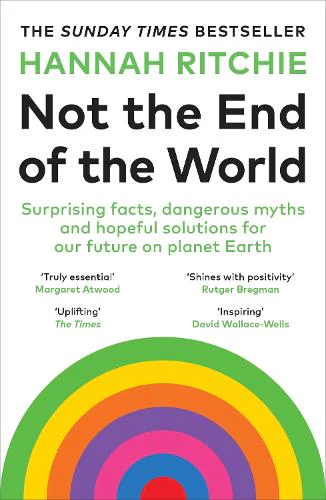
‘Not The End of The World’ by Hannah Ritchie

If your young ones are worried about Climate Change and you want to be able to reassure them then ‘Not The End of The World’ by Hannah Ritchie is a good read.

Remember how we succeeded in closing the ozone layer?

Talks about the importance of political will to make things happen and contains some surprising facts about the impact of our individual decisions.

We are bombarded by doomsday headlines that tell us the soil won't be able to support crops, fish will vanish from our oceans, that we should reconsider having children.

But in this bold, radically hopeful book, data scientist Hannah Ritchie argues that if we zoom out, a very different picture emerges. The data shows we've made so much progress on these problems, and so fast, that we could be on track to achieve true sustainability for the first time in history.

Packed with the latest research, practical guidance and enlightening graphics, this book will make you rethink almost everything you've been told about the environment, from the virtues of eating locally and living in the countryside, to the evils of overpopulation, plastic straws and palm oil. It will give you the tools to understand what works, what doesn't and what we urgently need to focus on so we can leave a sustainable planet for future generations.

These problems are big. But they are solvable. We are not doomed. We can build a better future for everyone. Let's turn that opportunity into reality.


‘Fluke’ by Brian Klaas

In ‘Fluke’ by Brian Klaas you get an explanation of why so many forecasts, predictions and polls don’t get it right. (The world is too complex.)

And that is why we should look behind the headlines and question data presented in a way that drives an emotional response (populism) to make better decisions and live better lives.

It’s not as dry as it sounds!

Fluke: Chance, Chaos, and Why Everything We Do Matters:
In Fluke, myth-shattering social scientist Brian Klaas deep-dives into the phenomenon of randomness, unpicking our neat and tidy storybook version of events to reveal a reality far wilder and more fascinating than we have dared to consider.

The bewildering truth is that but for a few incidental changes, our lives - and our societies - would be radically different. Offering an entirely new perspective, Fluke explores how our world really works, driven by strange interactions and random events.

How much difference does our decision to hit the snooze button make?

Did one couple's vacation really change the course of the twentieth century?

What are the smallest accidents that have tilted the course of history itself?


‘Great Britain? How We get Our Future Back’ by Torsten Bell

‘Great Britain? How We get Our Future Back’ by Torsten Bell is a readable explanation of how decades of under-investment by both UK Government and private organisations has stalled our economy.

A book for someone who is perhaps fed up with the Government.

The Generation Wars and Housing chapters are particularly thought provoking.

An essential blueprint for a better future, from the leading economist & Labour rising star

‘Stellar: brilliant, incredibly pragmatic’ Rory Stewart
‘Refreshingly optimistic’ The Times
‘No one has done more to re-inject sanity into our national policy’ Emily Maitlis

There are few who are better placed to investigate Britain’s plight than Torsten Bell, Labour MP for Swansea West and former Chief Executive of the Resolution Foundation.

In Great Britain? he offers both a clear-eyed diagnosis of the problems facing our country – a uniquely toxic combination of huge inequality and stagnant economic growth – and a bold vision for the alternative. This is a book bursting with ideas and infectious hope.

In his treasure trove of enlightening and original analysis, Torsten Bell argues that our era of chaos and cynicism needs neither utopianism nor nostalgia, but a practical patriotism to raise living standards and create a more equal country. He passionately points us towards a Britain that we can actually build – a future worth fighting for.

‘A roadmap to the new normal’ Observer
'Pretty cool … the think tank work I raved about on The Rest Is Politics has morphed into a book' Alastair Campbell
‘A dose of Torstenomics is the only thing that can give us hope’ Amol Rajan
‘Spiced with wit, masterful, fact-packed’ Polly Toynbee

**A FINANCIAL TIMES AND OBSERVER BEST BOOK OF 2024**

15 July – MASS LOBBY OF PARLIAMENT ON CLIMATE CHANGE

By ENews editor

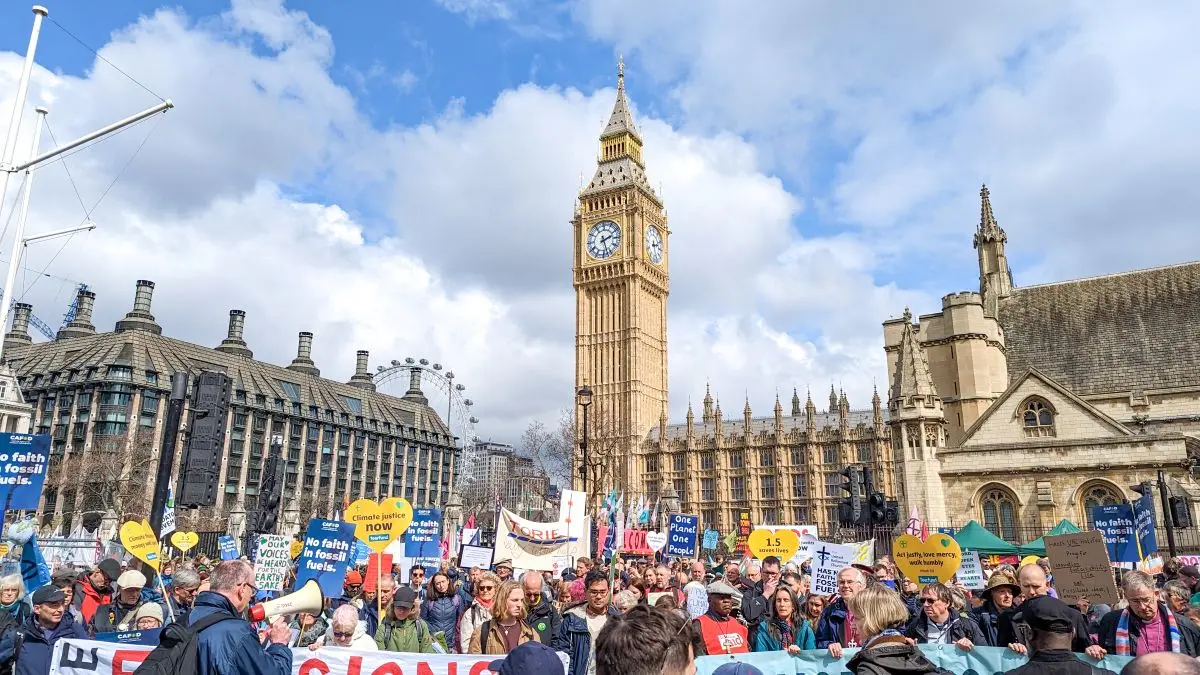
Wednesday 09 July saw a mass lobby of Parliament to keep up the pressure on politicians about Climate Change.

CAFOD is a key part of the coalition of organisations involved and CAFOD supporters from across the country descended on Westminster to try and talk to their own MP’s. A group of 3 people attending from the Leeds parish of Our Lady of Kirkstall were Marian & Michael Emly and Bronagh Daly (who also represented Leeds Church Institute).

Leading up to the lobby day itself, CAFOD has been running a campaign to get parishioners to sign a petition asking the Government, in this Jubilee Year of Hope, to address the debt crisis affecting the global South. The number of low and middle-income countries in debt crisis has more than doubled since 2015: 54 countries are now in debt crisis compared with 22 countries in 2015. In Africa, 34 countries spend more on external debt payments than on health or education, when hospitals and schools are already desperately underfunded. Debts are being paid at the expense of hiring doctors and teachers, building schools, hospitals and sewage systems, preparing for floods, or coping with droughts.

Mass lobby at Westminster. Big Ben in background Michael Emly commented,

“The petition last Sunday was a tremendous success and we collected 220 signatures which we will now send the sheets off to CAFOD to be collated with others from around the country… I have to say that I am really proud to be part of a parish that can show this level of commitment to solidarity with our sisters and brothers in the world's poorest countries.”

The lobby actually involved a lot of different organisations under the umbrella of the Climate Coalition, and around 5,000 people took part from all around the country. They took over 2 floors of a large building opposite Westminster Abbey for the day, and CAFOD had an area within it. Michael comments,

“This was great as we were able to meet up with lots of other CAFOD supporters, but also with Bishop John Arnold of Salford and with Fr. Charlie from Kenya - the priest whose letter was read out last Sunday. There was a series of talks throughout the day, but unfortunately Fr. Charlie was timetabled to speak in the morning, before we arrived. Even so, a great privilege.”

Fr Charlie’s picture features in the CAFOD resources about the debt relief campaign.

Marian Emly talks to Father Charlie from Kenya Our Lady of Kirkstall parish covers quite a large area of NW Leeds and their local MP is Alex Sobel. Michael, Marian and Bronagh were able to meet with him and Michael takes up the story:

“It wasn't until quite late in the afternoon that we were able to meet with Alex Sobel, but it was really worthwhile because it was just the 3 of us - none of his other constituents who had registered to attend actually turned up. So we were able to discuss the issues around Debt Justice at length and tie it in to the broader theme of climate change by explaining how debt repayments are a millstone around the necks of people in poorer countries as the size of the debt repayments prevents proper investment in mitigating the effects of climate change as well as reducing the money that is available to spend in areas like healthcare and education. In fact, I was very impressed by the awareness that Alex had of all these issues and his willingness to consider ways of addressing them - he told us that he had taken part in similar demonstrations 25 years ago when there was a similar focus on cancelling debt and achieving the "Millennium Development Goals". And he did share various ideas about how the issues might be addressed. And, of course, we stressed to Alex that we weren't lone voices in his constituency, because 220 people had signed the petition just a few days earlier."

Marian, Michael and Angela with MP Alex Sobel The Debt Relief (Developing Countries) Bill had its scheduled second reading in the House of Commons on Friday 11 July 2025, but it was not debated due to “lack of unanimous consent” – which means that it did not progress. It also means that there is still time to take action!

Showing solidarity with the poorest in the world is a fundamental part of being a Catholic. A very simple action that everyone could take is to sign the online version of the CAFOD petition. Just follow this link: https://action.cafod.org.uk/page/161357/petition/1

28 Feb – Climate Breakdown and the Military

by Tim Devereux

Tim is a member of the Leeds Diocese pax Christi group and has recently stood down as chair of MAW (The Movement for the Abolition of War).


It was Bruce Kent who first got me involved in the war/climate breakdown issue. I had been a member of CND and Pax Christi since the 70s, and Bruce recruited me to the Movement for the Abolition of War committee. One of MAW’s campaigns is Climate Change and Military Emissions – we’ve made a DVD about it!


I assume everyone knows the basic mechanism of climate breakdown – if you need a refresher, view Climate Change 101 by the masterly Bill Nye, Science Guy, made in 2015. He explains it in just four minutes!

"The Earth's temperature it is estimated to have gotten 1.2 to 1.4o Fahrenheit warmer in just the last Century. Ten out of the last thirteen years were the warmest on record."

In November 2015, a group of MAW members went to Paris for COP21. This was where the historic Paris Agreement on climate change was hammered out. As we stood under the Eiffel Tower, we wanted to make sure our banner was seen by delegates and the public alike.

War causes climate change. Climate change causes war. How does war contributes to climate change?

“The elephant in the kitchen when it comes to Climate Change is clearly the world’s military. The world spends something like 2 trillion US dollars a year on its military. At least half of that vast sum goes on military production with a massive CO2 output. The military are both a major cause of climate change and hence, of the conflicts which result from the movement of peoples as deserts spread.” Bruce Kent

The trouble is, much of this is not reported - US negotiators managed to exclude military greenhouse gas emissions at the 1997 Kyoto climate conference. In Paris 2015, it was agreed that countries no longer have automatic exemption but neither are they obliged to declare military emissions.


As Mark Carney remarked, “What gets measured gets managed” Disclosure is only the first step towards the real goal: reduction of these emissions.

Isabella in Mozambique surrounded by her crops How does climate change cause war?

The example of Syria illustrates this all too forcefully.

“Before the [Syrian Civil] war began, an extraordinary drought caused 75% of Syria's farms to fail and 85% of livestock to die between 2006 and 2011, according to the United Nations. That drought also triggered a wave of migrants searching for jobs in urban areas, spreading instability throughout the country… The war has killed around half a million people, and displaced around 11 million others. It has utterly destroyed the country’s infrastructure”

Climate breakdown refugees will be a big problem.

“Over the past 10 years, weather-related disasters have caused 220 million internal displacements – approximately 60,000 displacements per day. By 2040, the number of countries facing extreme climate-related hazards is expected to rise from three to 65, the majority of which are hosting displaced populations.”

Get Involved

Check out all the amazing programmes made by David Attenborough

Read George Monbiot

Join MAW

Join Pax Christi

Join the National Justice and Peace Network

Sign up for the Columban newsletter Vocation for Justice

Sometimes, we can't see the way to our destination and are beset by difficulties, but if we can just keep going, we'll get there!!