In day 2 of this heat wave, I have been listening to fears that our electricity grid needs investment to help us to cope with the increasing incidence of heat waves in the UK. The extra electricity load for significant numbers air conditioning increases the risk of blackouts ( and electric car charging) as happened in France recently.
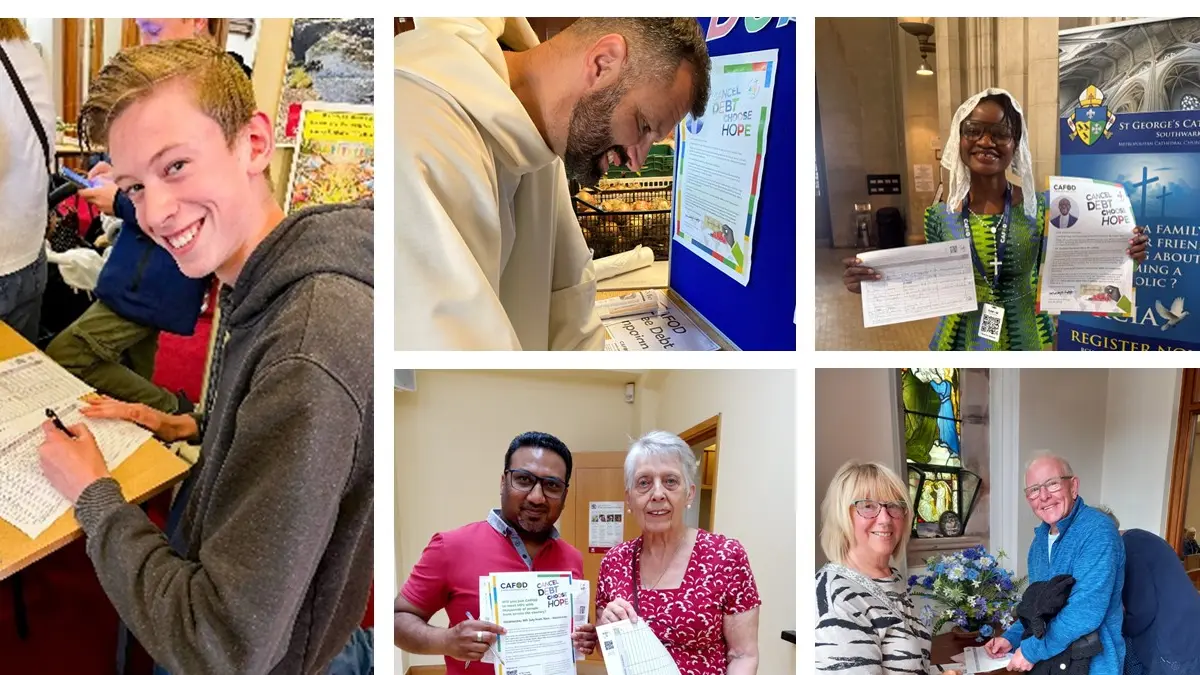
The CAFOD / Live Simply group in our parish promoted the new CAFOD petition lobbying the Prime Minister to use our hosting of the G20 next year to cancel some third world debt to enable poor countries to support their populations better and to pass a new UK law supporting Debt Justice.
We are privileged in that we have been a major world economy for hundreds of years and have built up more wealth than many of the nations who are suffering greater environmental changes due to climate change. Yet our Government is borrowing more money to ‘keep us in the manner we expect’. Smaller country economies must raise the capital to help their people from displacement and natural disasters. In addition to the humanitarian aid from organisations such as CAFOD, Medicines Sans Frontiers and DEC, plus many others. But with their credit rating are worse than ours so their costs of debt are higher than ours.
It has recently been reported that a certain President has increased his personal wealth in the last 12 months by $1 Billion. Looking at the alleged multi-million payments made to various politicians do we really believe that they are seeking to do anything other than protect their current source of wealth and wealth?
The rich are getting richer and the poor are getting poorer across the world. It is not right or just.
So, please visit CAFOD, sign the petition and maybe write to your MP to ask for their support in achieving debt justice across the world. And if you can donate to their Venezuela appeal.
Starting Salary: £35,668 - £39,005 (pro-rata, for part time is £17,834 - £19,502)
Contract: Permanent
Location:Home
Hours: Part-time: 2 ½ days (17.5 hours) per week.
While this is a home-based role, it involves regular travel throughout the Diocese of Leeds to build relationships and work closely with volunteers, clergy and other key stakeholders. We are therefore looking for someone who is flexible, mobile and based within, or close to, the Diocese of Leeds and can travel widely around the area covered.
Job Profile
CAFOD’s work in the Catholic community of England and Wales is to inspire and resource our diverse Catholic community to participate in the Church’s mission to overcome poverty and injustice in partnership with CAFOD.
The main purpose of Community Participation Co-ordinators (CPCs) is to inspire and increase the participation in CAFOD’s work of Catholic parishes, schools and the broader Catholic community within the Leeds Diocese. The successful candidate will take the lead on parishes and the broader Catholic community. This will be accomplished by recruiting and supporting a team of committed, inspired and well-resourced volunteers working in parish and school communities and by building fruitful relationships with clergy, church administrators, networks and other stakeholders across the diocese to enable and equip Catholics to give, act and pray with CAFOD.
The CPC is part of a regional team working across a group of dioceses and whilst having a primary focus on a diocese, is responsible for the results of the regional team plans in relation to volunteer recruitment and retention and parishioner and school participation. It is likely the postholder will work with others as part of a Leeds team. Flexibility regarding the area covered is important as we may need the postholder to cover a different area in the future.
The role will be home-based, although it is expected that the post holder will be mobile and flexible to frequently meet volunteers, clergy and other stakeholders as required around the Leeds diocese so living within or near the Leeds diocese is helpful. The post holder will also be meeting with other regional team members as required, both virtually and face to face.
The role involves extensive travel across the diocese; access to a car is essential. Mileage expenses will be reimbursed in line with organisational policy.
From time to time, the post holder will be required to transport equipment and resources, and to work flexibly, including evenings and weekends, for which time off in lieu (TOIL) may be claimed
The post holder must be willing to adapt to the needs of the regional team, contributing skills, knowledge and, where appropriate, supporting activity in other parts of the region.
Contribute to the development and delivery of annual plans in the region (a group of dioceses) with a primary focus on the Leeds diocese, and for fundraising, education, campaigns, and other targets, as delineated by the participation plan for the region.
Ensure that the regional plans are delivered taking local context and opportunities into account.
Share reports, information and insights on the participation of parishes and schools in CAFOD’s activities and on the recruitment, activity, development and retention of volunteers. Adapt the plans and priorities through periodic reviews with your manager.
Managing volunteers
Be the lead volunteer manager for an identified portfolio of volunteer roles locally and ensure effective coordination and communication.
Agree on targets for recruiting and retaining volunteers
Match the offers, skills, experiences and expectations of volunteers with opportunities and needs in relation to CAFOD’s plans.
Ensure each volunteer is appropriately inducted, briefed, trained and resourced
Organize and promote volunteer meetings and training opportunities online and offline to be delivered either by national programme teams or self or members of her/his regional team
Ensure data is regularly recorded, accurate and up to date on CAFOD’s database.
Managing relationships
Represent CAFOD in the diocese and ensure CAFOD retains a diverse range of fruitful relationships (eg the bishop, clergy, administrators, senior representatives and chaplains).
Ensure CAFOD is promoted via various diocesan communication channels, working with diocesan communications officers and church administrators
Be a point of contact for local broadcast and print media, to increase opportunities for Catholics to hear about CAFOD’s work, working with and through media volunteers where possible.
Safeguarding
All CAFOD staff share responsibility to promote and maintain a strong safeguarding culture, including identifying the key actions they should take given their role and responsibilities.
Job-specific competencies
A demonstrable commitment to volunteering and understanding of its potential as a force for change
Experience of managing multiple relationships eg with clergy, stakeholders and a wide variety of volunteers.
Experience of managing volunteers, including recruitment, retention, deployment and celebration.
CAFOD is a welcoming, supportive workplace committed to a safe, inclusive culture where everyone is respected. CAFOD will make reasonable adjustments at every stage of the recruitment process to ensure candidates with disabilities or individual needs are fully supported.
Safeguarding for Children and Vulnerable Adults
CAFOD recognises the personal dignity and rights of children and vulnerable adults, towards whom it has a special responsibility and a duty of care and respect. CAFOD, and all its staff and volunteers, undertake to do all in our power to create a safe environment for children, young people and vulnerable adults and to prevent their physical, sexual or emotional abuse. CAFOD is committed to acting at all times in the best interests of children and vulnerable adults, seeing these interests as paramount. Any candidate offered a job with CAFOD will be expected to adhere to CAFOD’s Safeguarding policy and sign CAFOD’s Code of Behaviour as an appendix to their contract of employment and agree to conduct themselves in accordance with the provisions of these documents. This post involves responsibility for people who will have contact with children, young people and vulnerable adults and applicants will be subject to specific checks related to safeguarding issues. The post holder is required to present or obtain a Disclosure from the DBS (Disclosure & Barring Service).
The global debt crisis: the example of South Sudan
Join CAFOD online at 1pm on 26 May to hear how low-income countries like South Sudan are struggling with huge debt burdens.
Hear from:
Kumi Anthony, Programme Manager, South Sudan
Maria Finnerty, CAFOD’s Lead Economist
Helen Moseley, Campaign Coordination Manager, who will share how we can all help push for change.
Low-income countries are struggling with huge debt burdens. Hear from South Sudan speakers on how their country is coping, Maria Finnerty, CAFOD’s Lead Economist, on some practical solutions, and CAFOD’s campaigns team on how we can all help push for change.
Call for debt justice with CAFOD, in solidarity with millions of our sisters and brothers around the world
Last year, our Catholic community supported a global church campaign to tackle the debt crisis, but we need continued support, to change the devastating impacts of debt on low-income countries. During the Jubilee Year, 35,000 people signed CAFOD’s petition including 18 parishes across the diocese of Leeds, including a group of parishioners who joined others in London to speak to their MP’s face to face about this issue, let us now build on this hope. Please see cafod.org.uk/cancelthedebt
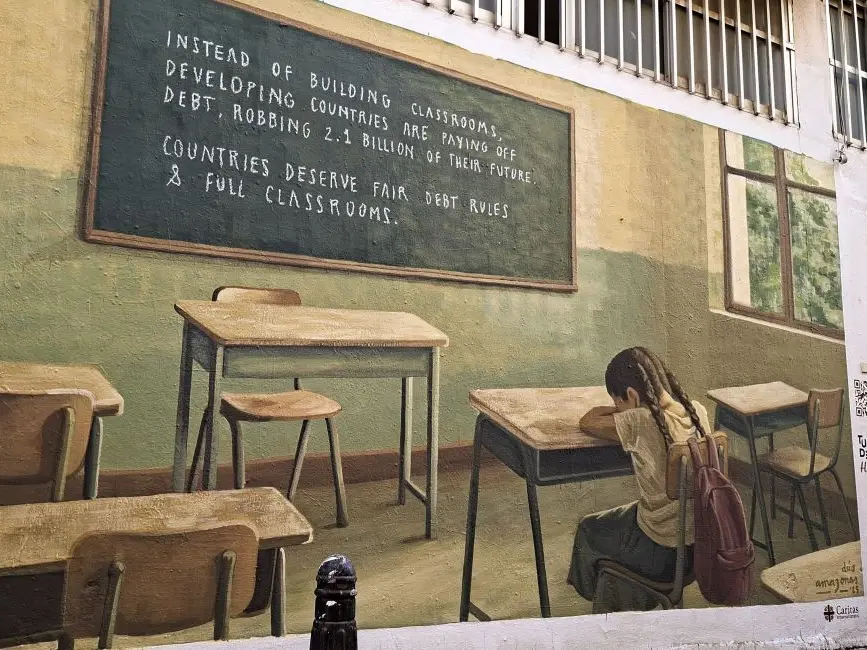
All countries borrow money. But low-income countries need to borrow more and are pushed into deepening debt crisis, paying high interest rates to wealthy lenders. Often, they have paid their original debt back, but spiralling interest means they cannot break the cycle. Money that should be spent on food, healthcare, and education is flowing out of countries that can least afford it. Governments across the global south must choose between serving their people or paying creditors.
Wesley Chibamba, Caritas Africa’s Policy and Advocacy Officer, explained people are dying because they can’t access healthcare. Children cannot go to school. People are going hungry because the governments have debt obligations. Governments don’t have the capacity to respond to humanitarian crisis, like floods or drought – they don’t have the funds.
Archbishop Gabriele GiordanoCaccia, says
“The current debt crisis represents a profound failure of our global economic system…If a mother cannot access prenatal care because the government has cut healthcare spending to service debt… if communities cannot rebuild after disasters because the resources are diverted to foreign creditors, we must acknowledge that there has not just been a serious economic failure but a moral one.”
Next year, our government is hosting the G20 in 2027 - a crucial gathering of the world’s 20 most powerful economies. These leaders have power to fix the global debt system; we need to call for debt justice now.
Continuing the theme of ‘Shining a Light’ on issues of concern, you are warmly invited to attend an open meeting hosted by the National Justice and Peace Network (NJPN)
There will be input from Professor Peter Jackson, Co-Director of the University of Sheffield Institute for Sustainable Food and from local community projects.
There will be opportunity for discussion about justice and peace activities from around the country, including suggestions on practical ways of becoming involved in campaigning for peace and social justice.
The word Lent finds its roots in the Old English word lencten, meaning "spring." It describes that quiet, persistent season when the days begin to lengthen and the earth slowly wakes from its winter sleep.
We began this journey with a stark reminder: "Remember that you are dust." While these words can feel bleak, they contain an invitation to wonder. We are intimately connected with the earth and everything on it – we are all members of one human family sharing one common home, all beloved creations of God. As we acknowledge our interconnectedness and reliance on God, we create space for new growth.
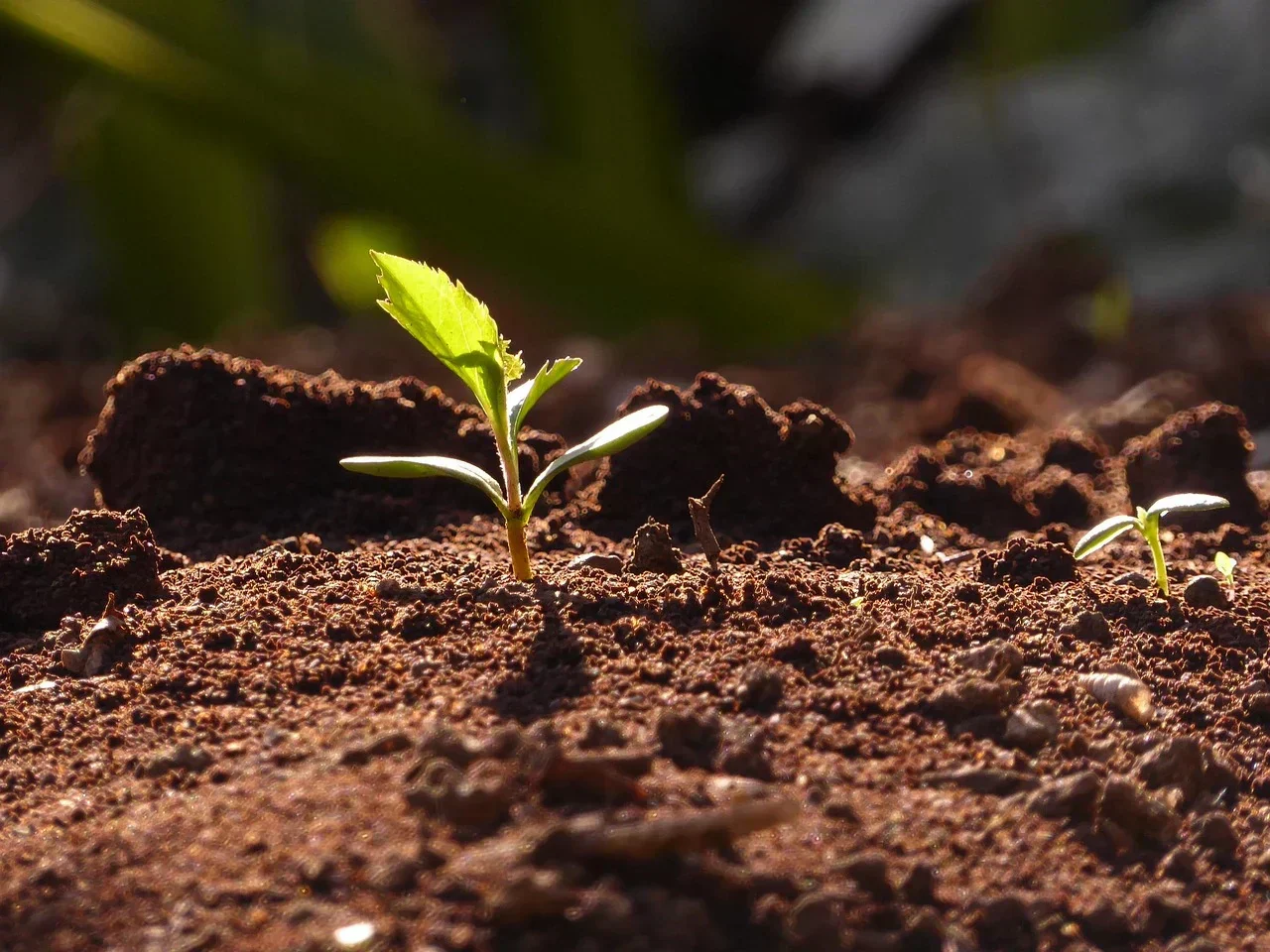
In the field and garden, this is a vulnerable, expectant time. Seeds are sown in an act of quiet trust—that a tiny grain, buried in the cold, dark earth, carries within it the potential for new life. Our Lent springtime calls us to such faith: that the seeds of hope and love that we plant even in the hardest soil will take root and blossom.
Across the world our neighbours are also planting seeds. Yet climate change is making it harder for them to grow enough to eat. In parts of Zimbabwe there is too little rain. In parts of Bangladesh and South Sudan, there is too much. The result is the same – seeds fail to grow, plants die, and families go hungry.
Our fasting, giving and prayer in this season remind us of our dependence on God and our longing for a world in which all people flourish. This Lent, as the light lengthens, may we stand in solidarity with our sisters and brothers throughout the world, knowing that God can work through us to bring new life.
Find out more about CAFOD’s Lent appeal is helping our global neighbours grow food in climate-resilient gardens: https://cafod.org.uk/lent
Cardigan Community Centre, 145-149 Cardigan Rd, Burley, Leeds LS6 1LJ
Join Global Justice Youth’s annual activist conference, We Rise, to learn from inspiring international speakers, join collaborative workshops and meet likeminded people.
This year’s line-up already includes
Rahila Gupta, chair of Southall Black Sisters and co-author of Planet Patriarchy: Global Tales of Feminism and Oppression
Pallavi Pundir, journalist and researcher on gender and democratic movements in Asia
Nick Dearden, director of Global Justice Now and author of Pharmanomics: How Big Pharma Destroys Global Health
Keir Milburn, co-director of Abundance thinktank, author of Generation Left and Radical Abundance: How to Win a Green Democratic Future
Professor Paul Routledge, author of Space Invaders: Radical Geographies of Protest, scholar of global social movements
Alyssa Elliott, founder of Indivisible London, campaigner against Donald Trump
Young people are leading resistance to the far right, the genocide in Gaza and fossil fuels all across the world. While extreme nationalism rises in the US, UK and globally, it is being challenged on the streets and in new political movements by leaders like Zohran Mamdani and Zack Polanski who bring together climate justice, internationalism and the urgent need to fight inequality and make our lives affordable. In the global south, Gen Z-led revolts have toppled autocrats from Nepal to Madagascar.
At We Rise we’ll hear strategies with incredible international speakers on the front lines of each of these struggles. We’ll be bringing together organisers from across the world to share lessons from the last year of youth led resistance. We’ll be planning what to do next and how we can make 2026 a year of solidarity and global justice.
We Rise is for anyone under 30 who believes that another world is possible. With a range of panels, interactive workshops and creative sessions there’s something for everyone.
CAFOD Lent Appeal: help families put food on the table
This Lent, as we deepen and enliven our faith, we can reflect on Jesus’ call to “love your neighbour as yourself” (Mark 12:31) and pray that we can give more help to families facing hunger today due to floods and droughts.
Christine Allen, Director of CAFOD says: “Last year I travelled to South Sudan. I would like to tell you about one person our local experts have been working with there, a young mother named Rejoice. Rejoice fled conflict twice to protect her children. Imagine losing everything and starting from scratch, only to be forced to do it all again. Then, after all she’d been through, Rejoice’s new home was hit by severe flooding.”
“The farmlands were submerged underwater,” Rejoice told us. “Everything including livestock was completely destroyed.”
With support from our local experts, Rejoice and her community created floating gardens. These are simple beds that rise above floodwaters, so amazingly, they can grow food even when the land is underwater.
Whether there is too much rain, or too little, crops around the world are being destroyed. In Zimbabwe, drought left Shorai and Hamunyare with nothing. They told us how the solar-powered water pump, funded by donations from people like you, allowed their community to grow a thriving, drought-resistant eco-garden. Now they can feed their family year-round and share food with neighbours. Shorai reflected that, “A good neighbour is someone who can help me in periods of need.”
By fasting and giving this Lent, you’ll be a good neighbour helping families find ways to grow enough food to eat. Donate online at cafod.org.uk or call 0303 303 3030 to help parents put food on the table today.
As we come to the end of the year, it's good to reflect not only on the ongoing issues throughout the world, but also to celebrate some of the successes, large and small.
Here are just a few examples of what's been happening this year.
Our first ever Diocese Eco Fair was organised by Rowan, Director of Communications and was a resounding success!
Within this beautiful building and peaceful grounds, we were able to reflect on the end of our Jubilee Year. As Pilgrims of Hope, we were reminded that we are stronger together and the effective networks and partnerships represented in this event will be the building blocks to a brighter new year. We are looking forward to Eco Fair 2026!
Read more...
3431 mile fundraising ride for Medical Aid for Palestinians
Pudsey cyclist Tim Devereux rode 3431 miles in 2025, the distance from Leeds to Gaza, to raise funds for Medical Aid for Palestinians, raising over £6000.
Read more...
Several of our SPARK members graduated in the summer, and are continuing to work towards justice and peace in pastures new
Read more...
On 15th June there was a 10th birthday party of Pope Francis’ encyclical Laudato Si, to remember how justice for the poor and justice for the planet are related.
Laudato Si is named after the Canticle of St Francis of Assisi which begins ‘Praise to You (Laudato Si’), Lord, in all your creatures’.
Cardinal Robert Prevost was elected pope and is now known as Pope Leo XIV
Pope Leo XIV holds dual citizenship in both the US and Peru where he served as a bishop. He spent much of his career as a missionary in South America where he is fondly remembered as a figure who worked with marginalised communities and helped build bridges in the local Church.
Read more...
Just over 50 people gathered at Wheeler Hall on the Bank Holiday weekend Saturday to find out more about the LiveSimply award scheme. It was a hectic day with 3 different workshops in the morning. In the afternoon people chose to attend another three workshops (out of 6 offered).
LiveSimply asks parishes to draw up a plan of action for
· Living more simply
· Living more sustainably
· Living more in solidarity with those experiencing poverty
Read more...
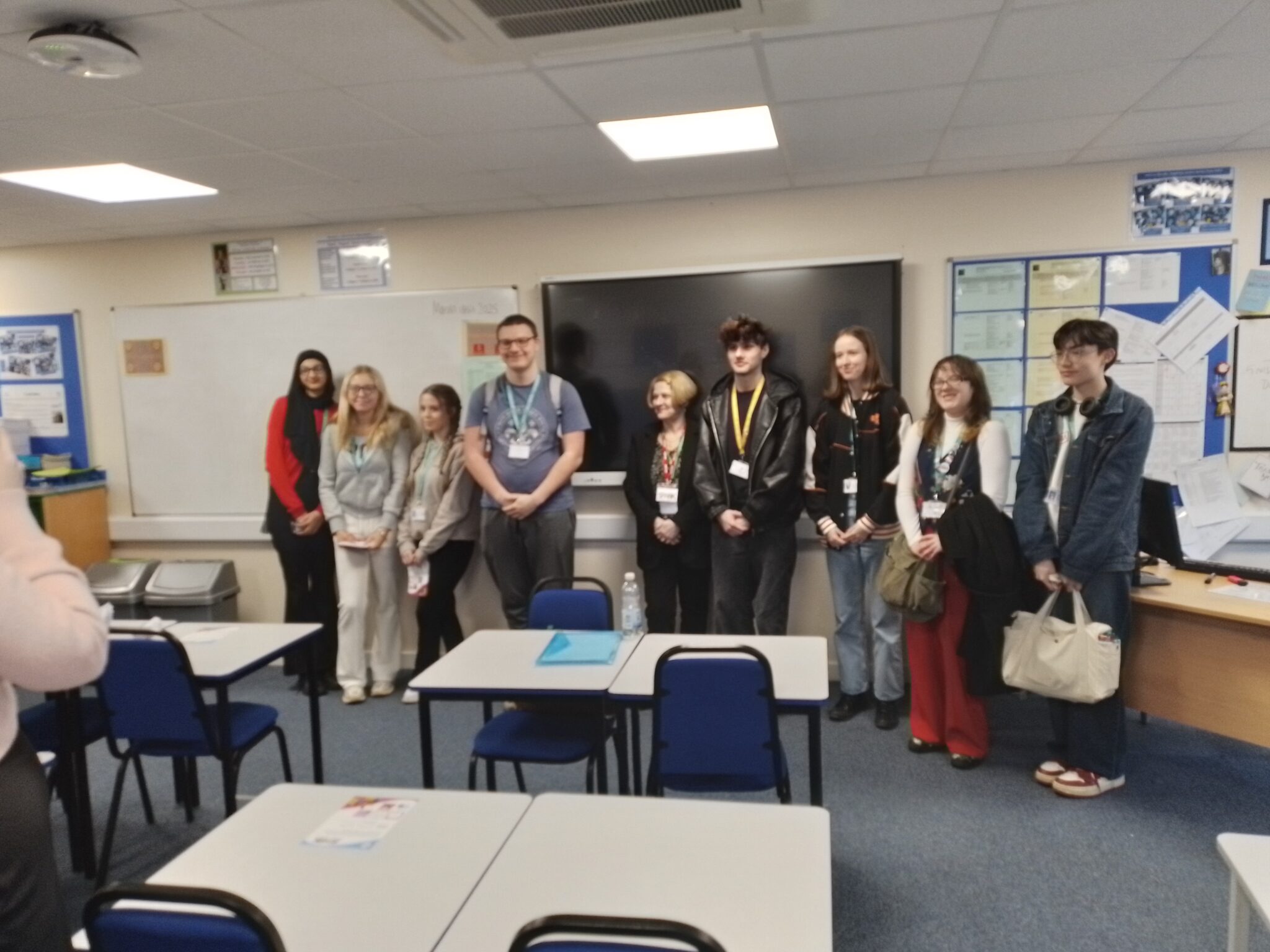
Exploring Social Justice with Notre Dame 6th Form College
The Social Justice group are interested in organising a marketplace event and future leadership activities, with a focus on their particular interest of poverty in the UK.
Working closely with key staff and Notre Dame Chaplaincy, we are listening to what these group members want to achieve and finding ways to support their passion for social justice.
Watch this space for a Social Justice event soon!
Read more...
Oscar Romero Lecture with Fr Luis Orlando Pérez Jiménez
The title of the lecture “Excavating Hope” reflects the desperate and dangerous work undertaken by 240 networks of mainly women across Mexico who are seeking answers and hoping to find the bodies of their loved ones. They connect locally and regionally to share information and support, building a community in the face of great challenges.
Read more...
The Global Ocean Treaty has now been ratified by over 60 governments worldwide, this creates legal frameworks for High Seas Sanctuaries, protected areas where threatened ecosystems can recover and thrive. If this treaty meets the expectations of conservationists, it will protect a third of our oceans (approximately an area bigger than Canada).
Read more...
FareShare was originally created as part of the homeless charity Crisis in 1994 but since 2004 they have been running as an independent charity. In 2023 FareShare and Tesco won a charity partnership award working together to reduce poverty in the UK. They ensure surplus food in the Tesco supply chain goes to feed people in need. In 2023 and 2024 they redistributed 56,000 tonnes of food to nearly one million people in need.
Read more...
Eva Wishart and Emily Smith spent 3 years breeding harvest mice in 27 tanks in their bedrooms and garage, in order to reintroduce our smallest rodent to Devon. They discovered the species is threatened in England due to current farming practices and habitat loss. They set up a Crowdfunder which was picked up by TV nature presenter Chris Packham, he shared it to his millions of social media followers. This helped them release more than 220 harvest mice into the wild.
With the global debt crisis high on the agenda at this week’s G20 summit, actor Alex Macqueen is starring in a spoof television advert released in the UK today (19 November 2025). Created by Richard Curtis’ Project Everyone initiative in partnership with Catholic aid agency CAFOD, the satirical commercial Meet the World’s Loan Sharks exposes the global debt crisis as tantamount to pay-day loans.
Best known for his roles in The Thick of It, Hijack, Rivals and Inbetweeners, Alex attended a special screening of the 90 second spoof on 19 November, for MPs at the Houses of Parliament, and it is also being released across the social media channels of NGOs and influencers.
Aid agency CAFOD is calling for the UK government to step in at this weekend’s G20 Summit on 22-23 November in South Africa, to encourage members to support a new system for managing unsustainable debt for lower income countries. The most important aspect of a new system, is that all debt repayments for low-income countries be put on pause as soon as they apply for debt relief. Without this, private lenders have zero incentive to cooperate, as they continue to receive payments.
CAFOD is also calling on the UK government to pass a new Debt Justice Law to force private lenders to take part in debt cancellation. UK law governs 90% of countries covered by the G20 debt relief scheme and 50% of all international debt.
In the film CAFOD Ambassador, Alex Macqueen, plays the part of a fictional and predatory ‘dodgy lender’ - representing the private banks and hedge funds that are allowed to target vulnerable low-income countries with loans, at exorbitant interest rates. Styled as a daytime television advert for a pay-day loan company, he’s wearing an ill-fitting suit and offers outrageous deals, all with dodgy graphics and sinister undertones.
His character in the film says:
“Are you a small country struggling with money? Finances been hit hard, through no fault of your own, by climate change, natural disaster, war? Can’t find the cash to pay for the basics? Like roads, electricity and water? Have no other access to credit?
“We're here to help. We give cash to countries just like you, every day. We’ve lent to dozens of nations. All at incredible interest rates. Worried you won’t be able to pay it back? That even though you’re careful with money you’ll be stuck in a cycle of poverty? A never ending spiral of debt? Not a problem - simply cut back your spending on other areas like hospitals and schools.
“And if you can’t pay it back, don’t worry, we’re happy to lend you more.”
The spoof finishes with a voiceover, stating:
“Find out more at unfairloans.com - terms and conditions apply - unless of course you're from a high income country, obviously that’s totally different. Oh and we’re barely regulated - governments allow us to operate this way - so there’s no comeback. And in fact if you don't repay, we'll sue you.”
Alex Macqueen says:
“The comparison to pay-day loan sharks perfectly captures the shockingly unethical and exploitative nature of the debt crisis. Those at the sharp end of poverty are forced into debt with scandalous interest rates just to survive, but the more comfortable can access reasonable loan arrangements. Clearly something has gone very wrong.
“With nearly half the world’s population living in countries that spend more on interest repayments than they do on essential services like schools and hospitals, it’s ordinary people who are most deeply impacted by this terrible unfairness. With the G20 imminent, now is the time to bring attention to a too long ignored outrage.”
Maria Finnerty, Lead Economist at CAFOD says:
“The UK outlawed exploitative loan sharks years ago, in a hugely popular move with support across the political spectrum. If predatory lending is illegal in the UK we must not allow it to continue globally. It’s time to apply the same logic and compassion to countries where millions suffer the consequences of unethical lending, decimating spending on health and education and condemning hundreds of millions of people to poverty.
“The UK is a global debt superpower, with 90% of private loans to low-income countries governed by English law. The government could change the law tomorrow at zero cost to UK taxpayers, solving 90% of the problem and benefiting millions of people overnight. All that's missing is the political will.”
In the last 10 years the number of low-income countries facing unsustainable debt levels has more than doubled, from 22 in 2015 to 54. Across Africa debt has skyrocketed from $17 billion in 2010 to $74 billion in 2024, a 335% increase in just over a decade, with 34 African countries now spending more on external debt payments than on health or education.
Private lenders charge low-income countries interest rates of 6-10%, but wealthy nations 0-1% meaning that low-income countries are often required to repay their original debts several times over. For instance, average borrowing costs for countries in Africa are 9.8%, compared to 0.8% for developed countries like Germany.
The impact on ordinary people is devastating. This is money that should be feeding children, training nurses, building schools and preparing for floods. Families feel this every day — when clinics run out of medicine, when classrooms are overcrowded, and when governments can’t hire the teachers and doctors that people need.
Hannah Cameron, Campaign Director at Project Everyone, says:
“We wanted to find a simple way to tell the story of the global debt crisis and its human impact. With the help of Alex Macqueen’s dodgy loan shark character we did just that. I hope it leads to increased understanding and public support for new solutions.”
This year’s G20 in Johannesburg offers a once-in-a-generation opportunity to fix a broken system. For the first time in years, sovereign debt is on the G20 agenda and with 2025 marking a Jubilee Year, global movements are renewing their call for large-scale debt relief.
Anyone wanting to learn and do more can visit unfairloans.com.
To provide the best experiences, we use technologies like cookies to store and/or access device information. Consenting to these technologies will allow us to process data such as browsing behaviour or unique IDs on this site. Not consenting or withdrawing consent, may adversely affect certain features and functions.
Functional
Always active
The technical storage or access is strictly necessary for the legitimate purpose of enabling the use of a specific service explicitly requested by the subscriber or user, or for the sole purpose of carrying out the transmission of a communication over an electronic communications network.
Preferences
The technical storage or access is necessary for the legitimate purpose of storing preferences that are not requested by the subscriber or user.
Statistics
The technical storage or access that is used exclusively for statistical purposes.The technical storage or access that is used exclusively for anonymous statistical purposes. Without a subpoena, voluntary compliance on the part of your Internet Service Provider, or additional records from a third party, information stored or retrieved for this purpose alone cannot usually be used to identify you.
Marketing
The technical storage or access is required to create user profiles to send advertising, or to track the user on a website or across several websites for similar marketing purposes.





 Find out more about CAFOD’s Lent appeal is helping our global neighbours grow food in climate-resilient gardens:

 By fasting and giving this Lent, you’ll be a good neighbour helping families find ways to grow enough food to eat. Donate online at
 3431 mile fundraising ride for Medical Aid for Palestinians
 Several of our SPARK members graduated in the summer, and are continuing to work towards justice and peace in pastures new
 On 15th June there was a 10th birthday party of Pope Francis’ encyclical Laudato Si, to remember how justice for the poor and justice for the planet are related.
  Habemus Papam!
 Just over 50 people gathered at Wheeler Hall on the Bank Holiday weekend Saturday to find out more about the LiveSimply award scheme. It was a hectic day with 3 different workshops in the morning. In the afternoon people chose to attend another three workshops (out of 6 offered).
 Exploring Social Justice with Notre Dame 6th Form College
 Oscar Romero Lecture with Fr Luis Orlando Pérez Jiménez
 The Global Ocean Treaty has now been ratified by over 60 governments worldwide, this creates legal frameworks for High Seas Sanctuaries, protected areas where threatened ecosystems can recover and thrive. If this treaty meets the expectations of conservationists, it will protect a third of our oceans (approximately an area bigger than Canada).
 FareShare was originally created as part of the homeless charity Crisis in 1994 but since 2004 they have been running as an independent charity. In 2023 FareShare and Tesco won a charity partnership award working together to reduce poverty in the UK. They ensure surplus food in the Tesco supply chain goes to feed people in need. In 2023 and 2024 they redistributed 56,000 tonnes of food to nearly one million people in need.
 Eva Wishart and Emily Smith spent 3 years breeding harvest mice in 27 tanks in their bedrooms and garage, in order to reintroduce our smallest rodent to Devon. They discovered the species is threatened in England due to current farming practices and habitat loss. They set up a Crowdfunder which was picked up by TV nature presenter Chris Packham, he shared it to his millions of social media followers. This helped them release more than 220 harvest mice into the wild.
 Maria Finnerty, Lead Economist at CAFOD says: