Donate
Diocese of Leeds Justice and Peace Commission (1)

TALKING ABOUT GOD IN A TIME OF GENOCIDE

Working in partnership with Sabeel-Kairos, we put on an event with them that included a Palestinian theologian called John Munayer. He has jointly edited a book of essays by Palestinian theologians called ‘The Cross and the Olive Tree’. The book explores grass roots thinking about the nature of God and the Christian life in the context of living in a time of genocide. It is a series of relatively short essays and is a book where it is easy just to read a chapter that catches your attention.
20260929_195158
John is based in Jerusalem(!) – so he joined us via Zoom. After a brief presentation from Prof Esther McIntosh, a Sabeel Kairos Trustee and professor of Feminist Theology at the University of York st John, John gave a little background about the book and opened up the discussion to the 30 people who came along.
People really engaged and John was asked a number of searching questions to which he responded in a very thoughtful way. The first question asked how, given the circumstances in Gaza and the West Bank, could ‘Palestinian Christians love their enemy’? He responded that Palestinian Christians needed to really think carefully about what makes a loving response in each situation; starting from a Christian position of non-violence he simply said that, at times, it is very hard. Another questioner asked if there were efforts to bring together younger Palestinian Christians with younger Jews. Here, John said that there were very limited moves towards this sort of activity. The main reason being that younger Jewish people, in particular, are generally more right wing – with hardened attitudes- than older generations (this, John readily conceded, is a generalisation – but, in his view, is a justified one).
20260929_192455
There were many other equally challenging questions. Of course, many people wanted to know what they could do to best support Palestinians in their current situation. John stressed the importance of maintaining pressure for more political action by Governments. At a more personal level, he was encouraged by being able to take part in meetings like this that demonstrate the global solidarity felt towards Palestinian Christians. More work is needed in understanding goods that are produced in illegal West Bank Israeli settlements and calling for boycotts of such goods. Equally, he recommended people to buy Palestinian products (such as Zaytoun olive oil).
It was a very thought-provoking evening.
bb9d0c47-d181-4c32-a48e-ad9118fb79e5

The Cross and the Olive Tree Book Tour event

NB Venue change - this event will now take place at Mill Hill Chapel, City Square, Leeds LS1 5EB

How do we keep Faith and Hope alive in a time of genocide? How can we bear witness to suffering, imagine a different world and move towards reconciliation in the face of destruction? These are not abstract theological exercises - they are the urgent, lived questions that the next generation of Palestinian theologians wrestle with in the book 'The Cross and the Olive Tree'. This  meeting at Leeds Minster will explore the themes presented in this book. John S. Munayer, is a Palestinian theologian from Jerusalem and holds degrees from London, Edinburgh and Amsterdam. He will join this meeting online from Jerusalem. John is currently involved in interreligious activism and is the founder and editor of the Journal of Palestinian Christianity at the Bethlehem Bible College. He is a PhD candidate at the University of Edinburgh. He brings deep scholarship and lived experience to conversations on faith, justice, and peace in the Palestinian context . Prof Esther McIntosh is Professor of Feminist Theology and Ethics at York St John University. She will join the meeting in person. She is a trustee of Sabeel-Kairos and co-leads the Sabeel-Kairos Palestinian theology group which is currently hosting a book reading series on The Cross and the Olive Tree. https://www.eventbrite.co.uk/e/the-cross-the-olive-tree-book-tour-event-tickets-1995801709639

Urgent Call from Taybeh & Ramallah

Israeli army surrounds last Christian town in West Bank

Jo Siedlecka,

https://www.indcatholicnews.com/news/55632

The Israeli army (IDF) has declared the Christian town of Taybeh - the last entirely Christian community in the occupied West Bank - a 'closed military zone' - prohibiting Israelis, foreign nationals, and journalists from entering. The army says this is to protect Taybeh from the illegal settlers that have been attacking the town for months.

Taybeh Mayor Suleiman Khoury said that restricting foreign visitors will have a serious economic impact because Taybeh is a popular religious and tourist destination with hotels, restaurants and other businesses relying heavily on visitors.

But the ban also means international activists, human rights observers, and journalists will no longer be able to enter the village to document or respond to the daily attacks by Israeli settlers. Many observers have noted that the IDF has tended to stand by and watch while 'settlers' have rampaged through Christian land and homes in Taybeh.

Ihab Hassan, a Palestinian Christian human rights advocate wrote: "This is a deeply alarming new measure and another step by the Israeli government and army toward the ethnic cleansing of the last entirely Christian village in the West Bank. They want to do it in silence - without witnesses, without journalists, and without the world noticing.

"Instead of arresting the settler terrorists responsible for these attacks, the authorities are banning the journalists and activists who document them from entering the village.

"If this continues, the survival of the last entirely Christian Palestinian village in the West Bank is at serious risk."

Father Bashar Fawadleh, parish priest of Christ the Redeemer Church in Taybeh, said in a statement: "From the perspective of the church, we welcome any serious measure whose real purpose is to protect our people, their homes, their lands and their freedom to live in security and dignity.

"The declaration of Taybeh as a closed military zone for non-resident Israelis may be a positive step if it is genuinely and consistently enforced to prevent settlers from entering our lands and carrying out further attacks. What matters to us, however, is not the announcement itself, but what happens on the ground in the coming days and weeks.

"For months, our community has experienced repeated incursions into private and agricultural lands, intimidation of families and workers, fires, armed presence, the entry of settlers and their livestock onto private property and attempts to establish a permanent presence around the village. These incidents have created fear and are threatening the normal life and future of our Christian community.

"As a Church, we therefore say clearly: protection must mean protection. The responsibility cannot be placed on the victims by restricting their lives, access to their lands or freedom of movement. The restrictions must be directed against those who enter illegally, threaten residents, damage property or attempt to take control of land.

"We will judge this decision by its results: Are the attacks stopped? Can our farmers safely reach their land? Can families live in their homes without fear? Are attempts to establish new settler outposts around Taybeh prevented?

"Taybeh does not ask for privileges. We ask for the basic right to remain peacefully on our land and to preserve a Christian presence that has existed here for centuries.

"If this decision provides real and lasting protection, we will welcome it. But it must be implemented seriously and accompanied by accountability for those responsible for the attacks. Temporary measures are not enough. What Taybeh needs is lasting security, justice and the protection of its people and land.

"At this stage, we still do not have clear information about the details of how this decision will be implemented, how it will translate into practice on the ground, which areas will actually be covered by the measures, or how they will be enforced and monitored.

"For this reason, we cannot judge the decision solely by its announcement. We will assess it by the way it is implemented and by its actual impact on the lives, security, and freedom of movement of the people."

In an interview with Vatican News, Fr Fawadleh appealed for prayers from the global church.

He said: "Do not forget Taybeh. I invite every Catholic diocese worldwide to speak out about the situation here, to talk about these Christian brothers and sisters who are living in terror. The birthplace of the Christian community must not vanish into silence. Together, we can preserve this living testament of faith."

"Through your platform, I would like to appeal directly to Pope Leo XIV to intervene for this last Christian village in the West Bank, so that these settler attacks cease and the occupation of our land stops. We simply want to live in peace, with justice and dignity.

"It is a vital, foundational symbol for everyone, especially as we prepare for the 2033 Jubilee, marking two millennia since Jesus Christ walked this earth. Taybeh stands on the front lines of preserving Christianity here in the Holy Land. Jesus chose to seek refuge in Taybeh before his passion, death, and resurrection. We must remain a living testament to Christianity and its enduring presence in the Holy Land. The world must stand with Taybeh."

LINKS

Two charities supporting the Christian community in Taybeh are:

Aid to the Church in Need: https://acnuk.org

Friends of the Holy Land: www.friendsoftheholyland.org.uk/


How Long Must This Go On?

A Journey from Palestine to Jordan: When Simple Travel Becomes an Ordeal

By Fr. Firas Abedrabbo
11 August 2026
It was supposed to be an ordinary journey: leaving Ramallah in the morning, crossing the bridge into Jordan, attend the ceremony of religious vows for three dear sisters, and later returning with my mother. Geographically, it is not a long distance, and under normal circumstances, such a journey should not require so much planning, time, money, and stress. But in Palestine, distances are not measured in kilometres alone.

 
The complications began even before reaching the bridge. Leaving the Ramallah area took longer because one of the checkpoints along the way was closed. This is nothing exceptional in our daily lives. You may leave home knowing where you are going, but you do not know which road will still be open when you reach it, or how long it will actually take you to get there.
The situation becomes even more complicated when other roads are closed, as is happening in the Taybeh area. The closure of a single road does not affect only the residents of one village. It alters traffic throughout an entire area, increases pressure on alternative routes, and turns short distances into longer and more exhausting journeys. And so, before the actual journey has even begun, you have already gone through another journey simply to reach the crossing point.
 
When I finally reached the bridge, the number of travellers was overwhelming. I found myself with two choices: wait amid the crowds, with all the exhaustion and uncertainty that this entails, or use the VIP service to make the crossing easier. I chose the second option, not because I was looking for luxury, but because the crowds were more than I could manage and because I needed to travel and return with my mother.
 
At first, I thought the service would cost around $100. Then I discovered that I was mistaken: the actual cost was closer to $130. On top of that, there are approximately $70 in fees paid to the Israeli side upon departure. We are therefore already at around $200, and that is before even reaching Jordan, where additional fees still have to be paid.
 
And the expenses do not end with official fees. There are taxis, high transportation costs, and what travellers sometimes experience as exploitation by certain drivers who take advantage of their need and the lack of alternatives. When you urgently need to reach the bridge, leave it, or move from one point to another, you are not always in a position to compare prices or calmly search for a better option. You simply need to continue your journey, and that necessity itself can become an opportunity for prices to be inflated.
 
In the end, I found myself paying around 560 shekels instead of the roughly 250 shekels I had expected for part of this journey. The irony is that the total amount one can end up paying simply to travel from Palestine to Jordan can sometimes equal the price of a plane ticket to certain European destinations. We are talking about crossing a few dozen kilometres, not travelling between countries and continents.
 
Of course, I could have chosen not to use the VIP service. But that is precisely the point: sometimes all the options available to you are bad ones. Either you pay an excessive amount, or you face hours of crowds, waiting, and exhaustion, without knowing exactly when your journey will end.
 
The problem is not one incident, one checkpoint, or even one side. It is the daily accumulation of obstacles. An Israeli checkpoint may be closed, a road may be blocked, the bridge may be overcrowded, procedures and fees await you on both sides of the border, transportation costs are high, and some taxi drivers take advantage of the situation. At every stage, another obstacle appears, Israeli or Arab, official or unofficial.
 
This is sometimes difficult to explain to someone who lives in a place where they can simply get into their car and drive one or two hundred kilometres without having to think about anything beyond ordinary traffic. Here, even visiting a neighbouring country, or simply going to bring your mother home, can become an entire operation requiring calculations of time, money, checkpoints, crowds, open and closed roads, fees, and taxi fares.
And in moments of anger, you feel that everything has become difficult: because of Israelis and because of Arabs, because of occupation and because of disorder, because of checkpoints and because of the bridge, because of fees and because of exploitation. Everyone adds something to the burden, and in the end there is one ordinary human being who pays the price, financially and psychologically.
 
We are not asking for a privilege. We simply want something that seems perfectly ordinary in most parts of the world: to be able to go to work, visit our families, travel to a neighbouring country, and return home without every journey becoming yet another test of patience and endurance.
 
Today, I paid more than I wanted to pay, waited longer than I expected, and travelled a route far more complicated than it should have been. There is nothing I can change about that now. I will continue my journey, bring my mother home, and try to rest.
 
But the painful paradox remains: in this very small part of the world, a distance may be very short on a map, yet become extraordinarily long, complicated, and expensive in a person’s life.

Could you be an Ambassador for Friends of the Holy Land?

Friends of the Holy Land are looking for local volunteers to deliver talks in Catholic parishes, schools and colleges to help raise awareness of their work and inspire fundraising activity.

The role of the Volunteer Ambassador is to present and promote the work of Friends of the Holy Land (FHL) in the area/region of both Catholic and Anglican dioceses close to place of residence. You will be asked to give up to 8 appeals each year in local area parishes and may be asked to also give occasional talks to locals schools, universities, or groups. You will receive a flat fee for expenses for this role and will need to complete an interview.  


Find out more

Edmund Adamus, Advocacy and Engagement Manager at Friends of the Holy Land also hosts a monthly information webinar every fourth Monday of the month at 19.30 for 45 minutes. This is for anyone wishing to find out more about their work and the urgency of the mission to assist and sustain our vulnerable fellow Christians in Gaza, West Bank, Israel and Jordan at this time.
 
Just use this link to register to attend on your preferred date and receive the online invitation.

Must We Still Hope About Gaza?

By Carol Burns, Leeds Pax Christi

I was very pleased to be alerted by a friend to a webinar hosted by the Canonesses of the Holy Sepulchre led by Father David Newhaus SJ.

Born into a German Jewish family in South Africa, who had fled the Holocaust, he was sent to Jerusalem aged 15 by his parents so he could avoid military service in South Africa. His parents opposed the apartheid regime and thought he was safer in Israel. He became an Israeli citizen at the age of 17 and has lived most of his life in Israel. After obtaining his Ph. D. in political science from the Hebrew University in Jerusalem, he decided to become a Catholic and entered the Society of Jesus in 1992.

He now teaches Scripture in several institutions including in Israel and Palestine.

It was a thoughtful and very engaging session from someone with a unique perspective.

The title of Father David’s talk was:

Must we still hope? Is it right to continue hoping despite Gaza?

Perhaps there comes a time for despair.

Father David put the Palestine situation in the context of his own heritage and the struggle against apartheid in South Africa.

He referenced those who had resisted the Nazis such as Irena Sendler and the Ulma family, a Polish Catholic family living in Markowa, who hid Polish Jewish families in their own home. The whole family including 6 children were executed by the Nazis for this bravery.

A reminder of those who resisted in South Africa, Archbishop Dennis Hurley, Desmond Tutu, Steve Biko and of course Nelson Mandela.

Resistance is vital but can we continue hoping after the devastating events of October 7th and all that followed with the genocide in Gaza.

Father David invites us to go through a number of stages that might bring us to the possibility of Hope.

  • Awakening to pain
  • A sober look around
  • A cry (lament)
It is ok to lament for all the suffering around us

  • Stepping into the breach, in other words speaking out, being prophetic
  • A prophetic imagination ( citing Walter Breugmann) this is our chance to look for our vision for fulfilling God’s Plan
  • Remembering, how God has worked in history
  • Hoping because we have the hope of the resurrection
He shared that in April 2025 an ecumenical group including himself, members of Sabeel and Michael Sabah Latin Patriarch emeritus issued a statement, offering specific support to Palestinians in Gaza and the West Bank.

We refuse to simply pass you by. We not only do not forget you, but commit ourselves to solidarity with you. We carry you in our prayers. We cry with you. We seek to make your cries heard in a world which needs to be shaken out of its complacency.

Finally, to those Jews and Christians who have been led to believe that God wants Israel to annex our homeland:

We want to state clearly that you have been misguided. All, Palestinians and Israelis, are created in the image and likeness of God. They are all equal in dignity and rights. Furthermore, our God is a God of love who abhors violence and loves all God’s children. The Palestinians are your “neighbor”. The inviolable commandment in the word of God we share is this: “Love your neighbor as yourself” (Leviticus 19:18, Matthew 22:39, Mark 12:31, Luke 10:27, Roman 13:9). To expel the Palestinians from their homeland is not only an act of violence; it is sacrilege.

The full statement is here https://www.sjesjesuits.global/2025/04/02/a-jerusalem-voice-for-justice-an-ecumenical-witness-for-equality-and-a-just-peace-in-palestine-israel/

Father David ended his talk with this: we can be hopeful even in the most difficult times because of the Resurrection.

“The experience of Easter obliges us to proclaim: The Risen Lord has triumphed over death and evil and we are witnesses to this. (…) The resurrection is not our response to violence; it is our very identity as Christians, called to preach hope when hope seems impossible, to witness to life when our day-to-day reality seems to promise only death. This hope, in our smallness, in mustard seeds, leaven in bread, translates into our stubborn insistence on continuing to imagine a better common future and then setting out the work of living it now.”

Justice and Peace Commission, Message for Easter 2024.

Father David shared a whole range of resources, encouraging us to listen to Jewish writers who support justice for Palestine.

https://www.youtube.com/watch?v=nHOoz6z4P8E
Rev Prof Mitri Raheb - Decolonising Palestine

In a brilliant webinar in November 2023, he describes life and Bethlehem at that time (it is worse now), Christian Zionism, and then discusses his book.

https://www.youtube.com/watch?v=JjXi6wyTjGM
Omar Bartov – Israel: What went wrong?

Video discussion

https://www.youtube.com/watch?v=qkPTwB58FpI
Peter Beinart – Being Jewish After the Destruction of Gaza

Video discussion

+972, Palestinians and Israelis working together

Independent, online, nonprofit magazine

Links to other talks/articles by Fr David include:


Christian Zionism - an ideology of conquest

https://www.indcatholicnews.com/news/54222

https://www.youtube.com/watch?v=TdiBoFgEyn8
Can Catholics Be Zionist?

Kairos Palestine

Recently issued the document "Kairos Palestine II" - essential reading for us! With talks from its launch in Nov 2025 at https://kairospalestine.ps/index.php/about-kairos/kairos-palestine-ii

Sabeel Kairos

UK charity partnering both Kairos Palestine and Sabeel and adding UK perspectives like Call to suspend UK-Israel trade deal over death penalty

Do join it!  https://www.sabeel-kairos.org.uk

Available from September 2026 (UK)

Catholic priest ‘writes what he lives’ in new book on Palestine/Israel

A new book written by Fr David Neuhaus SJ and titled ‘Conquest or Leaven: Reflections of a Catholic Priest in Palestine/Israel’, has been published by the Jesuit Institute South Africa.

https://www.youtube.com/watch?v=hdO8msPmAFQ

1 June – Yorkshire Gaza Families Fund

📅16 and 17 June 2026

📍Quaker Meeting house on Woodhouse Lane, next to Notre Dame.

The Yorkshire Gaza Families Fund (YGFF) is a grassroots, community-led mutual aid initiative in the Yorkshire region that raises money to send directly to four large families (totaling 400 to 600 individuals) trapped in Gaza who have relatives living in and around Leeds.

They are organising two days of events in June at the Quaker Meeting house on Woodhouse Lane, next to Notre Dame, including a showing of Aisha's Story - shown by the Leed's Palestinian Film Festival for International Women's Day, March 2026

For more information, contact yorkshiregazafamilyfund2026@gmail.com

yorkshiregazafamilyfund2026@gmail.com

24 Jan – The Loud Silence Update

THE LOUD SILENCE 

This is the title of a new half hour documentary that had its premiere on 4th December as part of the Leeds Palestinian Film festival. The premiere was held at All Hallows church in the Burley area of Leeds and was attended by about 80 people. The film has been made by Juman Quneis, a Palestinian filmmaker from Ramallah in the West Bank, who, until recently, was studying in Leeds. 

She recounts that the idea for the film came about when she was just walking through central Leeds on a Tuesday lunchtime and was intrigued to see a Palestinian flag. When she moved closer, she saw that it was a group of women, all dressed in black, with banners saying ceasefire now’ and ‘stop the genocide’. This was the Leeds Women in Black group who hold an hour-long silent vigil every week in Dortmund Square. After talking with some of them, the idea of making a film about the individuals who take part in the vigil took root. She was surprised by the level of knowledge about the Palestinian struggle and that women living so far away and with little, if any, direct connection to the Middle East should commit themselves to doing this on a regular basis. The result is a well-crafted and insightful look at the background to the motivations and thinking of the women who set up this group. 

At the start there were often less than a dozen women taking part. Nowadays the numbers have grown to between 30 to 40. Members of the Leeds Diocese Pax Christi often are part of the vigil and one, Carol Burns, is interviewed in the film. 

Juman and Carol Juman and Carol Juman is enthusiastic about showing this film to, in particular, Palestinian women's groups. She wants people in Gaza and the West Bank to know that there are others across the world who stand in solidarity with them as they suffer the ongoing injustices inflicted on them by successive Israeli Governments. 

WhatsApp Image 2025-12-05 at 20.16.31_36c6f534 This film will shortly be available for use as a discussion starter point for any groups who want to explore both what is happening in Israel Palestine and to explore how change happens (what is the point of a silent vigil?).

Details will be available soon. 

12 Dec – Christmas reads (and ideal gifts)

Here are some of the Members of the Commission recommended books for Christmas. Read them yourself or give as a thoughtful gift. 


‘One Day, Everyone Will Always Have Been Against This’ by Omar El Akkad

Recommended by Carol Burns

This book is about what has been happening in Gaza – see this review

https://www.theguardian.com/books/2025/feb/23/one-day-everyone-will-always-have-been-against-this-by-omar-el-akkad-review-gaza-and-the-sound-of-silence

One Day, Everyone Will Have Always Been Against This is an urgent and necessary reckoning about what it means to live in the West today. As an immigrant, Omar El Akkad believed the West offered freedom and justice for all. Over the past twenty years he reported on the various Wars on Terror, Ferguson, climate change, Black Lives Matter protests, and more. He won awards for his journalism and his fiction. But now, watching the unmitigated slaughter in Gaza, he comes to the conclusion that much of what the West promises is a lie.

This powerful book is a chronicle of Omar's painful realisation, a moral grappling with what it means - as a citizen, as a father - to carve out some sense of possibility during these devastating times. This is a book for those that have tired of moral emptiness. This is a book for everyone who wants something better.

One Day, Everyone Will Have Always Been Against This 'Horizons' by James Poskett

Recommended by Sara Forrest

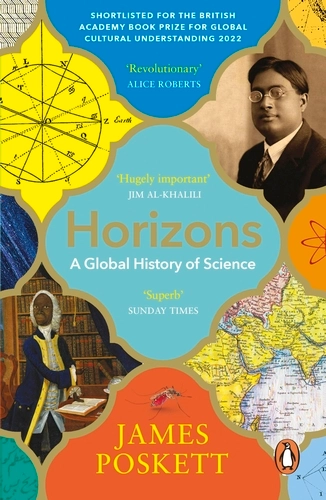
James Poskett has written a global history of science in a readable way that will appeal to those interested in either history or science. He takes big themes from history, such as exploration, empire building, capitalism, Cold War and links what was happening around the world to how scientific theories  developed. He demonstrates how the wisdom of the indigenous people in new worlds influenced scientific discovery. The ingenuity of Pacific navigators is astonishing.

In this major retelling of the history of science from 1450 to the present day, James Poskett explodes the myth that science began in Europe.

The blinkered Western gaze focusing on individual 'genius' - Copernicus, Newton, Darwin, Einstein - was only one part of the story. The reality was an utterly global, non-linear pattern of cross-fertilization, competition, cooperation and outright conflict. Each rupture in history carved fresh channels for global exchange.

Here, for the first time, Poskett celebrates how scientists from Africa, America, Asia and the Pacific were integral to this very human story. We meet Graman Kwasi, the African botanist who discovered a new cure for malaria; Hantaro Nagaoka, the Japanese scientist who first described the structure of the atom; and Zhao Zhongyao, the Chinese physicist who discovered antimatter.
9780241986264-jacket-large 'Hope: The Autobiography' by Pope Francis

Recommended by Carol Burns

THE GLOBAL BESTSELLER

The ground-breaking, intimate and inspiring memoir from Pope Francis.

Books of the Year 2025: The Times, Telegraph, Guardian, Independent, Financial Times, New Statesman

'Remarkable' Guardian

'Elegant and joyful' Financial Times

Pope Francis originally intended this exceptional memoir to appear only after his death, but the needs of our times and the 2025 Jubilee Year of Hope moved him to make this precious legacy available sooner. Now, the book stands as his testament; the spiritual, faith-filled, as well as moral, social, and civic legacy that he envisioned and left for the benefit of all the men and women of the world.

HOPE is the first autobiography in history ever to be published by a Pope. Written over six years, this complete autobiography starts in the early years of the twentieth century, with Pope Francis’s Italian roots and his ancestors’ courageous migration to Latin America, continuing through his childhood, the enthusiasms and preoccupations of his youth, his vocation, adult life, and the whole of his papacy up to the present day.

In recounting his memories with intimate narrative force (not forgetting his own personal passions), Pope Francis deals unsparingly with some of the crucial moments of his papacy and writes candidly, fearlessly and prophetically about some of the most important and controversial questions of our present times: war and peace (including the conflicts in Ukraine and the Middle East), migration, environmental crisis, social policy, the position of women, sexuality, technological developments, the future of the Church and of religion in general.

HOPE includes a wealth of revelations, anecdotes and illuminating thoughts. It is a thrilling and very human memoir, moving and sometimes funny, which represents the ‘story of a life’ and, at the same time, a touching moral and spiritual testament that will fascinate readers throughout the world and will be Pope Francis’s legacy of hope for future generations.

HOPE: The Autobiography by Pope Francis 'Drawn to Imperfection' by David Painting

Recommended by Sara Forrest

This beautifully illustrated book takes stories from the Bible and reframes them in a way that shows us imperfect people like us experience God’s love and compassion. I read it at one sitting and can see myself re-reading it again and again.

Through imaginative storytelling and evocative artworks, Drawn to Imperfection offers an engaging and accessible invitation into the story of the Bible.

Bringing 21 biblical characters to life, each story reveals the gritty humanity of people who lived long ago, yet their struggles and triumphs are strikingly familiar to our own.

As we uncover who God was to these individuals, we are invited to see Him anew in the complexities of our everyday lives. This book is not just about understanding the Bible better; it’s about encountering the heart of God in a more intimate and honest way.

With beautifully crafted portraits and thoughtful retellings, Drawn to Imperfection will:

  • Offer a fresh perspective on the Bible’s big story.
  • Inspire a deeper, more authentic relationship with God.
  • Encourage you to live with greater freedom and deeper connection.
Pick up Drawn to Imperfection today, and embark on a journey through ancient stories that speak timeless wisdom into modern life.

6123WUH3E7L._SY522_ ‘The finest Hotel in Kabul’ by Lyse Doucet

Recommended by Carol Burns

A must-(and enjoyable)read if you want to find out about the history of Afghanistan over the last 50 years.

When the Inter-Continental Kabul opened in 1969, Afghanistan’s first luxury hotel symbolised a dream of a modernising country connected to the world.

More than fifty years on, the Inter-Continental is still standing. It has endured Soviet occupation, multiple coups, a grievous civil war, a US invasion and the rise, fall and rise of the Taliban. History lives within its scarred windows and walls.

Lyse Doucet, the BBC’s Chief International Correspondent, has been checking into the Inter-Continental since 1988. And here, she uses its story to craft a richly immersive history of modern Afghanistan.

It is the story of Hazrat, the septuagenarian housekeeper who still holds fast to his Inter-Continental training from the hotel’s 1970s glory days – an era of haute cuisine and high fashion, when Afghanistan was a kingdom and Kabul was the ‘Paris of Asia’. It is the story of Abida, who became the first female chef to cook in the Inter-Con’s famous kitchen after the fall of the Taliban in 2001. And it is the lives of Malalai and Sadeq, the twenty-something staff who seized every opportunity offered by two decades of fragile democracy – only to witness the Taliban roaring back in 2021.

The result is a remarkably vivid history of how Afghans have survived a half century of destruction and disruption. It is the story of a hotel but also the story of a people.

The Finest Hotel in Kabul: A richly immersive history of Afghanistan from the BBC's Chief International Correspondent 'Growing Brave' by Donna Ashworth

Recommended by Sara Forrest

Donna Ashworth has a large, loyal on-line following but as I didn’t use social media I discovered her through her poetry on Radio 4.  I bought Wild Hope and regularly dip into it when I feel a little lost in the messiness of life.  Bereaved friends had been given copies by their friends and  found it helpful so I have given a couple of copies away too.  Growing Brave is similarly reassuring when reassurance is what you need.  I haven’t seen her new book Joy Chose You but I suspect that that will appear on my bookshelf soon.

In this powerful new collection of wisdom and poetry, Donna Ashworth helps us to find strength and courage on the days we feel lost, to pick ourselves up when times are hard, to soothe fear and self-doubt when we are in their grip, and to let in more life and love as we brave our challenges.

Every day we are bombarded by thoughts, feelings and information that make us feel anxious and afraid. We worry we don't measure up, we are scared of failure and we find it hard to be ourselves. We also feel powerless watching the world getting messier. Fear is a limiting factor for many of us and if we don't challenge it we can find ourselves keeping out more of the good stuff in life than the bad.

With poems such as 'One Day You'll See', 'Growing in Moonlight', 'The Comparing' and 'Always There', bestselling author Donna Ashworth helps us to see that whatever we are facing, no matter how small or afraid we feel, we make the biggest difference in this world and to our own happiness when we are brave enough to show up as ourselves.


61QiAhjFbhL._SY522_ 'Domination' by Alice Roberts

Recommended by Sara Forrest

I haven’t yet read Alice Roberts new book about the spread of Christianity as I anticipate that it will be a Christmas present.  I enjoyed The Celts which she wrote to accompany a TV Series. In that she explains how the archaeological record suggests the spread of Celtic culture up the Atlantic Coast and separately across mainland Europe predominantly through trade and migration to support trade rather than invasion.  Her style is easy to understand and accessible. This is the story of the fall of an Empire – and the rise of another.

Who spread Christianity, how, and why? In her quest to find the answer, Professor Alice Roberts takes us on a gripping investigative journey. From a secluded valley in south Wales to the shores of Brittany; from the heart of the Roman Empire in a time of political turmoil to the ancient city of Corinth in the footsteps of the apostle Paul; from Alexandria in the fourth century to Constantinople.

As the Roman Empire crumbled in Western Europe, a shadow of power remained, almost perfectly mapping onto its disappearing territories. And then, it continued to spread. Unearthing the archaeological clues and challenging long-established histories, Professor Roberts tells a remarkable story about the relationship between the Roman Empire and Christianity.

Lifting the veil on secrets that have been hidden in plain sight, this story is nothing short of astonishing.

Domination is a page-turning exploration of power and its survival.

91kadYdp2iL._SY522_ 'Ted the Shed' by Mandy Sutter

Recommended by Sara Forrest

My husband chose this on a recent visit to our local Bookshop (Trumans Books, Farsley).  It’s written by Mandy Sutter (another writer on social media writer) and is a fond biography of the last year’s of her dad’s life when she needed his help with her new allotment.  

When Mandy’s Dad finally makes it to the top of the allotment waiting list aged 87, he is offered an unpromising jungle of a plot. He tells his daughter that she has always dreamed of having an allotment and a gardening relationship begins, full of resentment, disappointment and potatoes that grow large enough to appear on Google Earth.

John picked it up and started reading while he drank his coffee and he decided it was worth buying (a change from science fiction or crime). It’s a celebration of the life of someone who was well-loved. Her wry observations reduce the sentimentality. I  enjoyed it too and suspect that many people who enjoy growing things would enjoy an afternoon’s escape into its pages.


ted-the-shed-mandy-sutter

9 Dec – The Loud Silence

THE LOUD SILENCE 

This is the title of a new half hour documentary that had its premiere on 4th December as part of the Leeds Palestinian Film festival. The premiere was held at All Hallows church in the Burley area of Leeds and was attended by about 80 people. The film has been made by Juman Quneis, a Palestinian filmmaker from Ramallah in the West Bank, who is currently studying in Leeds. 

20251204_194345 She recounts that the idea for the film came about when she was just walking through central Leeds on a Tuesday lunchtime and was intrigued to see a Palestinian flag. When she moved closer, she saw that it was a group of women, all dressed in black, with banners saying ceasefire now’ and ‘stop the genocide’. This was the Leeds Women in Black group who hold an hour-long silent vigil every week in Dortmund Square. After talking with some of them, the idea of making a film about the individuals who take part in the vigil took root. She was surprised by the level of knowledge about the Palestinian struggle and that women living so far away and with little, if any, direct connection to the Middle East should commit themselves to doing this on a regular basis. The result is a well-crafted and insightful look at the background to the motivations and thinking of the women who set up this group. 

At the start there were often less than a dozen women taking part. Nowadays the numbers have grown to between 30 to 40. Members of the Leeds Diocese Pax Christi often are part of the vigil and one, Carol Burns, is interviewed in the film. 

Juman and Carol Juman and Carol Juman is enthusiastic about showing this film to, in particular, Palestinian women's groups. She wants people in Gaza and the West Bank to know that there are others across the world who stand in solidarity with them as they suffer the ongoing injustices inflicted on them by successive Israeli Governments. 

This film will shortly be available for use as a discussion starter point for any groups who want to explore both what is happening in Israel Palestine and to explore how change happens (what is the point of a silent vigil?).

Details will be available soon. 

30 Nov – I hadn’t expected to be inspired, but I was!

Israel-Palestine: Where is the Hope?

By John Duffy, parishioner of the Good Shepherd, Mytholmroyd

"I hadn't expected to be inspired, but I was!" said an attendee at this event.

About 30 people, including several from outside the parish, came to this talk at Good Shepherd, Mytholmroyd by Janet Symes, who has lived in Palestine and worked there as Head of Region for both CAFOD and Christian Aid.

Janet Symes Janet Symes Janet gave us a brief history of the decline of hope and trust following the the Oslo Agreement in 1993, with Palestinians in Gaza and the West Bank experiencing growing restrictions and disruptions, affecting civil society, community cohesion and family lives. Strong resilience helped them cope and kept hope and resistance alive, but lack of international support and sympathy led to greater reliance on armed resistance, which lead to more Israeli repression.

The atrocities carried out by Hamas on October 7th shocked Palestinians and led to the genocidal campaign in Gaza, and the growing assaults on the West Bank. There are powerful international forces, from USA to Gulf oil states, whose influences critically affect the Palestinian people, and the entrenched Israeli government ignores calls for restraint and peace from within Israel.

So where is the hope?

In the spirit of resilience within Palestine, in international solidarity – demonstrations, boycotts, pressure on politicians, discussions, aid and prayer.

Two participants summarised the spirit of this meeting:

"What I took away from Janet's clear, calm, balanced and compelling talk was that hope is kept alive when people resiliently work together for peace, for mutual understanding, and in providing care for their neighbours but that such hope is vulnerable to the fear and/or reality of finding oneself forgotten, abandoned, isolated. We have a moral obligation to maintain focus on the conflict in Israel Palestine and to demand fair dealing from our political leaders and attention to international law."

"The talk was inspirational, it's so easy to feel anger at the atrocities that are happening in Gaza (and the West Bank) but Janet talked in such a calm and reasoned way giving real examples of the day to day lives of all people in this troubled part of the world. She made made a big impression on me."

The Church of the Good Shepherd, Mytholmroyd The Church of the Good Shepherd, Mytholmroyd