One of the greatest gifts my mother gave me very early in life was the ability to read. I could read before I got to primary school at five, but, regrettably,was a disruptive child in the class until a teacher, to whom I'm eternally indebted, pulled me out and sent me with an exercise book and pencil to the public library to study on my own for a day. It couldn't happen now of course but that day inculcated in me a lifelong love of libraries and books.
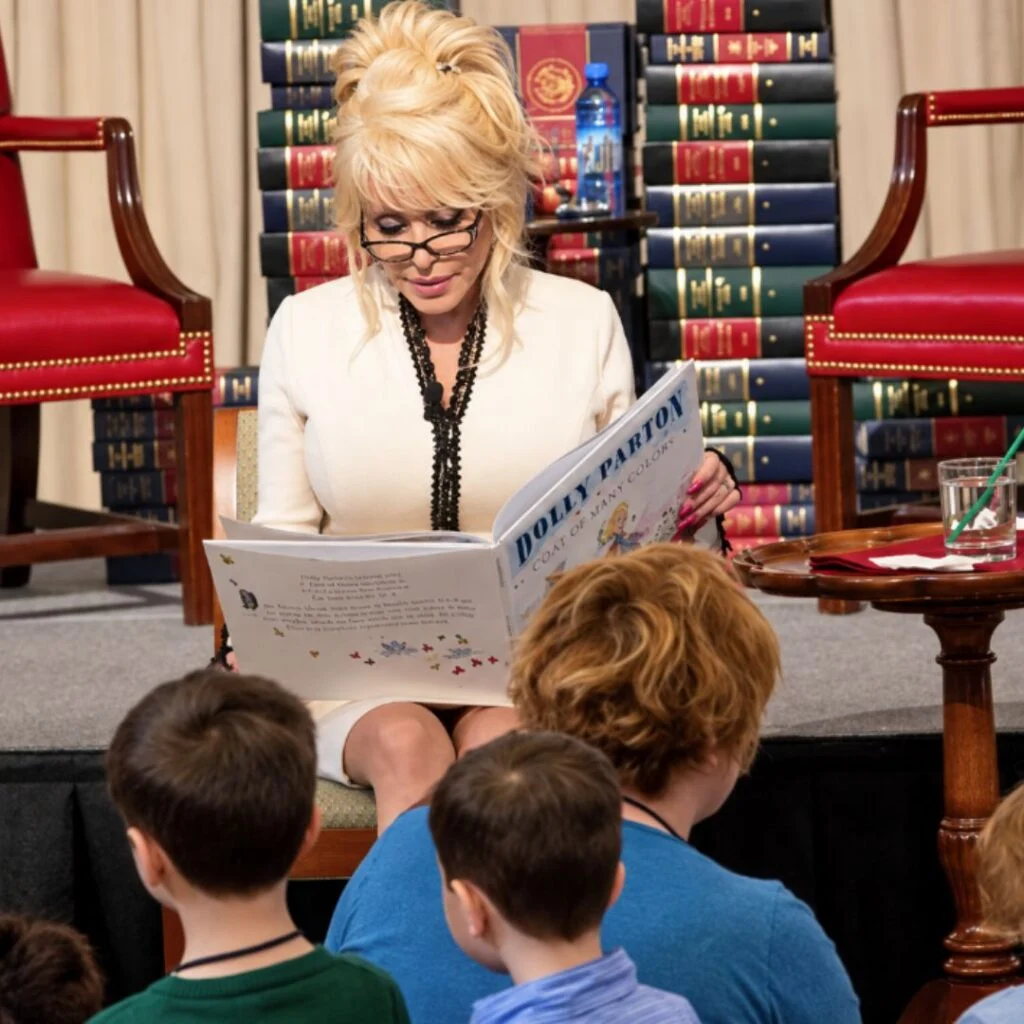
Amid the usual bleak news and daily tragedies this last month emerged an enheartening story in the reports of the death of the country singer Dolly Parton. She founded a charity the "Imagination Library" in honour and memory of her Father who was illiterate, that distributes free books to children from birth to the age of five.She started it in her home of Tennessee and it has since delivered over 300 million books worldwide, including supporting a reading project in Doncaster in the UK. The Imagination Library has been described as the biggest philanthropic contribution to literacy since Andrew Carnegie's libraries.
Here the award screen and children's writer Frank Cottrell Boyce, who from 2024 was the children's laureate, has made a huge contribution to encourage in reading, not least through the charity The Reader Organisation, championing a return to books for young people in the digital age.
Paradoxically, this is in the face of huge increases in the number of books published. In the UK over 177,000 books a year are now published, the largest expansion since 2005. Some 190 million books were sold in the UK in 2025, yet there has been a real decline in the sustained voluntary reading of printed books. In the USA, only 45% of the population read at least one book a year. a decline from 61% in serious and leisure reading, though there has been a move to audio and e-books.
In the UK, it is children's reading that is in serious decline.The National Literacy Trust spells out that since 2005, it has fallen from 38.1% to 18.7%.
Fewer young people are picking up books and are rather fixed onto their digital devices and screens watching videos, gaming, streaming, podcasts and sometimes e-books and audiobooks.
In 1985, Neil Postman in "Amusing Ourselves to Death: Public Discourse in the Age of Showbusiness" warned of the impact of TV on our society's abilities to be attentive. Now social media has greatly amplified the impact of the delivery of quick, short time attention 'moments', presented in bite-size chunks. James Marriot cites the prescient remark of the 18th century literary giant Samuel Johnson: "People in general do not willingly read if they can have anything else to amuse them."
Interestingly, Marriott goes on to refer to the work of Fr Walter J Ong SJ whose "Orality and Literacy: The Technologising of the Word" (1982) suggested that without writing and reading societies become "agonistically programmed", with an inherent bias towards confrontation. Walter Ong wrote "not only in the use to which knowledge is put but also in the celebration of physical behaviour, oral cultures revealed themselves as agonistically programmed", that is as competitive and contest orientated. He proposes that reading and writing "foster abstractions that disengage knowledge from the arena were human beings just struggle with one another".
Reading therefore can be an antidote to conflict and violence.
The American writer George Saunders suggested that:
"reading is a form of prayer... a guided meditation that briefly makes us believe we are someone else, disrupting the delusion that we're permanent and at the centre of the universe... suddenly (we're saved), other people are real again and we're fond of them.".
The idea of "reading as prayer" is long-standing in the Christian tradition.
Erasmus regarded reading the Gospel as a form of prayer, as through the text Christ becomes present to the reader. The ancient prayerful practice in the Church of "Lectio Divina", with its roots in early monasticism, encourages us to treat reading as prayerful reflection on the Scriptures, and to treat the text not as a source of new knowledge but as a personal transformative interaction. Of course it matters what material we read but perhaps it's a time to turn again to quiet personal reading of the Scriptures as a contribution to the continuation of the practice of reading.
The last few weeks have featured the seasonal reporting of the exam results for the majority of the 16 and 18 year olds in the UK. Great fuss is made of the improving results and the joy of those who have achieved the grades they wanted. But what about those who are disappointed? Yesterday, following the death of Dolly Parton, reporting was about literacy and the high number of adults in the UK who struggle to read.
State education was introduced to enable those from poorer backgrounds to increase their learning and earning. Yet after 100+ years it is apparent that the exam results achieved in the poorer areas in the country significantly lag behind those in more affluent areas. Why is this so? One reason may be that the exam Boards were originally created by Universities to enable them to select on merit those who would benefit most from their ongoing studies. There was a system of vocational qualifications established by different industries and occupations and employers expected their new staff to complete such occupational qualifications.
In my day 1 in 10 18 year olds went onto further academic study. 1 in 6 students were girls. Now a much higher proportion of 18 year olds continue to study and the gender split is approximately 50/50. Major employers and the Forces would sponsor the brightest students who would gain work experience in vacations and be expected to join their workforce for a period post graduation.
But many occupational qualifications, such as teaching, physiotherapy, radiography, nursing and other public sector jobs now require a degree. Yesterday a women explained how she felt ‘thick' at school because she struggled to read, but having raised her children she wanted to be a midwife so she went to the local college and spoke to them. They helped her to improve her reading and do an access course and she is now a midwife. Two of my daughter's friends who received Educational Maintenance Allowance due to low family income, went to University to do Childhood Studies. They graduated with Student Debt. On graduation one decided to work in a Nursery, the other as a Teaching Assistant. They then did courses at FE College that they could have done at 18……..
Not everyone thrives in the education system but that is not a reflection of their ability to do a professional job.
I think there is a dissonance between a system that aims to produce great academic results to age 18, defining and measuring and monitoring the achievements of each pupil and within which the teachers are adamant that such a judgemental regime, OFSTED, should not apply to their performance. Seems hypocritical to me. I ran many courses for managers regarding performance management and the accent was always on identifying an individual’s strengths and assigning work that played to those strengths. It marries knowledge and skill but still recognises that within the workplace there is some flexibility on how a task is done. It was so important that everyone felt their worth was recognised so they were motivated. It seems to me that our education does not create that sense of worth which can lead to disengagement.
About 15/20 years ago Julie was made redundant from her job managing a team of 50 people. She found work as a learning mentor in a senior school and loved it. One of the teachers encouraged her to qualify as a teacher and get paid more. She decided to go to University and do a degree in Business Studies followed by a Post Grad Certificate of Education. She was puzzled when she attended the interview for the PGSE because the first stage was that she was asked to write the story of her journey to the interview. She did so. At the end of the interview she was asked if she had any questions, she queried why she had been asked to write the story. She was told that it was a good way for them to weed out the graduates who could not write in grammatical sentences and explain something simple in good English!
About 20 years ago when I worked in the security industry, at the time it was believed that about 25% had poor literacy, we used that test on job applicants to check that they would be able to read enough to pass the mandatory test that they needed to go on site and work.
Gary left school at 16 to work on a factory production line. He decided to do Maths and English GCSEs when his children started secondary school. A College tutor recommending he considered a teaching degree via an Access Course as he felt he had the ability to be a good teacher. He went to Uni and spent some time as a primary school teacher.He now works in an FE College teaching the students whose English and Maths is holding them back from passing their occupational qualifications. He uses the same techniques as were used in their primaries but these pupils can be more motivated to learn once they see the purpose of such learning.
Our system is failing too many of our young people. I pray that the discussions around the work being done by Aslan Milburn will continue to look at the way the whole system works and gain the traction and funding needed to create pupils who understand their worth, their abilities and what motivates them so that they can progress to adulthood feeling engaged in society and positive about their future.
For the Season of Creation come and find out why we must take more action to take better care of our Common Home.
SPARK Social Justice and the Leeds Diocesan J&P Commission is hosting a community screening of The People’s Emergency Briefing, a vital 50-minute documentary unpacking the latest scientific evidence on the climate and nature crisis.
The climate and nature crisis is already reshaping life across the UK, but the solutions are in our hands. Getting involved is about building safer communities, cutting costs, and creating a better future.
If you care about
- local flooding
- Clean air
- The cost of living
- Food prices
You might want to catch this
An eye-opening film introduced by Chris Packam featuring leading UK scientists talking us through the impact of the climate and nature crisis on everyday life including:
- extreme weather
- food security
- health
- cost of living.
The screening will be followed by a short open discussion about what we can do and what this means locally– this film is only shown at in person screenings.
Bring a friend or neighbour, book your free seat asap (but please complete registration as numbers are limited). It is suitable for those aged 16+
Earlier this year, SPARK was fortunate to gain additional funds through the Assumption Legacy Fund, focussed on Catholic Social Teaching. This fits with our current priorities of social justice; climate change, local poverty, refugees and people seeking asylum and the rights of people to live in peace and free from racism.
Our work with young people is centred on enabling their voices to be heard. At SPARK, we want to listen and enable our members to actively participate in their local communities. We raise awareness of the local and national issues that matter to them and offer support in finding local solutions. Our offer focuses on the personal development of each individual and on activities which are devised and directed by the young people. SPARK aims to create events that offer opportunities of enrichment, leadership and personal growth encouraging everyone to learn more about social justice and leading on action for change.
This new fund has allowed us to expand our existing work. Earlier this month we had our first parish session at St. Augustine of Canterbury. This is a lovely, welcoming parish in Harehills, home to a vibrant group of young people, who demonstrate strong leadership and enthusiasm.
In 2025, the parish made a conscious commitment to ensure that the voices of young people are heard as active contributors in their church and to nurture their personal growth.
Thanks to Fr Ghebreyesus and Cassandra James who leads the youth work in the parish, along with the team who helped on the day, we all had a memorable afternoon full of fun and pizza!
More sessions are planned and we are looking forward to working with the parish of St. Augustine.
In the world that we live in, full of disinformation and sound bites, how can we promote genuine communication and encounter in all areas, led by the Spirit of Truth?
We will be looking at how we challenge the disinformation, and the divisive rhetoric that is sweeping our nation (and indeed the world).
How can we have those difficult conversations and foster positive dialogue with those coming from a different mindset.
'Dialogue is not a tactic or a tool, but it's a way of life - a journey of the heart that transforms everyone involved, the one who listens and the one who speaks'
Our keynote speaker, booked some months ago, is Andy Burnham (currently Mayor of Greater Manchester). However, as of this present moment in time, we are unsure as to whether he will be able to come (who knows, he may be making a bid to be Prime Minister by then!).
Sir John Battle (former Member of Parliament for Leeds West) will be holding an Ecumenical Conversation on Engaging with Community Groups.
Billy Vaughan, Public Affairs Officer for the Quakers, will be speaking about the right to protest and how that relates to a different part of dialogue, freedom of speech.
We have some fantastic workshops lined up based around the theme of dialogue and communication:
1. The Information–Misinformation–Disinformation Triangle (Brian O’Toole)
Young people are growing up in a world where information is shaped by social media, fast-moving news cycles, algorithms, and increasingly by artificial intelligence.
Brian O’Toole will be leading an in-person NJPN workshop, which creates a supportive space for participants to explore how information, misinformation, and disinformation spreads online, and how these forces influence people’s understanding of truth. Participants will discuss real world examples, question digital content, and examine the role of algorithms and AI in shaping what we see and share online — including who may be exploiting social media and for what purposes. Through open conversation and guided reflection, the session aims to strengthen critical thinking, digital awareness, and a shared sense of responsibility as we navigate today’s complex and rapidly changing information landscape.
2. Resilience and Dialogue in Conflict Zones (Azad Hasan)
Azad Hasan is currently Project Coordinator at the Justice and Peace Refugee Project in Newcastle. He is also a PhD candidate at Durham University, School of Government and International Affairs. His research focuses on rebel governance, civilian agency, and everyday life in violent conflict.
Prior to his doctoral studies, Azad worked in humanitarian roles within refugee camps and as a freelance journalist in conflict-affected regions. His scholarly and professional interests centre on how civilians navigate protracted conflicts and demonstrate resilience in their everyday lives. Drawing on his fieldwork, in this workshop Azad will share some of his experience with us with particular focus on authentic dialogue in everyday life.
3. Deaf Awareness: The beauty of God’s Word in Sign Language (Joselyn Taylor and Peter McDonagh)
Joselyn Taylor and Peter McDonagh of the Catholic Deaf Association https://catholicdeaf.org.uk/ will give training in Deaf awareness and on communication strategies to improve access to church community especially for those for whom BSL is their first and /or preferred language.
This workshop will be an interactive dialogue. It will be practical, with a presentation. There will be opportunity for questions and answers, lip reading exercises and the opportunity to learn some basic sign language.
4. Having difficult conversations (Fay Pretty)
PeaceJam UK https://peacejam.org.uk/ presents an interactive workshop which will explore how can we can engage young people (and adults) in difficult conversations about the local and global issues that they witness and want to address but very often don’t know how. Including topics such as diversity, tolerance, social justice, conflict, and non-violence.
We will use Lego as communication tool and share our experience working in schools across the UK, providing practical tips to take away; as well as sharing PeaceJam's education programmes and teacher-friendly resources which draw on the lives of the Nobel Peace Laureates as positive role models for our children and teenagers.
5. From access to action: poverty and participation (Liam Purcell)
Our churches are at the forefront of social action to respond to the growing scandal of poverty in the UK. But too often, churches treat people in poverty as passive recipients of charity. If we respect the dignity and agency of every person, and stand alongside people in solidarity, we can do much more to tackle the injustices that are at the root of poverty.
Hear about ‘Sharing Power to Shape Mission’ – a Church Action on Poverty programme which enabled dialogue and relationships between church leaders and church members who have direct experience of poverty. We’ll share skills and approaches that can help church projects to ensure everyone is heard and has a chance to take part.
The workshop will be led by Liam Purcell, Chief Executive of Church Action on Poverty (www.church-poverty.org.uk).
6. Language and Racism (Margaret -Ann Fisken)
This workshop examines the role language plays in naming, normalising, and challenging racism.
Together we will explore common terms, phrases, and narratives—both secular and church-based—and how they can unintentionally reinforce racial injustice.
Grounded in a Christian commitment to truth and love of neighbour, the session will offer practical tools for speaking about race with greater clarity, humility, and faithfulness.
7. Interfaith dialogue – for justice and peace (Barbara Butler)
This workshop will present interfaith dialogue as a necessary contribution towards the creation of understanding and peace between people of the world faiths in the UK and around the world.
It will enable participants to explore how to engage with people of other faiths and beliefs, to listen to other world views than their own and to share. There will be examples of good practice and a power point presentation.
8. Forces Watch (Emma Sangster)
With the international tensions and conflict of recent years, demands for more 'hard power', higher levels of military spending and preparation for war against Russia have gained prominence.
The government's 2025 Strategic Defence Review laid plans for the defence industry to become an 'engine for growth' and for the 'whole of society' to be mobilised. This workshop will look at political and media narratives around 'defence' and the role they play in normalising military approaches to conflict and discuss how we can continue to foster cooperative approaches and a wider understanding of common security.
It will be led by Emma Sangster from ForcesWatch which investigates and raises awareness about militarism in the UK, with a focus on civil society and young people.
9, Dialogue, AI, and the Future of Advocacy (Andrea Speranza - CAFOD)
Pope Francis has warned of the risk of becoming “rich in technology and poor in humanity” if we lose the “wisdom of the heart.”
This session will explore the Church’s teaching on AI and how, in a world marked by the rapid rise of Artificial Intelligence, human dialogue can become a radical act for social change.
We will also discuss how, in a time of growing political tension, as people of faith, we can bridge the gap between “we” and “them,” ensuring that our message for social justice remains not only loud and clear, but above all, genuinely human.
10. A time to talk with our head, heart and hands: An OutoftheBox story (Helen Bell)
The workshop will be experiential and interactive. It will share a story on sand using simple materials from the box and natural materials.
The group will be invited to participate in the story and to seek wisdom from their own stories, the collective wisdom of the group, and to be open to new wisdom from that which lies beyond. The process is “light yet deep” as participants are encouraged to be playful and curious, whilst open to discovering new insights and “aha moments,” both for themselves and for their contexts.
Booking Information
In the spirit of inclusivity, one of the workshops will be run by members of the Catholic Deaf Association, and BSL Interpreters will be covering the main sessions. (Members of the Deaf Community will be very welcome at our Conference - please pass this on to anyone Deaf or Hard of Hearing who may like to join us).
Arrivals are from 3pm on the Friday, until after lunch on the Sunday. In the cost you get ALL meals, including unlimited tea/coffee; plus we are offering a Wine Reception on the Friday evening to open our very popular 'Just Fair' - which showcases the best in social justice organisations.
Adult places are £300 for the whole weekend, and there are reductions for children and young people, plus those on low incomes. Don't let cost put you off - speak with Sharon (admin@justice-and-peace.org.uk) as there may be some help available.
Leeds Justice and Peace Commission may also be able to offer financial support to an applicant who is living or working in the Diocese of Leeds.
If you are interested in justice and peace issues, want to talk with people who share a common interest - and really just want to make the world a better, more peaceful place, to live in - this is the place to be.
We are sadly saying farewell to two members of our Catholic Young Men’s Group, who are joining religious orders. One young man originally from Ireland is joining the Dominicans and one member from Lithuania is joining the Jesuits in Austria.
As often happens, all the best ideas in SPARK come from our membership and the idea for the Men’s Group came from a synodal listening event we hosted in February last year. Listening to SPARK Voices is a key part of what we do, and the theme of “What could the Diocese of Leeds do for young Catholic men?” was also chosen by a member of our Faith and Friendship group.
The mixed gender discussion observed that social networks in church were often aimed at women, with limited appeal for men “there is a lack of comfort for men in the spaces that exist”. An overwhelming theme emerged from these and other consultations, young Catholic men were looking for a feeling of belonging “a fraternity, somewhere to share our faith”.
The final report was circulated to the Diocesan Justice and Peace Commission who lead SPARK and to the Bishop of Leeds. Bishop Marcus unexpectedly called into our Faith and Friendship group to hear what the SPARK members might want to share with him directly. This visit, alongside the feedback from the Commission was really valued by everyone who had contributed their views. So, fast forward to where we are now …. as a result of these discussions a regular group was curated by our SPARK member, Conor. We continue to host and support these gatherings in the lovely venue of Hinsley Hall and discussions around faith, fraternity and connection are an integral part of every occasion.
We send Stephen and Laurynus all our prayers from SPARK and the Justice and Peace Commission as they dedicate their lives to God’s work. This is such a significant milestone for them both in their spiritual journey and perhaps being part of a group of peers, sharing their Catholic identity, offered an opportunity in their discernment to combine reflection, prayer and dialogue. Their faith and perseverance have brought these young men to take this meaningful step; their warmth, devotion and compassion will make them both valued members of these communities.
If you would like to hear more about the work we do, or you think you have a good idea and would like some help to make this happen, just get in touch and have a chat.
I had a lovely visit to the parish of St Augustine of Canterbury in Harehills on Sunday.
The Youth Mass was a joy; young people led the readings and responsorial psalm and sang solo with skill and confidence. Some spoke of their own experiences of faith in moving testimonies, including a young man who had not been raised in a faith background but had recently found his place in the community of St Augustine. The church offers specific masses for Zimbabwean, Ukrainian, Portuguese and Nigerian parishioners as well as the whole community.
After Mass, team building activities for all ages were led by the irrepressible energy of Cassandra James, a recent and welcome addition to the J&P Commission. I spoke to a number of parishioners who all spoke of the diversity and family sense of this parish, the young people were repeatedly assured that as the light of the world they were the future of the church, and they would be the leaders to come.
My happy place is never behind a microphone at the front of a crowded hall, but in response to a request from Cassandra I spoke briefly about our work. There were several young adults from Notre Dame and at university and our leaflets may lead to further conversations.
It was a joy filled occasion which truly celebrated the place of young people at the centre of this parish. An example to those across the Diocese who say it is hard to involve young people and teenagers … come to St Augustine’s or talk to Cassandra!
Come and join others in their 20’s and 30’s to explore Pope Leo’s first key document, Dilexi Te, ‘On Love for the Poor’, over drinks each Thursday.
The sessions, which will run over 6 weeks, will include prayer, have a little input giving an overview of the chapter (in case you only got the chance to skim it) and allow time for sharing reflections with others in small group. While we’ll be taking the document seriously, and what it’s asking of us as individuals and as a Church, but the atmosphere will be relaxed, informal and hopefully enjoyable! So sign up and come to as many as you can make.
Dilexi Te, ‘On Love for the Poor’, is a document started by Pope Francis, and completed by Pope Leo that helps us better appreciate “the close connection between Christ’s love and his summons to care for the poor”, a summons that Pope Leo recognises not all take as seriously as we should.
Sessions will be on zoom from 7-8.15pm from the 30th of April and each week until the 4th of June.
Continuing the theme of ‘Shining a Light’ on issues of concern, you are warmly invited to attend an open meeting hosted by the National Justice and Peace Network (NJPN)
There will be input from Professor Peter Jackson, Co-Director of the University of Sheffield Institute for Sustainable Food and from local community projects.
There will be opportunity for discussion about justice and peace activities from around the country, including suggestions on practical ways of becoming involved in campaigning for peace and social justice.
SPARK are offering full or part bursaries to people under 30 living in the Catholic Diocese of Leeds, with a closing date of 30 April for anyone interested to have got in touch.
‘Just Talk’
In a world of disinformation, sound bites and echo chambers, our conference will explore how we promote genuine communication and encounter through areas such as the media, arts, education, diplomacy and political engagement led always by the Spirit of Truth.
Our aims
- to increase participants understanding of how language and other forms of communication are used or misused in our current context
- to help participants challenge disinformation and divisive rhetoric, change narratives, foster dialogue and encounter, and speak truth to power.
In celebrating 60 years of Nostra Aetate Pope Leo XIV said the document
“opened our eyes to a simple yet profound principle: dialogue is not a tactic or a tool, but it's a way of life – a journey of the heart that transforms everyone involved, the one who listens and the one who speaks.”
Key details
A full or part funded bursary is available, dependent on the number of applicants
24th to 26th July 2026 title “Just Talk” at The Hayes Conference Centre, Swanwick, Derbyshire
Applications for a bursary or support with travel costs must be received before the closing date of 30 April.
JUST FAIR
To open our ‘Just Fair’ on Friday evening we will be hosting a Fair Trade Wine Reception. This is a great way to get to renew old acquaintances, as well as make new ones.
There will be more than 20 stalls, with different agencies displaying resources/selling goods, as well as information and ideas about practical action throughout the weekend.
This year, there will be a choice of meat or vegetarian at all meals. We would encourage you to choose the vegetarian option if you can, following our environmental principles and in the main being better for the planet.
We do ask, though, that you make it clear when booking if you will be following a Vegetarian diet so that we can pass the information onto the Hayes. Please also advise when booking of any dietary intolerances to enable the Hayes to cater adequately for you.
CHILDREN AND YOUNG PEOPLE
Children and young people are a vital part of the NJPN conference. There will be a programme of activities for 5 to 11 year olds. 12 to 16/18 year olds will explore the conference theme in an active and thought provoking weekend.
NJPN is committed to the protection of children, young people and vulnerable people. People of all ages and backgrounds are welcome and encouraged to attend conference.
Manage Consent
To provide the best experiences, we use technologies like cookies to store and/or access device information. Consenting to these technologies will allow us to process data such as browsing behaviour or unique IDs on this site. Not consenting or withdrawing consent, may adversely affect certain features and functions.
Functional
Always active
The technical storage or access is strictly necessary for the legitimate purpose of enabling the use of a specific service explicitly requested by the subscriber or user, or for the sole purpose of carrying out the transmission of a communication over an electronic communications network.
Preferences
The technical storage or access is necessary for the legitimate purpose of storing preferences that are not requested by the subscriber or user.
Statistics
The technical storage or access that is used exclusively for statistical purposes.The technical storage or access that is used exclusively for anonymous statistical purposes. Without a subpoena, voluntary compliance on the part of your Internet Service Provider, or additional records from a third party, information stored or retrieved for this purpose alone cannot usually be used to identify you.
Marketing
The technical storage or access is required to create user profiles to send advertising, or to track the user on a website or across several websites for similar marketing purposes.




 The People’s Emergency Briefing
 Hinsley Hall, Headingley, England


 We send Stephen and Laurynus all our prayers from SPARK and the Justice and Peace Commission as they dedicate their lives to God’s work. This is such a significant milestone for them both in their spiritual journey and perhaps being part of a group of peers, sharing their Catholic identity, offered an opportunity in their discernment to combine reflection, prayer and dialogue. Their faith and perseverance have brought these young men to take this meaningful step; their warmth, devotion and compassion will make them both valued members of these communities.
 After Mass, team building activities for all ages were led by the irrepressible energy of Cassandra James, a recent and welcome addition to the J&P Commission. I spoke to a number of parishioners who all spoke of the diversity and family sense of this parish, the young people were repeatedly assured that as the light of the world they were the future of the church, and they would be the leaders to come.
 It was a joy filled occasion which truly celebrated the place of young people at the centre of this parish. An example to those across the Diocese who say it is hard to involve young people and teenagers … come to St Augustine’s or talk to Cassandra!

