SPARK Social Justice and the Leeds Diocesan J&P Commission, with the support of the Diocese, is hosting a community screening of The People’s Emergency Briefing, a vital 50-minute documentary unpacking the latest scientific evidence on the climate and nature crisis.
The climate and nature crisis is already reshaping life across the UK, but the solutions are in our hands. Getting involved is about building safer communities, cutting costs, and creating a better future.
If you care about
local flooding
Clean air
The cost of living
Food prices
You might want to catch this
An eye-opening film introduced by Chris Packam featuring leading UK scientists talking us through the impact of the climate and nature crisis on everyday life including:
extreme weather
food security
health
cost of living
The screening will befollowed by a short open discussion about what we can do and what this means locally– this film is only shown at in person screenings.
Bring a friend or neighbour, book your free seat asap (but please complete registration as numbers are limited). It is suitable for those aged 16+
https://www.eventbrite.co.uk/e/the-peoples-emergency-briefing-tickets-1996041406579
From LSI MOVEMENT - resources to prepare parish hearts for the September Season of Creation: Begin with the Heart - then solar panels!
by Christina Leaño, Associate Director, Laudato Si' Movement
The world feels thirsty.
We see it in communities facing heat waves, floods, and conflict. But perhaps we feel it within ourselves too—a longing to slow down, to listen, and to rediscover God's presence.
Before we prepare for the Season of Creation, God invites us to prepare something even more important: our hearts.
Begin with the Heart
Our newest Dilexit Nos reflection reminds us that compassion doesn't begin with doing more—it begins by stopping.
In the silence of prayer, Christ renews our hearts so we can respond to the suffering of creation with hope instead of exhaustion. Explore the new reflection and Parish Guide to help your community grow together this summer.
That is the invitation of the Season of Creation 2026. Living Water begins long before September—not with planning events, but by allowing God's grace to flow through us into our families, parishes, and communities.
Our new reflection and Celebration Guide will help you begin that journey today.
As we continue this journey together, we are grateful for everyone who sustains the mission of Laudato Si' Movement. If you are able to support this work, we invite you to kindly make a gift.
Thank you for walking this journey with us.
May Christ renew your heart, so that together we may become living water for our common home.
“Love is the will to extend one's self for the purpose of nurturing one's own, or another's spiritual growth”
M. Scott Peck
A lot has happened in my life in the last three months including the death of my beloved father and being made redundant. These two unexpected losses have really stopped me in my tracks, and made me consider my faith as well as my vocation as an artist and community organiser.
My parents were both great advocates of creativity and supported me and my two brothers study Fine Art at university and to use our creativity for the common good. My father and I recently published co-written poetry and enjoyed sketching together as a way to share the old, and ancient, stories from his childhood home on the shores of Lough Neagh, County Tyrone in the north of Ireland. I miss them both deeply, and whilst I am in the process of developing my artist practice as a freelancer I think of their belief in me that I should use my art and commitment to justice and peace for the benefit of others.
In taking some time to heal, I have read several faith, art and inspirational books including bell hooks’ bestselling book ‘all about love’ which is helping me put things into perspective and feel comforted by her words of wisdom.
‘all about love’ published in 1999, is a cultural critique and self-help book that diagnoses modern society as suffering from a pervasive ‘lovelessness’, driven in part by consumerism and in her writing, she argues that because society fails to define love properly or provide clear models for it, people struggle to build healthy connections.
It was released for sale when I was in my final year at Liverpool Hope Art College training to become a Fine Art printmaker, and I wish I had known about it back then, as so much of my creative practice would have dovetailed to her writing.
I was first introduced to bell hook’s work when researching for a creativity retreat I delivered called ‘Creativity Catalyst’ back in 2022 which reflected on the Christian church’s role in the trans-Atlantic slave trade, and later in a case study I commissioned in 2024 with Leeds Beckett University looking at creative pedagogies in a Leeds faith based school. The lead researcher, Dr Lisa Stephenson quoted bell hooks throughout her final report on children’s dispositions and capacity for love, hospitality and welcome expressed through drama, creative writing and sculpture.
bell hook’s writing has a gentle force to encourage community organisers like myself, to shed the overwhelming complexity and distractions of modern consumption. Through her own lived experiences she describe how we can free up the emotional and physical energy needed to truly care for, respect, and know others. “Simplicity strips away our reliance on excess, allowing us to be present.”
Her inspiration is not merely in her writing, as she opted not to capitalise the spelling of her name, hoping to keep the public’s focus on her work. But over her decades at the forefront of Black feminist writing, the punctuation choice became a constant curiosity.
I feel like making the decision to read ‘all about love’ has helped me to challenge my views linked to the popular notion that love is merely a feeling. Instead, she described love as an action, a choice and a commitment to nurture our own and one another's spiritual growth. Her vision resonates strongly with the Gospel commandment to ‘love your neighbour as yourself’ in and offers a powerful framework for anyone seeking to work for justice and peace. These words are foundational to Christian ethics and Catholic Social Teaching, especially the two pillars of solidarity and subsidiarity that help navigate my own decision making.
Looking back over the past quarter century since ‘all about love’ was published, I can see how my own understanding of agape, self-sacrificing, love has influenced my work in the Catholic Diocese of Leeds as Community Participation Coordinator for CAFOD for 7 years, and more recently as Faith and Creativity Lead at Leeds Church Institute. Whether supporting parish communities, engaging with campaigns for global justice, or creating spaces where art and faith meet, I have been drawn to the conviction that social transformation begins with relationships rooted in dignity, compassion and solidarity.
The call to ‘live simply’ has been another thread running through both my faith and professional life. For hooks, love requires us to challenge systems built on domination, greed and inequality. Similarly, Catholic Social Teaching reminds us that our choices have consequences for our neighbours, especially those living in poverty and those most affected by environmental destruction.
This connection became particularly evident through conversations around climate justice and climate racism. The communities who contribute least to climate change are often those who suffer its harshest impacts. I have delivered creativity retreats for clergy and lay faith leaders on climate racism using the inspiration of Yinka Shonibare’s ‘Hibiscus Rising’ which exposes the unequal burdens carried by poorer nations and marginalised communities, reminding us that environmental issues cannot be separated from questions of justice, power and human dignity. To respond faithfully requires more than concern; it requires love in action.
These themes have also found expression through the Art Theology Festival, where Leeds based artists Janet Freckleton and Luke Walwyn, theologian Dr Tasia Scrutton, Leeds Craftivists and local communities have explored how creativity can help us imagine more just and hopeful futures. Art has the unique ability to connect head and heart, helping us see our neighbours differently and inviting us into deeper relationships with one another and with creation itself.
As a young graduate from Liverpool Hope Art College, I was inspired by the ecumenical witness of Bishops David Sheppard and Derek Worlock, whose leadership in Liverpool demonstrated the transformative potential of faith working for the common good. Their commitment reflected the vision of the landmark report Faith in the City, which challenged churches to engage seriously with poverty, exclusion and urban injustice. Those influences helped shape my understanding that faith is not something lived privately but expressed through active participation in the life of our communities.
These insights also echo the teaching of Pope Francis in Laudato Si', where he reminds us that "everything is interconnected". Care for creation, concern for the poor, and commitment to the common good are not separate tasks but part of a single vocation to love.
As Francis writes,
"We are not faced with two separate crises, one environmental and the other social, but rather one complex crisis which is both social and environmental."
As I look ahead to the next stage of my journey, I remain grateful for the writers, church leaders, communities and colleagues who have helped shape my understanding of faith in action. Twenty-five years on from graduation in Fine Art I am still learning that the most important creative work we can do is to practise love, not as sentiment, but as a way of living that seeks justice that builds a more compassionate world for all. I will be leading creative retreats in September for clergy and lay faith leaders alike, using fine art techniques to encourage dialogue on some of the hardest to talk about social injustices facing our communities today.
Keep an eye on my Instagram for dates and booking information.
The Catholic Church’s commitment to racial justice and the dignity of refugees flows from its core belief that every human person is created in the image and likeness of God (Genesis 1:27). This truth underpins Catholic social teaching and has been consistently affirmed across generations—from Pope Leo XIII to Pope Leo XIV. Together, their teachings call the faithful to confront racism, defend the vulnerable, and respond to migration with compassion, justice, and solidarity.
Leo XIII, often regarded as the father of Catholic social teaching, laid the foundation in his 1891 encyclical Rerum Novarum. Although written in response to the challenges of the industrial revolution, it emphasized a universal principle: every person possesses inherent dignity that must be upheld in social structures. This teaching implicitly rejects racism and exploitation by insisting that no one can be reduced to a tool of profit or power. His vision of the common good continues to shape Catholic responses to inequality, discrimination, and displacement.
Later popes made this teaching more explicit. St. John Paul II repeatedly condemned racism as a grave sin that contradicts the Gospel and fractures the unity of the human family. He urged both personal conversion and systemic reform to overcome discrimination. For him, the Church must reflect the universality of Christ’s love, becoming a place where all peoples are welcomed and valued equally.
Benedict XVI developed this vision further in his reflections on migration. He stressed that migrants and refugees are not merely social or political issues, but persons endowed with rights and dignity. He called on nations to balance border control with moral responsibility. Migration, he argued, can be an opportunity for encounter and mutual enrichment when approached with respect and solidarity.
Pope Francis placed renewed urgency on these concerns. In Fratelli Tutti (2020), he famously described racism as a “virus” that persists in hidden forms and continues to wound society. He has also made the plight of refugees central to his papacy, urging the global community to “welcome, protect, promote, and integrate” migrants. His visit to Lampedusa in 2013 highlighted what he called the “globalization of indifference,” challenging the world to recognize and respond to the suffering of displaced people.
Leo XIV, has continued and deepened this trajectory, particularly emphasizing the dignity of migrants and the moral duty to respond. He has repeatedly stressed that refugees are not threats but brothers and sisters in need, insisting that “there is no justice without compassion”. He has appealed to world leaders to ensure that those fleeing persecution are given a “humane and dignified welcome” and reminded the faithful that “no one can turn a blind eye to those who are seeking protection and safety”.
In his broader teaching, Leo XIV connects migration with the Church’s mission and identity. He has described migrants and refugees as “missionaries of hope,” witnesses who reveal the resilience of the human spirit and the importance of trust in God. He also emphasizes that indifference is one of the greatest obstacles to justice, warning against a “globalization of powerlessness” in which people resign themselves to suffering instead of acting to alleviate it.
This echoes and develops Pope Francis’ earlier call to overcome indifference with a “culture of encounter.”
Racial justice and the defence of refugees are deeply interconnected in Catholic teaching. Refugees often face discrimination based on ‘race’, ethnicity, or religion, compounding their vulnerability. The Church insists that such exclusion is incompatible with the Gospel. Solidarity, a key principle of Catholic social thought, calls all people to recognize their shared humanity. As St. John Paul II explained, it is a firm commitment to the common good and the well-being of all, especially the most vulnerable.
Catholic teaching also insists that justice must address not only personal attitudes but also structural causes. War, poverty, environmental degradation, and inequalities, all contribute to forced migration. Pope Francis, in Laudato Si’, and Leo XIV in Magnifica Humanitas, both highlight the need to safeguard human dignity in the face of modern challenges, calling for systems that prioritize people over profit or power. These teachings reinforce the idea that lasting solutions require both moral transformation and institutional change.
The Church emphasizes the responsibility of every Christian. Supporting refugees, opposing racism, and advocating for just policies are not optional acts but essential expressions of faith. As Leo XIV teaches, the credibility of the Gospel depends on concrete acts of welcome and compassion toward those who are excluded.
In conclusion, from Leo XIII to Leo XIV, Catholic social teaching presents a consistent and evolving vision rooted in human dignity, solidarity, and love. The call to racial justice and the protection of refugees is central to this vision. In a world marked by division and displacement, the Church calls all people to recognize one another as brothers and sisters and to build a society grounded in compassion, justice, and the common good.
by Christina Leaño, Associate Director Laudato Si' Movement
"Come to me, all you who labor and are burdened, and I will give you rest." — Matthew 11:28
July invites us to slow down.
Before the Season of Creation begins, we are invited to pause, pray, and allow Christ to renew our hearts. Ecological conversion doesn't begin with a campaign or an event—it begins by encountering God's love.
This month, journey with us through prayer, reflection, and preparation.
Restores What Is Wounded
A Journey Inspired by Dilexit Nos
What is your heart carrying today?
The Sacred Heart of Jesus welcomes every burden, every wound, and every hope. Our newest Dilexit Nos reflection invites you to experience Christ's healing love through prayer, Scripture, and a beautiful video meditation.
As we prepare for the Season of Creation, let us first allow our own hearts to be restored.
At the Austrian World Summit, Lorna Gold joined faith leaders from different traditions to reflect on a simple truth:
The climate crisis is also a spiritual crisis.
Technology and policy matter, but lasting change requires transformed hearts, moral courage, and communities rooted in hope.
Inspired by Laudato Si' and Pope Leo XIV's Magnifica Humanitas, faith communities continue to remind the world that caring for creation is inseparable from justice and human dignity.
Prepare the Season of Creation 2026
This year's theme, Living Water, calls us to renew our relationship with God, one another, and creation.
Our new Season of Creation Celebration Guide includes prayer ideas, community activities, liturgical resources, and practical tools to help your parish, school, family, or Laudato Si' Circle begin planning today.
Join thousands around the world who pray each month for our common home, communities affected by the ecological crisis, and all those working for justice.
We pray for young people and those who accompany them, that they may continue to find hope and inspiration in the beauty of God's creation amidst the ecological crisis.
The guide also features "Cooking Anew: From Scarcity to Communion," a moving reflection by Laudato Si' Animator Sashi Natarajan (India) on how sharing a simple meal became a lesson in gratitude, communion, and ecological conversion.
Your generosity allows us to continue bringing Catholics together in prayer, dialogue, and action, helping people around the world respond to God's call to care for creation with faith, courage, and compassion.
As we prepare for the Season of Creation, every gift becomes a sign of hope for the future we are working to build together.
Members of the Northern Dioceses Environment Group gathered for the annual in-person meeting held on Friday 19th June at the Laudato Si’ centre, Wardley Hall, Salford.
The meeting reflected the purpose of the centre, ‘A statement of hope – rooted in the belief we can make a difference’ and opened with prayers and quiet reflection led by Emily Cahill, the Environment and Learning Officer who led us for much of the day.
The vision and operating model is rooted in the belief that we can all make a difference through the actions we take in response to the cry of the earth and cry of the people, so powerfully expressed by Pope Francis in his letter ‘Laudato Si’ – Care for Our Common Home’.
In response to the call of Pope Francis, the Centre began life in 2019 and has welcomed over 9,000 visitors to this impressive place of education offering a model for parishes, schools and the wider community to follow and emulate.
Emily took us on a tour of the Laudato Si’ Centre – its poly-tunnels, flower and vegetable beds, fruit trees, woodlands and outdoor classroom - explaining the centre’s ambitious mission to put into practice our Faith and look after the environment and the poor of our world.
In the afternoon, we spent time sharing our ‘hopes’ and ‘fears’ and looking towards the need for collective action if we are to be agents for change. We looked at a set of resources on Salvation and Creation Care for a short parish course developed by Dr Finlay Malcolm, a theologian at Manchester University, as part of his work with Salford Diocese the last 3 years. He has developed 3 sessions each 90mins long on themes of Communion, Reconciliation, and Redemption. Full materials – leaders’ notes, participant notes, short videos, etc can be downloaded and freely used from Formation and Training Resources - Salvation and Creation Care - Research Explorer The University of Manchester
We concluded this part of the day with an input on engaging school children on the issues of plastic waste and the forthcoming Cop 31.
Before Mass we were invited to take our time in quiet reflection through a Woodland Walk moving slowly, noticing the woodland, using our senses and hearing the sound of the forest. We were invited to look and feel the beauty of God’s creation in the design of what God has created.
We ended the visit with Mgr. Paul Smith who celebrated Mass with the group in the woodland area under the canopy of a donated parachute strung between the trees in case it rained. A perfect way to conclude a wonderful day appreciating nature!
One member summed up the day,
‘It was great we could meet together in Salford on Friday. Thank you for coming. I found it a brilliant day, informative and reflective; and came away with lots of ideas to share more widely. And very many thanks to Emily and Mgr Paul for all their time, and enthusiasm’.
A couple of future meetings for the diary:
Monday 14th September 6:30pm a reflective evening for the Season of Creation – joint meeting with the Southern Dioceses Environment Network.
Tuesday 10th November 6:30pm NDEG meeting – Environmental Developments at Ladyewell Shrine (near Preston) with Dr Stephen Garsed
by Keith Pitcher, St John Fisher & St Thomas More, Burley in Wharfedale
Our parish began the CAFOD LiveSimply award in 2019 trying to follow the Gospel call to live simply, in solidarity with people in poverty, and sustainably with creation. It sounds daunting but forming a parish team was a great way to get things going. We asked parishioners for ideas that were important to them and could be put into action. We had over 300 suggestions, and gained our LiveSimply award in 2022, a great occasion for our parish; a result of making a lot of these suggestions happen.
More recently parishioners suggested installing solar panels on the south facing roof at church. They had installed panels on their houses and found they had worked well with good paybacks. This seemed timely as the parish had already
replaced old, inefficient gas heaters with electric heaters, thermostats & time controls
implemented a schedule to replace single glazed windows with double glazing
changed old lighting with LEDs and planned to replace the lighting in the main part of the church
When getting quotations, the design was based on historic electricity usage but also looked forward to future changes needed to supply low energy heating. The system we chose was for 22 panels, each 500Wp, generating 8,750kWh per annum, saving 1.6 tonnes of CO2, plus an 11.5kWh battery to store generated electricity.
An ethical, environmental and economic report gave a project payback of 6 years, to be financed by our parish. It was supported by our parish, our finance committee and then by the diocesan finance committee.
The installation took only a few days during December 2024. The main electricity meter was later exchanged by the diocese’s energy supplier for free smart meters, enabling the parish to receive income for electricity exported to the local grid through the UK’s Smart Export Guarantee scheme. And removing the meter previously supplying the presbytery means one set of standing charges are no longer being paid.
We monitor the system via an App. We’ve been impressed with its performance. The panels generate electricity not only in direct sunlight but also on cloudy days as well. During 2025 the panels generated 10,550 kWh, outperforming their design, this due to an exceptionally sunny spring & early summer. The panels supply both the church and presbytery. Making some of our own electricity has significantly cut our monthly bills and we earn money from the surplus. And all the saved carbon is great for the environment.
As Bishop Marcus said in his September 2024 Pastoral Letter for the Season of Creation:
“We may lack the power to change the whole world, but we do have the ability … to make changes in our own lives, homes and communities.”
Reducing energy usage and costs are a priority for our diocese.
The Diocesan Laudato Si’ Sustainability Group has produced a leaflet to help parishes, schools and individual homes who would like detailed steps for installing solar panels. The diocese has a partnership with the company used to install solar panels at our church.
We’ve discussed how the panels work in our parish children’s liturgy. Parents told us that The Environment is part of the school curriculum, they said our project provides a great example of putting this into practice.
Looking back, it’s been a good project. We hope it will encourage others to consider this for their own parishes and homes.
We are pleased to introduce Carla Stockton-Jones who became a trustee of the Diocese in November 2025 and has taken responsibility for promoting the sustainability agenda within the diocese of Leeds.
Can you tell us a bit about yourself and your journey into this role?
My career has centred on how organisations can deliver positive change at scale, bringing together purpose, people and long-term responsibility. Alongside my role as Managing Director of Stagecoach and my time at Sky and HomeTree, I’ve seen how leadership on climate and nature can make a real difference.
I was drawn to this role because I believe faith communities have a unique and powerful part to play in responding to the climate and nature crisis. The Church is embedded in communities where environmental and social challenges are often felt most deeply.
Why did you become a diocesan trustee?
I became a diocesan trustee because I wanted to support the Church in responding faithfully and practically to the challenges of our time — particularly climate change, environmental degradation and inequality.
The Diocese of Leeds has significant influence through its buildings, land and community presence. Being a trustee is about helping ensure that our stewardship reflects care for creation, justice for our neighbours and responsibility to future generations.
What can the diocese do to become more sustainable?
Caring for creation needs to be seen as central to the Church’s mission, not an optional extra. Progress comes from practical steps. We are currently working on improving energy efficiency in parishes, investing in renewables and supporting nature-friendly spaces working alongside our Laudato Si diocesan partners, supporting parishes with clear guidance, shared learning and encouragement, so climate action feels achievable and hopeful rather than overwhelming.
What are the main barriers to achieving energy sustainability?
Historic buildings, limited capacity and access to funding or expertise can all slow progress. There can also be a perception that sustainability is mainly about cost, when in reality it’s about long term resilience, lower energy bills and healthier, more welcoming spaces for worship and community life.
Final reflection
The climate crisis is one of the defining issues of our age. The Diocese of Leeds has a real opportunity to lead with hope — showing that faith, justice and care for creation belong together.
As we come to the end of the year, it's good to reflect not only on the ongoing issues throughout the world, but also to celebrate some of the successes, large and small.
Here are just a few examples of what's been happening this year.
Our first ever Diocese Eco Fair was organised by Rowan, Director of Communications and was a resounding success!
Within this beautiful building and peaceful grounds, we were able to reflect on the end of our Jubilee Year. As Pilgrims of Hope, we were reminded that we are stronger together and the effective networks and partnerships represented in this event will be the building blocks to a brighter new year. We are looking forward to Eco Fair 2026!
Read more...
3431 mile fundraising ride for Medical Aid for Palestinians
Pudsey cyclist Tim Devereux rode 3431 miles in 2025, the distance from Leeds to Gaza, to raise funds for Medical Aid for Palestinians, raising over £6000.
Read more...
Several of our SPARK members graduated in the summer, and are continuing to work towards justice and peace in pastures new
Read more...
On 15th June there was a 10th birthday party of Pope Francis’ encyclical Laudato Si, to remember how justice for the poor and justice for the planet are related.
Laudato Si is named after the Canticle of St Francis of Assisi which begins ‘Praise to You (Laudato Si’), Lord, in all your creatures’.
Cardinal Robert Prevost was elected pope and is now known as Pope Leo XIV
Pope Leo XIV holds dual citizenship in both the US and Peru where he served as a bishop. He spent much of his career as a missionary in South America where he is fondly remembered as a figure who worked with marginalised communities and helped build bridges in the local Church.
Read more...
Just over 50 people gathered at Wheeler Hall on the Bank Holiday weekend Saturday to find out more about the LiveSimply award scheme. It was a hectic day with 3 different workshops in the morning. In the afternoon people chose to attend another three workshops (out of 6 offered).
LiveSimply asks parishes to draw up a plan of action for
· Living more simply
· Living more sustainably
· Living more in solidarity with those experiencing poverty
Read more...
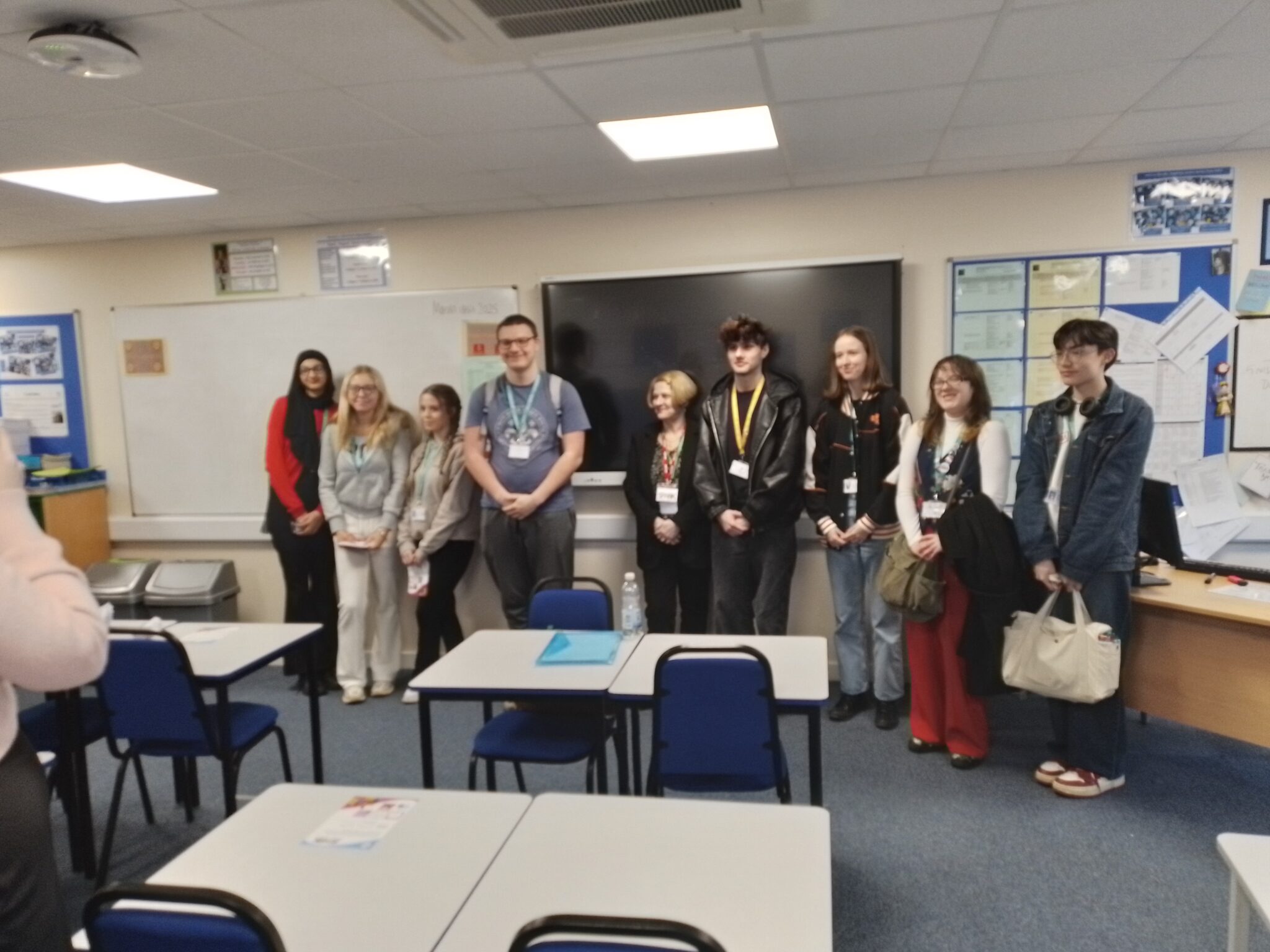
Exploring Social Justice with Notre Dame 6th Form College
The Social Justice group are interested in organising a marketplace event and future leadership activities, with a focus on their particular interest of poverty in the UK.
Working closely with key staff and Notre Dame Chaplaincy, we are listening to what these group members want to achieve and finding ways to support their passion for social justice.
Watch this space for a Social Justice event soon!
Read more...
Oscar Romero Lecture with Fr Luis Orlando Pérez Jiménez
The title of the lecture “Excavating Hope” reflects the desperate and dangerous work undertaken by 240 networks of mainly women across Mexico who are seeking answers and hoping to find the bodies of their loved ones. They connect locally and regionally to share information and support, building a community in the face of great challenges.
Read more...
The Global Ocean Treaty has now been ratified by over 60 governments worldwide, this creates legal frameworks for High Seas Sanctuaries, protected areas where threatened ecosystems can recover and thrive. If this treaty meets the expectations of conservationists, it will protect a third of our oceans (approximately an area bigger than Canada).
Read more...
FareShare was originally created as part of the homeless charity Crisis in 1994 but since 2004 they have been running as an independent charity. In 2023 FareShare and Tesco won a charity partnership award working together to reduce poverty in the UK. They ensure surplus food in the Tesco supply chain goes to feed people in need. In 2023 and 2024 they redistributed 56,000 tonnes of food to nearly one million people in need.
Read more...
Eva Wishart and Emily Smith spent 3 years breeding harvest mice in 27 tanks in their bedrooms and garage, in order to reintroduce our smallest rodent to Devon. They discovered the species is threatened in England due to current farming practices and habitat loss. They set up a Crowdfunder which was picked up by TV nature presenter Chris Packham, he shared it to his millions of social media followers. This helped them release more than 220 harvest mice into the wild.
Our first ever Diocese Eco Fair was organised by Rowan, Director of Communications and was a resounding success!
Hinsley Hall was a thoughtful choice with accessible bus routes and free parking right outside, to encourage as many people as possible to enjoy the experience. One attendee had travelled all the way from Grassington, the Settle area was also well represented as well as more local communities.
Stalls spilled out into different rooms and attendees and stall holders alike enjoyed the relaxed and positive atmosphere. The Justice and Peace Commission were there in strength, along with the Laudato Si group. SPARK, CAFOD and others talked to attendees about our work raising awareness of climate action and encouraging sustainability.
Climate change is one of the priority areas for action by the Commission and the Climate Action Group within the Commission is very active. It was the Climate Action group that was responsible for the drafting of what is now the Diocesan Environment Policy. Two members of this group are now part of the official Diocesan group for promoting sustainability throughout the diocese: the Laudato Si Sustainability Group. We had various leaflets and information sheets available about, for example, installing solar panels on church roofs or things that individuals can do to reduce their carbon footprint.
Leeds Church Institute shared a thought-provoking display that linked creativity with faith, the local artist showing the beauty to be found in unexpected places and how urban areas offer a lifeline for nature. Local entrepreneurs set up their baking and craft work for unique and original Christmas stocking fillers. Rosie was the youngest stall holder at 21 years; her amazing miniature gingerbread houses were a real winner!
There were all sorts of stalls at the fair including a lovely biscuit stall using fairtrade ingredients, a stall supporting Medical Aid for Palestinians and an impressive plant stall. Climate Action Leeds were also represented with an engaging board game for people to try their luck (prizes were packets of seeds!).
There were a steady stream of visitors who were not all based in Leeds. We noted visitors from Settle, Clapham, Grassington, Mytholmroyd and Bradford – amongst others. It was also a good opportunity to meet with supporters and activists and share information about what each of us has been doing.
Within this beautiful building and peaceful grounds, we were able to reflect on the end of our Jubilee Year. As Pilgrims of Hope, we were reminded that we are stronger together and the effective networks and partnerships represented in this event will be the building blocks to a brighter new year.
We are looking forward to Eco Fair 2026!
Manage Consent
To provide the best experiences, we use technologies like cookies to store and/or access device information. Consenting to these technologies will allow us to process data such as browsing behaviour or unique IDs on this site. Not consenting or withdrawing consent, may adversely affect certain features and functions.
Functional
Always active
The technical storage or access is strictly necessary for the legitimate purpose of enabling the use of a specific service explicitly requested by the subscriber or user, or for the sole purpose of carrying out the transmission of a communication over an electronic communications network.
Preferences
The technical storage or access is necessary for the legitimate purpose of storing preferences that are not requested by the subscriber or user.
Statistics
The technical storage or access that is used exclusively for statistical purposes.The technical storage or access that is used exclusively for anonymous statistical purposes. Without a subpoena, voluntary compliance on the part of your Internet Service Provider, or additional records from a third party, information stored or retrieved for this purpose alone cannot usually be used to identify you.
Marketing
The technical storage or access is required to create user profiles to send advertising, or to track the user on a website or across several websites for similar marketing purposes.


 The installation took only a few days during December 2024. The main electricity meter was later exchanged by the diocese’s energy supplier for free smart meters, enabling the parish to receive income for electricity exported to the local grid through the UK’s Smart Export Guarantee scheme. And removing the meter previously supplying the presbytery means one set of standing charges are no longer being paid.
 Reducing energy usage and costs are a priority for our diocese.
 Can you tell us a bit about yourself and your journey into this role?
 Our first ever Diocese Eco Fair was organised by Rowan, Director of Communications and was a resounding success!
  3431 mile fundraising ride for Medical Aid for Palestinians
 Several of our SPARK members graduated in the summer, and are continuing to work towards justice and peace in pastures new
 On 15th June there was a 10th birthday party of Pope Francis’ encyclical Laudato Si, to remember how justice for the poor and justice for the planet are related.
  Habemus Papam!
 Just over 50 people gathered at Wheeler Hall on the Bank Holiday weekend Saturday to find out more about the LiveSimply award scheme. It was a hectic day with 3 different workshops in the morning. In the afternoon people chose to attend another three workshops (out of 6 offered).
 Exploring Social Justice with Notre Dame 6th Form College
 Oscar Romero Lecture with Fr Luis Orlando Pérez Jiménez
 The Global Ocean Treaty has now been ratified by over 60 governments worldwide, this creates legal frameworks for High Seas Sanctuaries, protected areas where threatened ecosystems can recover and thrive. If this treaty meets the expectations of conservationists, it will protect a third of our oceans (approximately an area bigger than Canada).
 FareShare was originally created as part of the homeless charity Crisis in 1994 but since 2004 they have been running as an independent charity. In 2023 FareShare and Tesco won a charity partnership award working together to reduce poverty in the UK. They ensure surplus food in the Tesco supply chain goes to feed people in need. In 2023 and 2024 they redistributed 56,000 tonnes of food to nearly one million people in need.
 Eva Wishart and Emily Smith spent 3 years breeding harvest mice in 27 tanks in their bedrooms and garage, in order to reintroduce our smallest rodent to Devon. They discovered the species is threatened in England due to current farming practices and habitat loss. They set up a Crowdfunder which was picked up by TV nature presenter Chris Packham, he shared it to his millions of social media followers. This helped them release more than 220 harvest mice into the wild.
 Leeds Church Institute shared a thought-provoking display that linked creativity with faith, the local artist showing the beauty to be found in unexpected places and how urban areas offer a lifeline for nature. Local entrepreneurs set up their baking and craft work for unique and original Christmas stocking fillers. Rosie was the youngest stall holder at 21 years; her amazing miniature gingerbread houses were a real winner!