I think that, probably like many people, I have been a bit of a rabbit in headlights when it comes to things that Donald Trump and his coterie have been saying and doing since the end of January. When faced with such Orwellian ‘Newspeak’ I find myself scrambling to find the right way to respond.
A recent public letter from a parish priest in Ohio to his Bishop has helped me to put it all in perspective. It is so good that the rest of this article is some extended quotes from it.
Our new Secretary of State, the Catholic Mr. Marco Rubio, says that the United States is not in the business of doling out charity, that foreign aid demands a return on our investment, and that it should be given only to those who can increase our “security.” With the snap of a finger, we stop lifesaving food and medicine to millions of poor people around the world, so that we can be more secure. Mr. Rubio, let me say that doing charity is exactly what we should be about as a nation. “Much will be required of the person entrusted with much, and still more will be demanded of the person entrusted with more,” (Lk. 12:48) Security? Mr. Rubio, you may want to read Jesus’ parable about building “bigger barns.” (Lk. 12: 16-21)
The entire issue of immigration and the treatment of disenfranchised people is a complicated one, balancing rights and responsibilities, common good and individual good. Certainly, the processes to enter this country seeking asylum and/or citizenship must be reviewed and perhaps totally reworked. But the scripture is abundantly clear: All people are created in the image and likeness of God. All are children of God and have an inherent dignity that comes solely from that and the fact that the Son of God died for each one of them. We are to pay special attention and care to the “widow, the orphan and the alien [immigrant].” What could be clearer? To label the bulk of these people as “murderers, thieves, rapists, nut cases,” as Mr. Trump regularly does, is simply untruthful and a despicable affront to humanity. Almost as despicable, is the Vice President, Mr. J. D. Vance, also a Roman Catholic, accusing the American bishops of caring about immigrants only because they (the bishops) “are in it for the money, the federal funds that come their way.” [cf. Mr. Vance’s interview on CBS Face the Nation, 01-26-25] Abominable.
I am aware that millions of Christians voted for Mr. Trump because he professes to be “pro-life.” A pretty shaky definition of “pro-life.” Would a “pro-life president” cut off programs aiding women and children living in poverty (one of the principal reasons troubled women reluctantly choose abortion)? Would a “pro-life president” advocate expanding the death penalty to include even more vast numbers of people, many of them suffering from mental illness? Would a “pro-life president” turn a blind eye to the catastrophic climate crisis facing our “Common Home” and in fact propose policies that will increasingly put our fragile planet in even greater, more precipitous danger? Would a “pro-life president” label immigrants fleeing poverty and oppression as “vermin, poisoning our blood”? (Perhaps 1930’s/40’s Germans would have considered Adolph Hitler to be “pro-life”—he stood for the same things.) And even the façade of being “anti-abortion” has fallen away as Mr. Trump now says he would veto a national ban on abortion. He is “pro-life” as long as there may be votes in it for him.
I find the argument that bishops, priests, religious women, the Church, should not get involved in “politics” to be specious at best. “Just talk about God and Jesus,” they tell us. “Exactly,” I say. And what does Jesus say about love, justice, mercy, compassion, forgiveness, solidarity, fraternity…? Proclaim it to the ends of the earth. Politics is life. It is people encountering people, and the Church must always be in the midst of those encounters. True, we do not support a single political “party,” but we must never shy away from proclaiming the human and spiritual values which must animate our political discourse, whatever the party.
This is just a portion of what this priest had to say, and it is reassuring in some measure to hear such voices coming from the USA.
Tim is a member of the Leeds Diocese pax Christi group and has recently stood down as chair of MAW (The Movement for the Abolition of War).
It was Bruce Kent who first got me involved in the war/climate breakdown issue. I had been a member of CND and Pax Christi since the 70s, and Bruce recruited me to the Movement for the Abolition of War committee. One of MAW’s campaigns is Climate Change and Military Emissions – we’ve made a DVD about it!
I assume everyone knows the basic mechanism of climate breakdown – if you need a refresher, view Climate Change 101 by the masterly Bill Nye, Science Guy, made in 2015. He explains it in just four minutes!
"The Earth's temperature it is estimated to have gotten 1.2 to 1.4o Fahrenheit warmer in just the last Century. Ten out of the last thirteen years were the warmest on record."
In November 2015, a group of MAW members went to Paris for COP21. This was where the historic Paris Agreement on climate change was hammered out. As we stood under the Eiffel Tower, we wanted to make sure our banner was seen by delegates and the public alike.
How does war contributes to climate change?
“The elephant in the kitchen when it comes to Climate Change is clearly the world’s military. The world spends something like 2 trillion US dollars a year on its military. At least half of that vast sum goes on military production with a massive CO2 output. The military are both a major cause of climate change and hence, of the conflicts which result from the movement of peoples as deserts spread.” Bruce Kent
The trouble is, much of this is not reported - US negotiators managed to exclude military greenhouse gas emissions at the 1997 Kyoto climate conference. In Paris 2015, it was agreed that countries no longer have automatic exemption but neither are they obliged to declare military emissions.
As Mark Carney remarked, “What gets measured gets managed” Disclosure is only the first step towards the real goal: reduction of these emissions.
How does climate change cause war?
The example of Syria illustrates this all too forcefully.
“Before the [Syrian Civil] war began, an extraordinary drought caused 75% of Syria's farms to fail and 85% of livestock to die between 2006 and 2011, according to the United Nations. That drought also triggered a wave of migrants searching for jobs in urban areas, spreading instability throughout the country… The war has killed around half a million people, and displaced around 11 million others. It has utterly destroyed the country’s infrastructure”
“Over the past 10 years, weather-related disasters have caused 220 million internal displacements – approximately 60,000 displacements per day. By 2040, the number of countries facing extreme climate-related hazards is expected to rise from three to 65, the majority of which are hosting displaced populations.”
“You are very lucky” said many a friend and relative to me. I recently returned home to my country of origin after a hectic and emotionally demanding year as an international student.
But it was only after this statement, did I realise how true this sentiment was. I was a man of two worlds. I was a working international student. I had to learn how to juggle both my studies, as well as my responsibilities towards my current occupation. It was difficult!
I still recall the shifts, where I could only rely on the copious amounts of caffeine from coffee (thanks to the generous privilege of my job) to get through the work shift, and stumble back to my accommodation to begin my studies and research.
“What sustained you?" many of you may ask. The answer I can only think of is kindness.
It’s no secret that in recent memory, both in the UK and the world at large, there has been a lack of kindness, last year’s “summer of violence” comes to mind, first a riot in a neighbouring town in Leeds and later the entire country was engulfed in such chaos after the horrific murder of three children.
Kindness is indeed powerful, its current lacking and absence in the world is proof of its power.
But indeed, I was very lucky, because on many occasions of the life I had carved in a country that is not my own, I experienced it.
My job, while physically demanding, never forced me to do anything beyond reason and the staff welcomed me with open arms. They helped me cross my comfort zone, they always looked for my best interest, and above all always made sure my person was safe and sound throughout every shift.
It restored my belief in the good of people.
In frank terms, kindness is difficult to locate. That is why, when we see it, it makes it all the more important to follow such leads and become an example of it.
As a foreigner with a great command of the English language, I will admit it has been disheartening to have experienced being unwelcomed for simply being foreign…and I can only shudder of what others might have experienced without this ability.
I would like to believe that I am wiser now than I had been that fateful year I arrived in this country. I have accomplished much; I now have my university degree (with a merit I may proudly add) and I can only thank the kindness of the community I know I belong to.
My university was kind to have let me freely pursue my studies and research to my heart’s content and my religious community in the Catholic Cathedral and Chaplaincy allowed me to feel welcome, know and create meaningful relationships with my fellow parishioners. Most of all, I am grateful to my job for welcoming me with open arms, as before I knew it, I had saved enough to fly back home to see my loved ones.
In these trying times of doubt and bleakness, what can we as Christians do one may ask.
The answer is simple and is as timeless as our lord and saviour’s teachings…let us be kind.
Let kindness be a testament, both to his teachings and our duty to our community.
Last September, in his Pastoral Letter for the Season of Creation, Bishop Marcus encouraged parishes to think about signing up to work towards the LiveSimply award, which is managed by CAFOD.
Having lived in a parish where we worked towards the award and now being a schools assessor for the award scheme, it is something which I would encourage any parish or school in the diocese to seriously consider. To work for the award , your parish has to consider how everyone can live more simply, more sustainably and how they can show their solidarity with those experiencing poverty.
It is a wonderfully positive way of involving all sections of a parish and all ages. Everyone has something that they can contribute and the scheme is flexible enough to allow you to use the strengths and resources within your own church community.
The Commission is supporting a group of 4 parishes in the Leeds area to put on a day event about this scheme. We have a title (as above), a date (Saturday May 3rd) and a venue (Wheeler Hall at Leeds Cathedral) – but the rest is all a bit fluid at the moment!
Within the next few weeks we will have finalised more details and will have an Eventbrite page for people to sign up to come along….
In the meantime, save the date and mention it to other people at church. Watch this space!
We are delighted that SPARK Social Justice, our project working with younger Catholics, working in partnership with Leeds Trinity University, will support a Leeds presentation of the 2025 Romero Lecture. It will take place at the new city centre campus of the university, which is on Trevelyan Square, just off Boar Lane in central Leeds, on Thursday 13 March at 7pm.
Luis Orlando Pérez Jiménez is a Mexican Jesuit currently studying for a PhD at University College, London. He has organised seminars on human rights advocacy strategies for sexual torture, extrajudicial executions, and enforced disappearances. He has conducted workshops on victims' rights and legal guidance for the Enlaces Nacionales network, which comprises 72 groups seeking missing persons in 25 states of Mexico. He has also provided assistance to indigenous communities in Chiapas and Oaxaca and peasant communities in Coahuila affected by resource dispossession.
In his talk he will relate all these experiences to the life of St Oscar Romero.
During Lent, CAFOD is inviting you to join Lokho on her journey of survival – of finding hope through devasting drought.
“One day, two of them died,” Lokho tells us of her goats. “A day after that, another. A week later, another three. Now I have zero livestock.”
At just 28-years-old, Lokho is a survivor of a devastating drought. There was no grass for her goats to eat, just miles of dry, cracked earth. The goats collapsed and died from dehydration.
With her animals gone, Lokho was left with no way to support her young family. She had no safety net to fall back on.
40 MONTHS WITHOUT RAIN
In northern Kenya, the dry seasons are increasingly extreme. Lokho’s community survived 40 months without rain – 40 months of scorching sun.
Her neighbours shared all they had. Lokho tells us: “My good neighbours have the habit, the tendency, of helping one another – and that is how they can survive.”
Finally, thankfully, the rains came. But Lokho’s community had already lost almost everything. They needed a new way to get food. They needed a plan so that when the next drought hit, they would not be left with nothing.
SIMPLE IMPACTFUL SOLUTIONS
Lokho chats as she pushes a wheelbarrow full of water tubs. Her baby sleeps peacefully on her back. She strides toward the community vegetable farm, surrounded by her neighbours. Here, working side by side with local experts, they’ve begun to sow the seeds of their future.
“They entirely depended on livestock for life,” explains Wakera, who works with Lokho’s community. “Now we have introduced poultry and kitchen gardening.”
Local experts like Wakera are teaching Lokho and her neighbours techniques for growing vegetables in the arid climate. Crucially, together, they’ve built innovative shade nets which protect young plants from the sun.
“They provided us with that green net there,” says Lokho, pointing to a large net that covers her whole vegetable patch. “The sunlight still gets to the plant, but it’s not as destructive as before.”
These nets act as an ‘anti-greenhouse’ – they keep the burning sun off the plants whilst still allowing every drop of precious rain through.
BUILDING A BETTER WORLD FOR ALL
Arms full of vegetables, Lokho walks back to her home. Later, she will sell the produce in her small shop and split the money between her neighbours.
“These savings will help us when we go through a time of emergency,” says Lokho, “At a time when there’s a food crisis, we can purchase food to save people. I feel like I’m now safe and secure.”
Lokho’s eyes turn to her children playing in the yard.
“The littlest one was born towards the end of the long drought,” she says. “It makes me smile now to see her walking about. I feel great pride.”
Lokho has hope for her family’s future. She tells us: “I turn to God through prayer. I pray for a better life in which to raise my children.”
A BETTER WORLD NEEDS ALL OF US. A BETTER WORLD NEEDS YOU.
Help families around the world survive emergency conditions and build a better future.
or send a cheque to: Freepost CAFOD (no address or stamp needed)
5 ways your parish can get involved this Lent
1. Hold a Fast Day collection - Hand out CAFOD's green Fast Day envelopes as people come into church and share CAFOD's Family Fast Day with your parish by putting up CAFOD's Lent poster and reading their short talk at Mass. You'll be amazed by the difference your parish can make!
Modern-day Slaves are significantly exploited by their employers. A high proportion are sex workers. Women are therefore more likely to be slaves than men. Charities working in this sector estimate that there are about 122,000 people currently living in the UK who are Modern-day Slaves.
The Government established a Care Workers Visa to enable workers from abroad to pay for visas to come here to work in what are often minimum wage jobs. Sadly, some employment agencies saw this as an opportunity to make lots of money and advertised Care Work jobs in the UK. Those applying did not realise that there could be times when no work would be available.
Visa holders cannot claim unemployment benefits or work for other employers. This gives their employers greater power. Significant numbers of these new Care Workers started to call the Modern-day Slavery Advice Lines due to the exploitation they suffered; forced to work long hours, pay for training/accommodation/uniform and to work anywhere.
The Visa rules have been changed each year to reduce the factors contributing to this exploitation. But the exploitation continues.
I know of one family where the mother got a Care Worker Visa, her husband and children got Dependent Visas. The family came expecting to be more financially secure than they had been in Africa. With both parents working full-time for the minimum wage the family could just about provide for themselves.
But the mother’s full-time care work soon stopped. Her agency could then provide her with only part-time work. Her sponsor offered her a temporary, full-time job 200 miles away. She had to take it to feed her family. When that job ended they offered part-time work in the same city. The family were desperate.
Her family will not be more secure until she finds a local employer who has a job in their own Care Home and who will pay to sponsor her. It is very difficult to find such jobs. Life in the UK is not what the family imagined. Their livelihood as insecure as it was in Africa.
In Hope, the Pope says
‘Every Christian is called upon to be an instrument of God for the liberation of all people and the advancement of the poor. This implies more than a few sporadic acts of generosity. It presumes a new mindset that thinks in terms of community.’
UK Slavery still happens. We know that as a country we do not have enough income to pay for all the services we expect. Poverty is a political choice. The Government are responsible for allocating their income for the good of all. Parties accept that the Care Sector is not working effectively.
Maybe in response to the Pope’s plea for a new mindset we should each think about (and talk about) what we consider to be fair share of the costs of our own care?
We must not be distracted by arguments about promises of no tax rises. There must be radical changes if the Care Sector is to become sustainable without the risk of Modern-day Slavery.
For more information:
ACAS have a good website that explains employee rights.
80 of us gathered in the centre of Leeds - Jews, Muslims, Christians, other faiths and none - to mark Holocaust Memorial Day. We held the event independently of any other organisation so we could include reference to Gaza. As well as recalling the Nazi Holocaust with readings from Primo Levi and Eli Wiesel, we recalled the genocides that took place in Cambodia, Rwanda, Bosnia and Sudan. We also included poetry from Gaza, including ‘If I should die’ by Refaat Alareer and ‘Oh rascal children of Gaza’ by Khaled Juma. There were no flags. No banners. No slogans. Between each reading, we held a minute's silence.
Robert Cohen gave an introductory speech and explained why those of us organising this event thought it was so important to remember those killed in the genocide in Gaza. His powerful words are reproduced below.
"We are gathered here in Leeds City Square to mark Holocaust Memorial Day.
Tomorrow will be the 80th anniversary of the liberation of the Auschwitz-Birkenau death camp in Poland in 1945.
It’s estimated that more than a million people perished in Auschwitz during the Second World War. The vast majority were Jews. But there were also Roma and Sinti and Gays, all murdered just for who they were.
In all, it’s estimated that six million Jews were killed by the Nazis during the Holocaust including around 1.5 million children.
The Nazi Holocaust destroyed a third of the global Jewish population, with centuries of culture and heritage lost forever.
And the world said: NEVER AGAIN. But genocide did happen again."
Read Robert Cohen's full speech in our Views section
Manage Consent
To provide the best experiences, we use technologies like cookies to store and/or access device information. Consenting to these technologies will allow us to process data such as browsing behaviour or unique IDs on this site. Not consenting or withdrawing consent, may adversely affect certain features and functions.
Functional Always active
The technical storage or access is strictly necessary for the legitimate purpose of enabling the use of a specific service explicitly requested by the subscriber or user, or for the sole purpose of carrying out the transmission of a communication over an electronic communications network.
Preferences
The technical storage or access is necessary for the legitimate purpose of storing preferences that are not requested by the subscriber or user.
Statistics
The technical storage or access that is used exclusively for statistical purposes.The technical storage or access that is used exclusively for anonymous statistical purposes. Without a subpoena, voluntary compliance on the part of your Internet Service Provider, or additional records from a third party, information stored or retrieved for this purpose alone cannot usually be used to identify you.
Marketing
The technical storage or access is required to create user profiles to send advertising, or to track the user on a website or across several websites for similar marketing purposes.


 How does climate change cause war?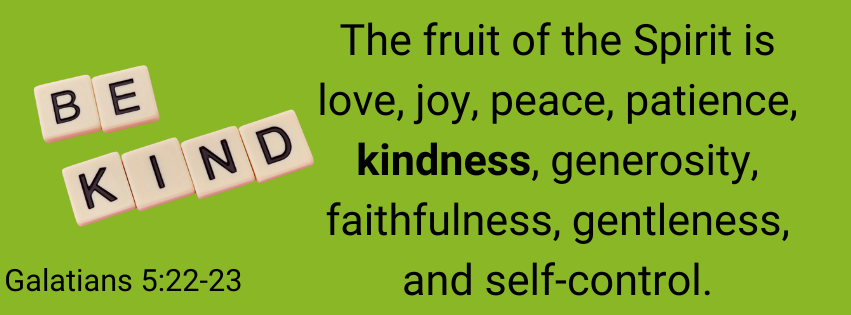




 40 MONTHS WITHOUT RAIN
  SIMPLE IMPACTFUL SOLUTIONS


 The Nazi Holocaust destroyed a third of the global Jewish population, with centuries of culture and heritage lost forever.