Donate
Diocese of Leeds Justice and Peace Commission (1)

Win/Win or Win/Lose

By Sara Forrest, Commission Member

Like many behavioural approaches to any situation there are a range of options varying from Win/Win where both parties get what they need and maybe some of their ‘would like to get’ or Win/Lose where one person or organisation dominates and get what they need and most of what they want and the other gets very little.

win-win-lose-lose2


It appears from the media that most politicians and big businesses are operating on a Win/Lose approach helped by the power they hold. Yet when you look at what happens at a local community level you see many people operating on a Win/Win basis.

As Christians we believe that each of us has a unique dignity and that we should respect each other and use our God given talents to create a better world. Only a Win/Win approach embodies this.

images (15)


Understanding that there is a difference between what we actually need and what we want if fundamental to Win/Win. I have had several periods of unemployment and luckily always managed to reduce my monthly budget to cover housing, heating, water, Council Tax, transport, broadband and food plus presents for family members at Christmas and birthdays. Holidays and clothing were classed as a want rather than a need. Getting a new job enabled wider spending on new clothes and wants.

images (16)


However as an SVP member I am aware that many unemployed people cannot even cover those basic costs, hence the rise of Food banks and Pantries. Local services like charity shops, Pay as You Feel cafes, Baby banks etc are examples of people volunteering their time to improve the lives of those around them.

Like any household we as a Country need to balance our books, the cost of our borrowing, and other countries', is rising due to international economic uncertainty and war. So there has been much discussion at Party Conferences about cutting the welfare budget.

As a Christian it is my duty to be prepared to pay more tax to alleviate the hardship of those who rely on charities every month to stay sheltered, warm and fed. It is the Government's duty to manage the systems effectively and in a fair and just manner.


I also recognise that parents are subsidising the provision of ‘free’ nursery places through paying higher costs and others are subsidising the cost of Care at home and Care Home care through increased charges to fill state funding gaps.

I see these as indirect taxes so I never believe any politician's promises about ’No Tax Rises’.

2a49d0dc-2567-4fe6-a285-d49ce03ffc04


In a just and Christian society those who can afford non essentials should expect to pay sufficient direct taxes to help those who are struggling to meet their basic needs.

Imagine a society where all children attend school in warm winter coats with full bellies and return to a warm and secure home every night.

Be cynical about political spending promises that can’t be met and wary of those who demonise the poorest people in your neighbourhood and want you to believe that cutting the welfare (and foreign aid) bill is a viable solution to our spending challenges.

The Power of Money

by Sara Forrest, Commission Member
Recent headlines on BBC News have reinforced my idea that members of the multi-millionaire and billionaires club are exercising great influence over those who bear responsibility for taxing and protecting the majority of people in their jurisdiction. The numbers are staggering.
Sir David Beckham nets £38.5M after World Cup ad deals, and that’s his dividends on his share of his business.
David Beckham in a variety of adverts for the World Cup
Continuing with football, there’s the issue of Man City disregarding the fiscal rules set by the Premier League, the deal Giani Infantino of FIFA did with members of Trump’s family, offering a stake in the World Cup, Sir Jim Ratcliffe, Man United owner, presiding over a loss making club whose debts have increased to £1.15 B after the summer transfer window.
US Government backing Musk's bid to overturn 120M Euro fine against X.
photo of elon musk
Other recent headlines featured a settlement of $18 Billion to the States who sued them for the harms to children caused by the addictive nature of their products. In exchange for this money the States accepted age verification and time limits rather than a change in the operating model to reduce the addictive nature of it.
Then of course the £72M donations from cryptocurrency Billionaires to a UK political party. A party who assured us, the electorate, that they would not give them peerages for example.
photo of nigel farage
I see a pattern of the very rich buying and maintaining their advantage and power. Perhaps emboldened by the activities of the current leaders of Russia, USA and China over whom the censure of the UN seems to hold little sway. The days of philanthropy, especially in the USA where in a low tax environment the very wealthy funded used to fund free hospitals and other charitable institutions to alleviate the poverty of most of the people seem to be long gone.

The poor don't matter.

Christian teaching tells us that we ALL matter. We should share wealth so that we each have enough. The Gospels give us plenty of examples of how to decide what is the right thing to do. But it pays us to be aware of where the very rich are spending their money and asking ourselves ‘ Who benefits?’
In the UK we are supposed to give our vote to the candidate who we think most represents our views and values. Not the party they purport to represent, especially as the days when someone changing political party was rare. 'Be careful what you wish for’ was regularly said when I was growing up, and it pays to keep abreast of what is happening in politics so that you are able to cast your vote in confidence.

A Climate Change Gamble

by John Battle, Commission Chair
The World Cup, whose ubiquitous batting coverage was unavoidable was one of the biggest events for the gambling industry. Betting was a main beneficiary. We in the UK are increasingly a society of gamblers. The UK gambling industry is one of the UK's most profitable industries and BET365 is one of the worlds most profitable companies. National lottery tickets, scratch cards,gift cards for online gambling, are all sold every day in our supermarkets and corner shops. UK adults spend roughly £6 million to £8 million every day on scratch cards alone. The UK public spend between £2-3 billion a year on National Lottery scratch cards, and further £1.3 billion on online 'Instant Win' games as mobile phone based gambling is taking over.
Gambling Facts UK
We are increasingly a nation of gamblers, risking our money on uncertain outcomes in the hope of a boost of a short term quick win. It is not just the sugar rush of expectation that is undermining our rational sensibilities but perhaps, more importantly, the wiping out of addressing the realities of the present and any purposeful action to really shape the future that is doing the damage.
As forest fires rage in Europe and closer to home in Britain and devastating floods hit Afghanistan and Bangladesh this last month, the tragic irony is that campaigns to undermine climate emergency efforts to restrain adding more overall greenhouse gases to the atmosphere are rampant, not least promoted by financially vested interests, including the most profitable oil and gas companies.
The concerted efforts to restrain are now often referred to as "net zero" measures. "Net Zero" does not mean producing "zero emissions now" but rather taking action to reduce emissions as much as possible such as by using renewable energies, improving energy efficiency planting and restoring forest peat and wetlands and also including reducing waste and recycling.
net zero graphic
Universally, scientists agree that to halt further long-term warming, global carbon dioxide emissions need to reach zero. Many countries, including the UK , have set legally binding policy targets to achieve net zero greenhouse gas emissions by 2050 which is the UK target.
In our era of fiercely binary and reductionist politics "net zero" has become a touchstone for opposition. Some claim "net zero" to be the new "Brexit", dismissing its purpose and aims and even the scientific consensus on the evidence of a climate emergency, despite the increasing daily news reports of worldwide extreme climatic events.
Meanwhile the "merchants of doubt" (usually invested financial interests) distort public media perceptions and encourage that gambler's dismissive shrug of "it may never happen to me and my family" and often even those sensing a real need to change course fall in with the pressure simply to lay the blame and responsibility on the individual alone calling upon them to reduce their emissions, reduce the use of fuel guzzling transport, and increase energy efficiency and recycling measures.
In other words it suits the powerful vested interests to encourage the individual to take the blame, shifting the responsibility for pollution on to consumers and society as a whole. Little wonder that it is then easy to wonder "why bother?" doing our little bit here, when China, India, Nigeria ,and America carry on emitting dangerous gases.
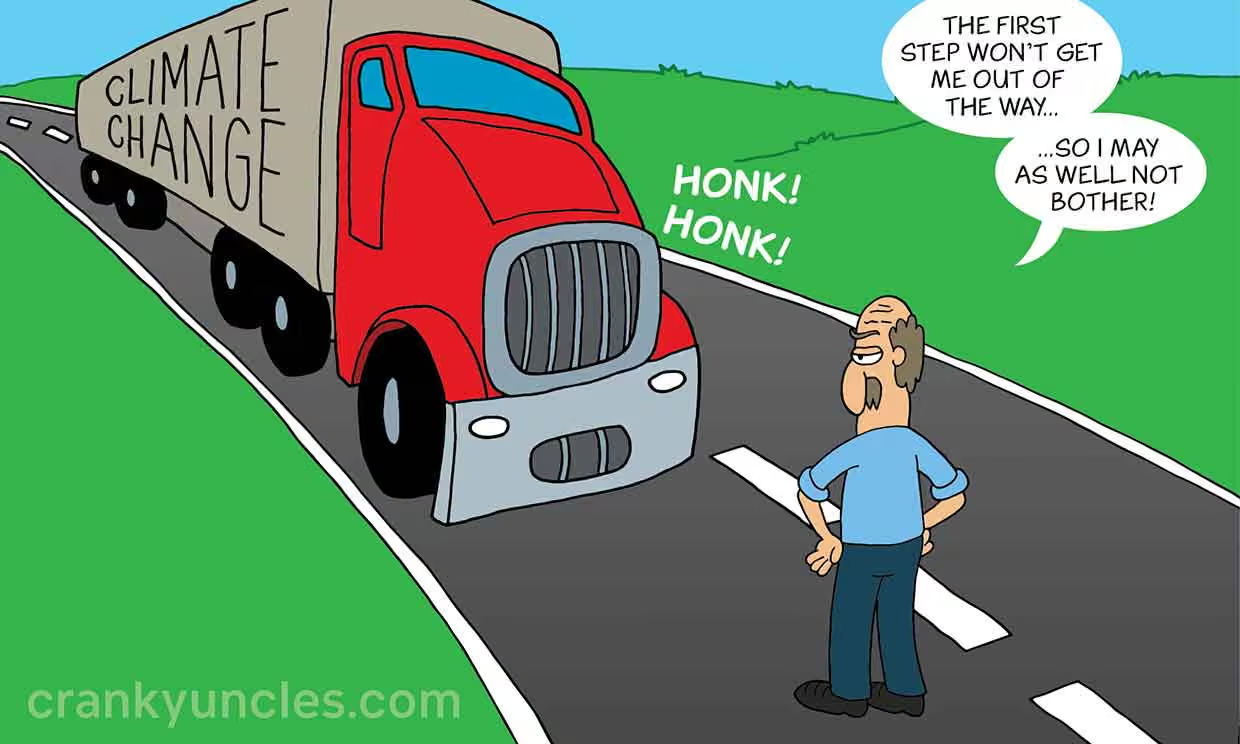
A cartoon illustration of the Trump administration’s climate policy logic
Even those individual gestures, having been blamed, are drowned out in a prophecy of the gambler's despair.
On the 10th World day of prayer for creation last September, Pope LeoXIV insisted that climate change is both "a scientific reality and a moral responsibility". Building on the anniversary of Pope Francis's great encyclical "Laudato Si", Pope Leo stressed how "environmental degradation disproportionately harms the poor and vulnerable".
The American writer Gabriel Winslow-Yost refers to climate change as a "crime" in which we are all implicated;
"Our car rides and plane trips, coffees and burgers, heating and cooling and clothing are paid for in blood contributing every moment to the suffering and destruction global warming brings".
- Gabriel Winslow-Yost
As Pope Francis insisted in "Laudato Si" we have to hold joined together "care for the Earth and care for the poor in our common home". Pope Leo now stresses that climate change is "an issue of justice as well as environmental protection", declaring that
"environmental justice can no longer be regarded as an abstract concept or a distant goal. It is an urgent need that involves much more than simply protecting the environment and it is part of the churches mission to promote human dignity peace and care for creation".
- Pope Leo
In " Laudato Si", Pope Francis makes the challenge very personal in his detailed appeal for us to each undertake a deeply spiritual "ecological conversion" and now Pope Leo invites us to step back from the gambler's betting shrug and to join together to tackle "the injustice social economic and human"; urging us all to now "sow the seeds of justice".

Forgiveness

by Sara Forrest, Commission Member

Recent Sunday readings have focussed on the way we behave towards one another, especially regarding the need to forgive the hurt we feel about what others do. Matthew 18:15-20 talked about the importance of giving personal feedback which gives friends or family the opportunity to realise the impact their behaviour has on you and to chose to change it if they want stronger relationships. Any feedback needs to come from a feeling of love if it is to achieve lasting change in another. Feedback given in the anger of the moment rarely works to defuse a situation! It also talks about involving the wider community if necessary because the initial intervention has not stopped the unwanted behaviour.
Two chairs facing each other with the caption "If your brother sins" Matthew 18:15-20
Then Matthew 18:21-35 develops from this the need for forgiveness. It stresses that we should repeatedly forgive those whose behaviour hurts us. And continue to give loving feedback to sustain the relationship. If that ongoing discussion about why the other’s behaviour needs to change does not work then you might need to walk away from the friendship.
Distancing yourself, or even ending the relationship, is particularly important if you are suffering either mental or physical harm from its continuance. And the need to escalate is rightfully a feature of safeguarding protocols. Sadly we do not have to look hard to find examples of where the preservation of a reputation of an individual or organisation has allowed harmful behaviour to continue.
I feel so lucky to be European and Christian. Forgiveness is central to our faith. It allows the individuals to move forward and become reconciled in order to enjoy the fullness of life. Whilst we have left the European Union we still maintain constructive relationships with neighbouring countries, regardless of whose side they were on in World Wars. Indeed we are currently celebrating the return of the Bayeux tapestry which records the battle that allowed the French to rule most of us. Our democracy is founded on many of the principles of the Roman conquerors of Britain.
A scene of people riding horses from the Bayeux tapestry
Yet when I read or hear about the current situation in the Middle East or what America and other States are saying and doing to regain perceived past glories and advantages I do not recognise any learning from past experiences. Without changing (another word for learning) they are locked into future conflict and hurt.
It seems to me that if the ‘Powers that Be’ listened to more of the grandmothers and mothers in their countries, they would hear of their wish for more peaceful and properous, stable lives for their children. As Jo Cox said ‘We have more in Common than that which divides us.’
So a message I am taking from those Gospels is to remember that I have hurt others and been hurt by others and I have that in common with those around me. I will reflect on what I can do to repair those friendships which may need a little more loving attention, feedback and forgiveness.

Reading the Scriptures

by John Battle

One of the greatest gifts my mother gave me very early in life was the ability to read. I could read before I got to primary school at five, but, regrettably,was a disruptive child in the class until a teacher, to whom I'm eternally indebted, pulled me out and sent me with an exercise book and pencil to the public library to study on my own for a day. It couldn't happen now of course but that day inculcated in me a lifelong love of libraries and books.
chilld with lots of books cartoon
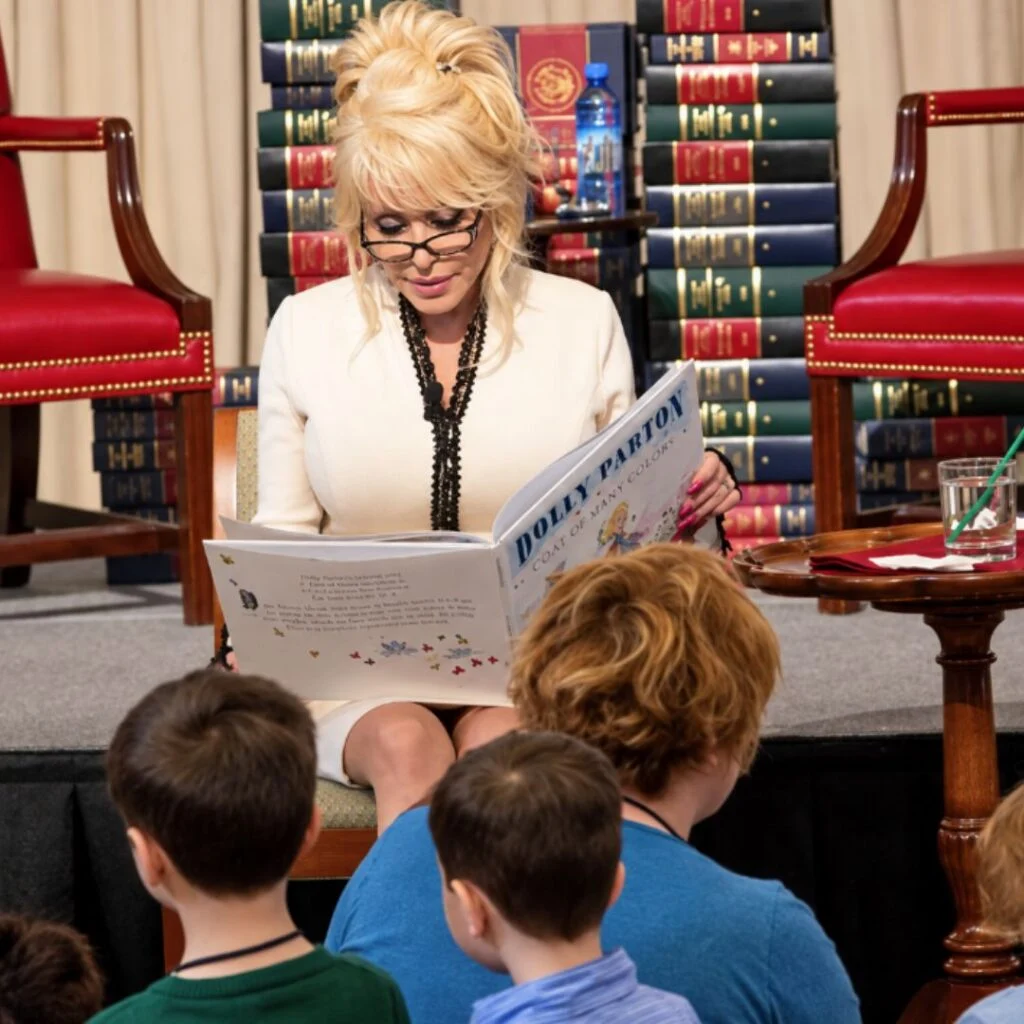
Amid the usual bleak news and daily tragedies this last month emerged an enheartening story in the reports of the death of the country singer Dolly Parton. She founded a charity the "Imagination Library" in honour and memory of her Father who was illiterate, that distributes free books to children from birth to the age of five.She started it in her home of Tennessee and it has since
delivered over 300 million books worldwide, including supporting a reading project in Doncaster in the UK. The Imagination Library has been described as the biggest philanthropic contribution to literacy since Andrew Carnegie's libraries.
dolly parton's imagination library
Here the award screen and children's writer Frank Cottrell Boyce, who from 2024 was the children's laureate, has made a huge contribution to encourage in reading, not least through the charity The Reader Organisation, championing a return to books for young people in the digital age.
book cover
In "The New Dark Ages: The End of Reading and the Dawn of a Post Literate Society", published recently, James Marriot spells out that more than half of UK adults say they have given up reading altogether. And in the last 20 years, reading for pleasure in the USA has fallen by 40%.
Paradoxically, this is in the face of huge increases in the number of books published. In the UK over 177,000 books a year are now published, the largest expansion since 2005. Some 190 million books were sold in the UK in 2025, yet there has been a real decline in the sustained voluntary reading of printed books. In the USA, only 45% of the population read at least one book a year. a decline from 61% in serious and leisure reading, though there has been a move to audio and e-books.
In the UK, it is children's reading that is in serious decline.The National Literacy Trust spells out that since 2005, it has fallen from 38.1% to 18.7%.
Fewer young people are picking up books and are rather fixed onto their digital devices and screens watching videos, gaming, streaming, podcasts and sometimes e-books and audiobooks.
book cover
In 1985, Neil Postman in "Amusing Ourselves to Death: Public Discourse in the Age of Showbusiness" warned of the impact of TV on our society's abilities to be attentive. Now social media has greatly amplified the impact of the delivery of quick, short time attention 'moments', presented in bite-size chunks. James Marriot cites the prescient remark of the 18th century literary giant Samuel Johnson: "People in general do not willingly read if they can have anything else to amuse them."
book cover
Interestingly, Marriott goes on to refer to the work of Fr Walter J Ong SJ whose "Orality and Literacy: The Technologising of the Word" (1982) suggested that without writing and reading societies become "agonistically programmed", with an inherent bias towards confrontation. Walter Ong wrote "not only in the use to which knowledge is put but also in the celebration of physical behaviour, oral cultures revealed themselves as agonistically programmed", that is as competitive and contest orientated. He proposes that reading and writing "foster abstractions that disengage knowledge from the arena were human beings just struggle with one another".
Reading therefore can be an antidote to conflict and violence.
The American writer George Saunders suggested that:
"reading is a form of prayer... a guided meditation that briefly makes us believe we are someone else, disrupting the delusion that we're permanent and at the centre of the universe... suddenly (we're saved), other people are real again and we're fond of them.".
The idea of "reading as prayer" is long-standing in the Christian tradition.
Erasmus regarded reading the Gospel as a form of prayer, as through the text Christ becomes present to the reader. The ancient prayerful practice in the Church of "Lectio Divina", with its roots in early monasticism, encourages us to treat reading as prayerful reflection on the Scriptures, and to treat the text not as a source of new knowledge but as a personal transformative interaction. Of course it matters what material we read but perhaps it's a time to turn again to quiet personal reading of the Scriptures as a contribution to the continuation of the practice of reading.

Reflection: Servant stewards? Self-proclaimed rulers? Or co-creators with God?

by James Makuba

In an age where entitlement, pride and greed are normalised and even promoted - to the detriment of our planet, our societies and even our own souls - it is worth asking ourselves a simple question, following Socrates’ ancient admonition that “the unexamined life is not worth living”.

The question(s) I’d like us to ponder are: What is our purpose in life as human beings inhabiting God’s creation? Besides the why - which might be an entirely different discussion - what have we been created for?

I have some answers of my own, however I would very much rather you critically and carefully explored yours in light of the Word of God to come to your own conclusions.

We see in Genesis that, as God’s ‘image bearers’ (Genesis 1:26-27), we are tasked (and honoured) with the responsibility to work/cultivate/serve and keep/watch over the garden of Eden, God’s original and perfect creation of which we are an integral part (Genesis 2:15).

I think it’s fair to say that we all know how the story unfolds in following chapters. However, if you don’t know yet, or if you need a reminder, feel free to read the rest of chapter/book. Much of the time since then our understanding of our role within creation has focussed on domination rather than stewardship or more, seeing ourselves as part of and in relationship within the whole web of creation.

Fast forward a couple of ages, and we find ourselves with the fullness of revelation, Jesus Christ, God Himself, the Son of Man who “did not come to be served, but to serve […]” (Matthew 20:28, Mark 10:45). The very Person by whose breath we have received and keep ours, lived among us, in the same broken and challenging world and “[…] did not count equality with God a thing to be grasped […]” (2 Philippians:6-7), choosing forgiveness, humility and service over self-interest, grandiosity and greed when He quite literally had every right and authority over life itself.

What does that tell about us about the tendencies of our world, our own ways and ourselves? Of course, given our brokenness and capacity for sin, it’s natural for us often to want more than we need, to feel that we are owed the things we so easily and regularly take for granted and to look to advance our own interests and agendas. But is that all there is to human existence? Are we simply here to follow our more base and natural desires and inclinations even at the expense of our neighbour, our future generations and the whole of creation? Or can we realise that God calls us into right relationship with the whole of God’s creation?

We are clearly seeing how the consequences our selfishness endangers not only the whole planet with high levels of land and marine deforestation and pollution, but also all its inhabitants, human and non-human alike. We also see how this self-centred, vainglorious and grandiose image we hold of ourselves as “supreme rulers of the earth” plays out against ourselves the very moment we remove or fail to acknowledge God’s sovereignty and true authority thus causing us to disregard His will and to extend our destructive tendencies outward onto each other and the created order.

I firmly believe we can and must do better with and by the Grace of God. For the sake of ourselves, for the sake of the created order and for the greater glory of God in the name of Jesus Christ. Amen.

Education

by Sara Forrest, Commission Member

The last few weeks have featured the seasonal reporting of the exam results for the majority of the 16 and 18 year olds in the UK. Great fuss is made of the improving results and the joy of those who have achieved the grades they wanted.  But what about those who are disappointed? Yesterday, following the death of Dolly Parton,  reporting was about literacy and the high number of adults in the UK who struggle to read.

State education was introduced to enable those from poorer backgrounds to increase their learning and earning. Yet after 100+ years  it is apparent that the exam results achieved in the poorer areas in the country significantly lag behind those in more affluent areas. Why is this so? One reason may be that the exam Boards were originally created by Universities to enable them to select on merit those who would benefit most from their ongoing studies. There was a system of vocational qualifications established by different industries and occupations and employers expected their new staff to complete such occupational qualifications.

In my day 1 in 10 18 year olds went onto further academic study. 1 in 6 students were girls.  Now a much higher proportion of 18 year olds continue to study and the gender split is approximately 50/50. Major employers and the Forces would sponsor the brightest students who would gain work experience in vacations and be expected to join their workforce for a period post graduation.

But many occupational qualifications, such as teaching, physiotherapy, radiography, nursing and other public sector jobs now require a degree. Yesterday a women explained how she felt ‘thick' at school because she struggled to read, but having raised her children she wanted to be a midwife so she went to the local college and spoke to them. They helped her to improve her reading and do an access course and she is now a midwife. Two of my daughter's friends who received Educational Maintenance Allowance due to low family income, went to University to do Childhood Studies. They graduated with Student Debt. On graduation one decided to work in a Nursery, the other as a Teaching Assistant. They then did courses at FE College that they could have done at 18……..

Not everyone thrives in the education system but that is not a reflection of their ability to do a professional job.

I think there is a dissonance between a system that aims to produce great academic results to age 18, defining and measuring and monitoring the achievements of each pupil and within which the teachers are adamant that such a  judgemental regime, OFSTED, should not apply to their performance. Seems hypocritical to me.  I ran many courses for managers regarding performance management and the accent was always on identifying an individual’s strengths and assigning work that played to those strengths. It marries knowledge and skill but still recognises that within the workplace there is some flexibility on how a task is done. It was so important that everyone felt their worth was recognised so they were motivated. It seems to me that our education does not create that sense of worth which can lead to disengagement.

About 15/20  years ago Julie was made redundant from her job managing a team of 50 people. She found work as a learning mentor in a senior school and loved it.  One of the teachers encouraged her to qualify as a teacher and get paid more.  She decided to go to University and do a degree in Business Studies followed by a Post Grad Certificate of Education.  She was puzzled when she attended the interview for the PGSE because the first stage was that she was asked to write the story of her journey to the interview. She did so. At the end of the interview she was asked if she had any questions, she queried why she had been asked to write the story. She was told that it was a good way for them to weed out the graduates who could not write in grammatical sentences and explain something simple in good English!

About 20 years ago when I worked in the security industry, at the time it was believed that about 25% had poor literacy, we used that test on job applicants to check that they would be able to read enough to pass the mandatory test that they needed to go on site and work.

Gary left school at 16 to work on a factory production line. He decided to do Maths and English GCSEs when his children started secondary school. A College tutor recommending he considered a teaching degree via an Access Course as he felt he had the ability to be a good teacher. He went to Uni and spent some time as a primary school teacher.He now works in an FE College teaching the students whose English and Maths is holding them back from passing their occupational qualifications. He uses the same techniques as were used in their primaries but these pupils can be more motivated to learn once they see the purpose of such learning.

Our system is failing too many of our young people.  I pray that the discussions around the work being done by Aslan Milburn will continue to look at the way the whole system works and gain the traction and funding needed to create pupils who understand their worth, their abilities and what motivates them so that they can progress to adulthood feeling engaged in society and positive about their future.

Blame

by Sara Forrest, Commission Member

One of my favourite bible passages is about how Jesus intervened in the case of a woman who had been caught in adultery. According to Jewish law her punishment was to be stoned. The male Scribes and Pharisees wanted Jesus, who had been preaching about love and forgiveness, to confirm his support for the Law. However Jesus said ‘Let anyone among you who is without sin be the first to throw a stone at her.’ And bent down and gave each of them an example of their own sinfulness. No stone was thrown. The woman went away with the message that she should sin no more.

When we blame someone else it often means that we are not considering our own role in whatever has happened.  Migration has always been feature of human existence. Yet across the world migrants are being blamed for problems within the societies they now live in.  The language of blame is spreading throughout politics. Economic woes within the UK are down to poor growth and the off-shoring of many jobs that used to be the providers of growth.

I grew up in Warrington and there were several large manufacturing works who provided  most of the local employment; the wire works (hence the rugby league team name of the Wires, now the Wolves), cotton mills and clothing manufacturers, the box works, tanneries, gas cooker manufacturers, train making, Persil manufacture, brewers and the distillery. Only gas cooker manufacture is still a big employer.  The warehousing, call centres and small businesses will never replace their contribution to the UK economy. That work is now done in other countries.

Recent migrants are not responsible for that change. Business managers will move their investment to areas where production is cheaper meaning their return on investment (profit) is greater. That’s capitalism.  In the short term we had more choice when we spent our money and everything looked rosy except for those who never found another well paid job and who lost hope. Especially when their children found good jobs hard to come by. 

Unfortunately some politicians have blamed recent migrants for our current economic woes and many of those who feel forgotten or unacknowledged by the ‘’Establishment’ like that message because it sounds like such a simple solution if we send them home. I feel that this misinformation threatens our democracy.

We need to own up to both the impact of decades of underinvestment in growing manufacturing and exportable services to provide well paid jobs throughout the country and acknowledge the impact of years of ‘austerity’ on Public Services that allow so many people to ‘fall through the gaps’ in services which have been reduced by the impact of inflation.

For example, this morning I went to see a Council tenant who had a kitchen fire 4 months ago. Smoke damaged all the furnishings. Temporary accommodation was provided for that night but the expectation was that they would move back in the next day after Council workers had disposed of the furnishings and washed the walls and ceilings. They left the burnt out kitchen appliances and removed a fuse so the kitchen plugs wouldn’t work. The Council will start work on her replacement kitchen on Monday. It has taken the intervention of her Town Councillor to get these repairs started.

Round the corner,  a family were re-housed and given a garden that their children, one of whom was disabled, could play in. The Council promised to replace the fencing so that it was safe for the children. Nothing was done. The parents' complaints weren’t actioned and they appealed to the Ombudsman who found in their favour. By that time they had had a whole summer where they couldn’t let the children into the garden without supervision.

I find it easy to understand why people with similar life experiences and an ‘uncaring’ State (despite the hard work and dedication of many public servants who often bear the brunt of such dissatisfaction) listen to messages of blame and may vote for those who appear to offer quick solutions. 

I hope that Alan Millburn’s second report and recommendations for supporting the young people not in education, employment or training who have often grown up in households in poverty will help the Government to address the lack of good jobs so that school leavers in Warrington, and similar places, will aspire to move into well paid jobs as they could have done 50 years ago.

His first report was clear that our economy has been struggling for growth for decades and that it is time that we looked at new ways of engaging with the way we work together to give children from poor households decent job prospects that enable them to break the cycle of poverty.  This is too important to let party politics stop the changes that are needed.

I hope that the Government and Mayors will pay more attention to rates of complaints and of successful appeals as a way of measuring how the public sector is performing. I am sure that such a change would help us to have more informed dialogue about what the people’s priorities are and where services need to change. Telling us how much more they are spending doesn’t give any indication of effectiveness!

And blaming migrants doesn’t help us to reduce poverty and become a fairer society.

I take hope from….

by Sara Forrest, Commission Member

I take hope from the millions of quiet conversations that take place around the world where people listen to each other and generate ways to improve the lives of their communities, especially for those who are struggling the most.  I am sure that the majority of such conversations  go unreported on socials and news media.

Yet when I look at BBC News or read a newspaper or listen to the radio I see a different picture. This morning there was talk of the very high number of people signing an on-line petition to keep the two men in jail for the manslaughter of PC Harper in jail rather giving them access to the next round of early releases.  In connection with that, I have heard several discussions about the categories of prisoners that will be released and the statistics about their chances of re-offending.  Sadly, domestic abusers and sexual predators will be eligible for earlier release even though their re-offending rates are high.  It would seem that the decision was made based on the number of places that could be freed up rather than the risk posed to the vulnerable?

This Government has a Minister for Women and Equalities. I also take hope from the raised profile of the need to reduce and eliminate gender based violence since the first appointment was made.  As a woman, it seems to me that we need both to protect our women and girls and our Police, emergency services and other public servants who we empower to act in our name. As such the likelihood of re-offending should factor in early release decisions.

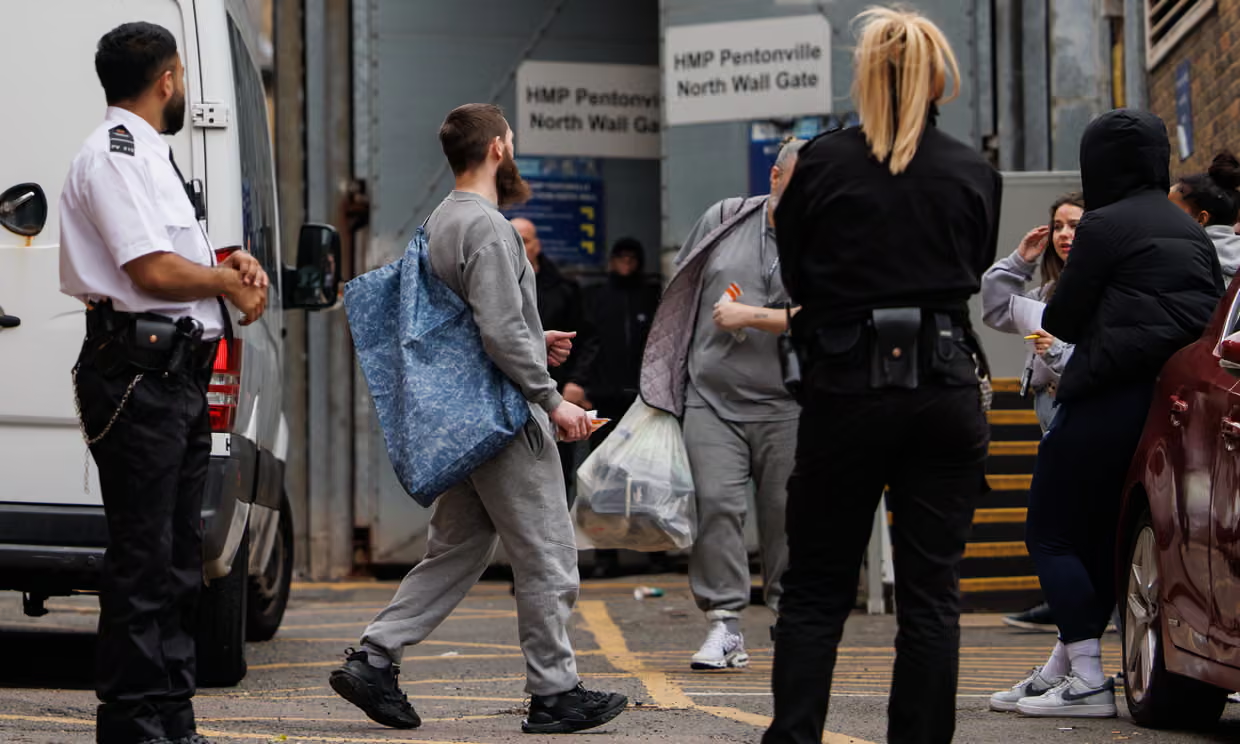
Prisoners are released from HMP Pentonville, London
Recent statistics have also shown that on average across the UK people are getting younger when their health starts to fail despite the extra money invested in the NHS.  Most reporting is on the length of waiting lists which seems to be where money is being spent. I understand that there is an increased focus on improving public health.  I take hope from the questions asked in a poll I completed that asked me to rate whether we should fund dentistry to ensure that most people can maintain functional teeth or fewer people have straight white teeth. I opted for the functional teeth.  I hope that influences where investment in NHS dentistry is going.

As a country we face enormous challenges from the influence of big tech firms whose platforms are designed to generate advertising income.  It is clear from recent USA Court Cases claiming damages for the harms done when the platform design accentuates negative posts that, particularly for young people, mis-inform and mislead. However such findings are always appealed.

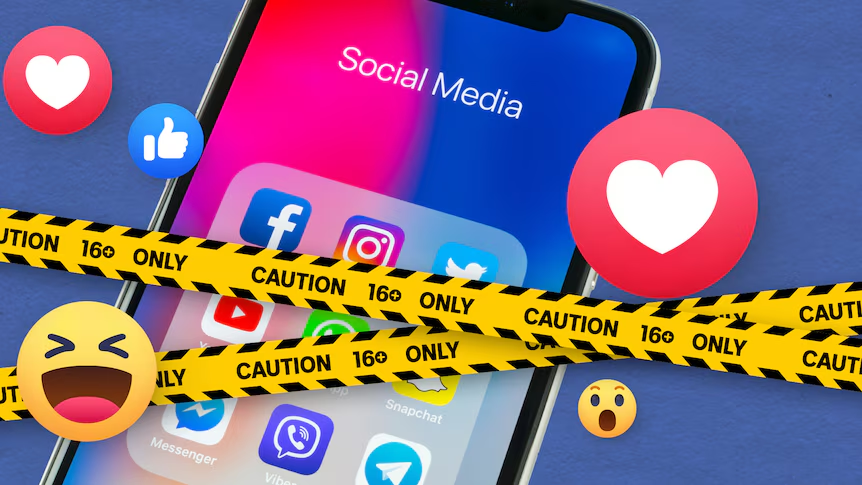
I take hope from that fact that Governments around the world, including ours, are taking action to force the platform designs to reduce harmful content. Surely the aim has to be on safer design?  As a teenager I placed more weight on what my friends said than anyone else, so a ban on access to harmful content until the age of 16 isn’t the full answer.

We have much to be thankful for and hopeful about.

Seeds of Equality

by Sara Forrest, Commission Member

I was contemplating life, the universe and everything while watching the river Thurne when I noticed hundreds of seeds, floating from left to right with the tide. The ducks were paddling against the tide and eating many of them. Some seeds blew across the river and landed on the river bank, some on the green grass close to the river’s edge and some a bit further away onto the very yellow parched grass. A while later the direction of the tide changed and they changed direction.

It brought to mind the fragility and randomness of life and the recent gospel about sowing seeds. I like to think I like to think that I heard the message Jesus intended for us, the seed in the soil. The Jesus I follow consistently reached out to the poor and marginalised people, he believed in equality of opportunity. He also tells us that we are each a unique individual in the image of God , and we are much loved by God.  As a follower of Jesus that means I must respect the dignity and worth of every single person. I therefore struggle to understand how some fellow Christians seem to believe that it is OK to treat some people detrimentally just because they look different or act differently. Slavery is one example of this behaviour. 

It is noticeable that over time the notion of equality of opportunity has become embedded in some societies. After all, both religions and political parties are groups of people with strongly held beliefs that they enact the rules under which their community lives. Those rules lead to accepted behaviours that are visible. The underlying beliefs are not as apparent.

I feel I have more in common with those believers of other faiths who also interpret their Holy texts as promoting  the way of love and equality than I do with the fellow Christians who seem to interpret the Good News to allow them to exploit and discriminate against other groups of people. I feel it is dangerous when faith leaders openly support politicians who are promoting divisive policies that breed hatred and ignore injustice and intimidation within their community.

I then saw a photo of Benita Bowlding, a young black woman, in a newspaper. It was taken on Independence Day this year. She is sitting on a crowded metro train in Washington surrounded by members of the Patriot Front. They were white, wore baseball Patriot Front caps and masks so they could not be identified. They were travelling in connection with  a march through the streets and had not sought permission from the authorities. The administration did not condemn the march or seek to interfere. Their silence can be seen as granting  the Patriot Front permission to continue to act in such an intimidating way. The history of the rise of Nazism in Germany teaches us that over time a community that was settled and diverse can become divided and fearful because people are afraid to challenge.

I believe that in a just society Free Speech has to be limited to protect minorities from such intimidation. For me that is what Jesus tells us. In the UK we have limits on what is classed as acceptable free speech and our independent Courts make decisions where there is a dispute. I am thankful that we have such checks and balances. For me democracy relates to the structures of the way power is challenged within the administration, it is more than the one person/one vote system. I am so thankful that I live here in the UK.

Just as I feel closer to people of other faiths who think and act like me, I feel closer to countries who have control and command structures as well as independent structures of checks and balances. Without those a democracy can become more like a despotic regime. As a woman I experience vulnerability.

When I was a teenager, my parents warned me that I would be judged by the friends I spent time with. In Europe we have centuries of experience of Diplomacy and Foreign Policy, of gaining and losing Allies.  I hope that our Government will continue to seek to influence those allies who overstep the boundaries of what we consider to be right and just and to step aside from action that we feel does not fit with our values of tolerance and equality.

I pray that our Pope and clergy will continue to speak out, promote and support a world that is more equal.