Donate
Diocese of Leeds Justice and Peace Commission (1)

18 Mar – St Oscar Romero: A Lenten Saint

By Joe Burns, Commission Member

St Oscar Romero: A Lenten Saint

This was the theme of Todd Walatka’s talk given earlier this week hosted at the City Campus of Leeds Trinity University under the banner of SPARK Social Justice.

Using quotes from St Oscar’s homilies, interspersed with a few from Pope Leo, Todd explored how St Oscar used his preaching as a way of promoting the key traditional themes of Lent: Prayer, fasting and Almsgiving.

Prayer was a recurring theme in his preaching and he was always exhorting people to ‘give glory to God’. This is a common enough sentiment in Church circles. It maybe conjures up pictures of being in churches with incense burning and people on their knees. However, his vision was much more concerned with seeing the Glory of God through his encounters with other people – especially the rural peasants (campesinos) and recognising that ‘the Glory of God is the human person ‘fully alive’.

20260311_195428 Fasting is the moment to review your life ‘and judge things, to see if you value anything more than God’. Do we value money, possessions, power more than God?

Almsgiving he talks about in terms of ‘experiencing ourselves as brothers and sisters’. Time and again, St Oscar talks about deepening our understanding of what it means to be ‘fully human’. The way to do this is through reflecting on our understanding the full humanity (c/f dignity) of our brothers and sisters.

Todd related the most striking example of this, given by St Oscar during the homily at the funeral of his assassinated friend Rutilio Grande SJ. In that homily, Romero directly addressed the killers with the striking phrase “queridos asesinos” — literally “dear murderers” — as part of a call to conversion, reconciliation, and justice.

He then goes on to speak about forgiveness, the need for conversion, and the Church’s refusal to respond with hatred. The ability to do that must give all of us pause for thought.

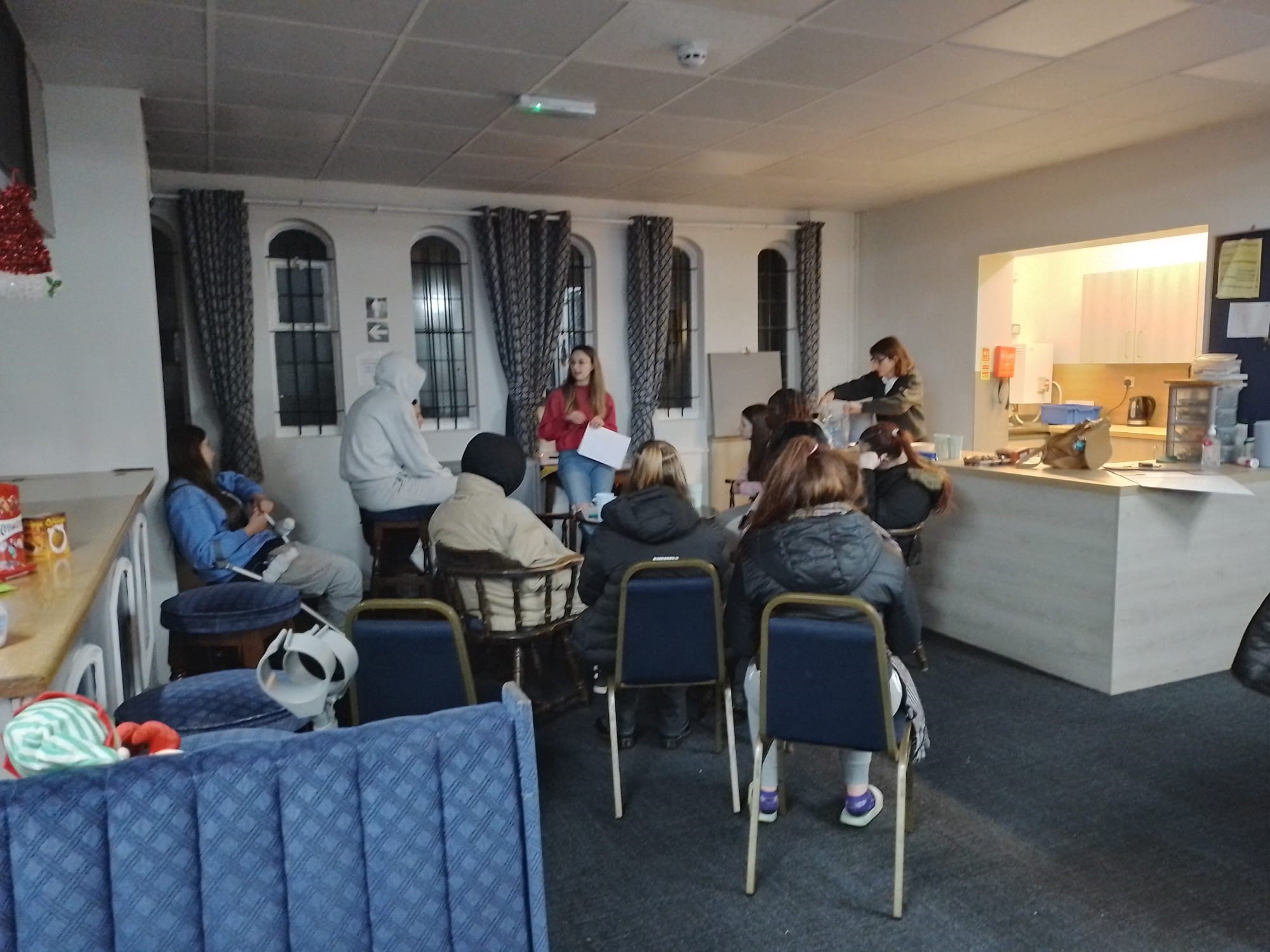
A painting of St. Oscar Romero and Fr. Rutilio Grande, SJ, in the rectory of San Jose Church in Aguilares, El Salvador. A painting of St. Oscar Romero and Fr. Rutilio Grande, SJ, in the rectory of San Jose Church in Aguilares, El Salvador. Todd’s talk covered many other points in a thoughtful and reflective way. There were about 20 people there, and it was a shame there were not more, as this really was a talk that made you sit up and think more about some of the things that St Oscar said – and how we, ourselves think, about other people.

It was an inter-generational event with university students as well as retired people coming along. One SPARK community member commented

“I thought it would be more academic, but it was inspirational.”

Another said

“I came along but didn’t think I would meet people who are saying out loud what I have been thinking in my head.”

closer-up of Todd If you are interested to read more (and I would encourage you in this) then we will be making Todd’s talk available in a few weeks as a pamphlet. SPARK are grateful to Leeds Trinity University for making their premises available to hold this event.

Equally, we are grateful to the Romero Trust and the indefatigable Julian Filochowski for once again bringing the Romero Lecture to Leeds.

1 Sep – Why we have decided to talk about Interculturalism, Faith and Racial Justice in Leeds

by Dwayne Hutchinson – Faith and Racial Justice Lead at Leeds Church Institute

Recently, I have been learning more about interculturalism. A lot of my key learning comes from conversations with Paul Lancaster, MA in Global Leadership in Intercultural Context and Guest Lecturer at Leeds Trinity University, who has spent many years in this area of work.

During one of our conversations, he mentioned there is a difference between multiculturalism and interculturalism. Now, interculturalism was not a word or concept that I was familiar with, and I was interested in learning more.

As our conversations and meetings continue, I am gaining significant understanding about the concepts of interculturalism, which helps me to realise that interculturalism can be a beneficial approach that works alongside faith and racial justice, to challenge racism and racial discrimination in churches, local communities and across the city.

Interculturalism In recent months, I have seen interculturalism initiatives separated from racial justice and vice versa. However, from the conversations with Paul Lancaster, we began to explore the Venn diagram between interculturalism and racial justice, and how faith plays a part in both areas of work. Furthermore, during my further learning about Interculturalism with Phil Thomas and Laura Palmer from Transformations Leeds, a charity working in intercultural spaces with international students across the city, my learning about how interculturalism can work alongside racial justice continues to solidify as I understand how they can work together.

I have realised people can sometimes think they are doing interculturalism that works alongside racial justice. However, once I began to learn some of the practices that were thought to be intercultural, it was multiculturalism that was being practiced, not interculturalism. Although it could appear that multiculturalism is challenging racism and racial discrimination to many, there are essential insights and practices to draw from interculturalism that support racial justice in ways that multiculturalism does not.

Paul Lancaster explains the difference between multiculturalism and interculturalism in this way.

"Society in the UK has become increasingly multicultural/multiethnic and this is seen particularly in many churches. Multiculturalism not only describes this, but it has been government policy. However Western/European culture and mindsets still predominate, which at best have only produced co-existence. It has been stated by politicians in recent years that ‘multiculturalism has failed’.

Increasingly the term ‘intercultural’ has been adopted as a way forward. It is characterised by intentionally creating spaces where there is deep, meaningful contact and communication, with mutual exchange of ideas. No-one is left unchanged because everyone learns from each other, which opens the way for something new to emerge.”

Paul Lancaster While they may appear to be very similar in description, multiculturalism and interculturalism differ in their approach. Interculturalism provides a true feeling of belonging for people living in cultures that are different from their place of birth and upbringing.

After conversations with Paul Lancaster and the Leeds Church Institute’s Churches Against Racism Group, we began to wonder who else may want and need to learn about interculturalism and how it can serve alongside racial justice. During further conversations with people, it became clear to me that interculturalism was not a phrase or methodology they knew about. It was usually confused with multiculturalism. Additionally, due to them not knowing about interculturalism, this meant they did not know about how it is linked to racial justice.

Flags from around the world By deliberately bringing these two areas of work together for learning and discussions, alongside acknowledging their similarities and differences, people will have the opportunity to remove misconceptions and misunderstanding about interculturalism and multiculturalism, whilst learning about racial justice, and how to take appropriate action in this area.
Now, the faith element involves understanding how interculturalism and racial justice can serve churches and all denominations. For Christians to further understand about their brothers and sisters in Christ, and people in their local communities from different ethnicities and cultures, there must be a true understanding of their heritage and backgrounds, rather than just an acknowledgement of how their cultures differ. That’s multiculturalism.

As we continue to learn together about how we can continue to make our city a place of welcome for all ethnicities and challenge racism and racial discrimination, we must remain active in our learning about interculturalism, faith and racial justice. These three elements provide a solid foundation for creating unity in our city.

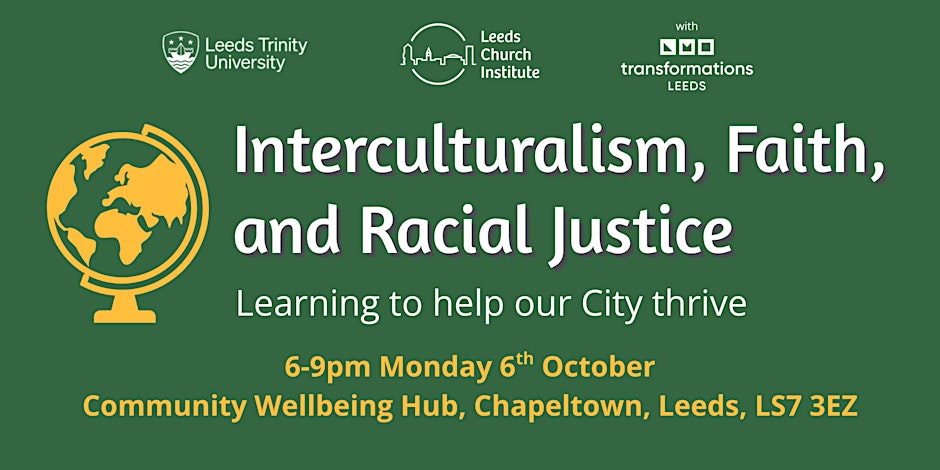
https___cdn.evbuc.com_images_1058473843_112446720455_1_original For those of you who would like to learn more about how interculturalism, faith and racial justice can help you and those within your local communities across your city, you are invited to attend the free Interculturalism, Faith and Racial Justice event on Monday 6th October, 6pm-9pm at the Chapeltown Community Wellbeing Hub, Leeds, in partnership with Leeds Trinity University and Transformations Leeds. Join us by signing up here.

WHERE WILL THE YOUNG WORK?

by John Battle

I recently had the privilege as Pro Chancellor of Leeds Trinity University of presiding over the Graduation ceremonies, great occasions of celebrations of academic achievements by students and their families and friends and the university staff. Leeds Trinity University, a highly regarded Catholic teacher training established in the 1960's by the Cross and Passion Sisters, was upgraded to full independent university status in 2012.

logo for Leeds Trinity University
It now has a diverse range of courses including vocational in-service training for health and policing services and retains its reputation for pastoral care of students, again gaining the highest ranking among UK universities for this year.

Previously Leeds Trinity has held one of the highest ranking for "student employability" but today that, as in all universities, is under great pressure. Entry level job vacancies in the UK have slumped to their lowest since 2018. Last year there were an average of 100 applications per graduate job. Moreover, new technology hiring has dropped by 25% since 2023.

The traditional business route into accountancy has dropped off by 30% as AI is reported as replacing start
up repetitive tasks such as data cleansing, draft writing and administration. HR managers are no longer needing graduate starters. Over supply of higher educational qualifications is said by some to be depressing job market opportunities (30% of the population now have a degree up from 19% in the 1990's) and certainly the much wished for increase in economic growth has not yet taken off.

Robot doing job instead of human
Nor is the issue just one of rising graduate unemployment. The official UK unemployment rate rose to 4.7% in the three months to May and vacancy rates have fallen for 36 consecutive periods. The net impact is hitting prospects for young workers hardest.

There are currently 923,000 16- 24-year-old "not in education, employment or training” (known as " NEETS"). They make up 14.2% of the unemployed and represent not just unskilled and youngsters with no relevant qualifications but also years of underfunding of employment support services for young people. The long tail legacy of COVID lockdowns and a sharp rise in youth mental health problems are neglected parts of the picture.

However, increasing the challenge emerges "where will the young work in future?". It is not sufficient to complacently concede to the job reducing effects of new technologies. Recent figures demonstrated that more
people in West and South Yorkshire were working in the new warehouse and distribution centres along the MI and M62 motorway routes than ever worked in the Yorkshire coalfields at their peak.

But the age of warehousing replacing mining jobs is now moving in robotics are displacing warehouse workers, especially women packers. In other words, labour markets, from traditional manufacturing and production to service sector administration and management are undergoing profound restructuring and transformation and presently squeezing out opportunities for new young workers.

In his still much neglected social encyclical neglected "Caritas in Veritate" Pope Benedict reflected deeply on the economic and political challenges of our times and spelt out what has not become a new buzz word call
for a "reset".

"The complexity and gravity of the present economic situation causes us concern, but we must adopt a realistic attitude as we take up with confidence and hope the new responsibilities to which we are called by the prospect of a world in need of profound cultural renewal; a world that needs to rediscover fundamental values on which to build a better future. The current crisis obliges us to replan our journey, to set ourselves new rules, and to discover new forms of commitment, to build on positive experiences and to reject negative ones. The crisis this becomes an opportunity for discernment in which to shape a new vision for the future".

That vision should now include supporting initiatives for the development of an "Economics of Caring and Sharing" seminal to Catholic social and economic thinking. An elderly disabled woman alone in her flat in
Japan was offered a personal robot to help her as her companion coping with daily chores. She asked for it to be taken back and for a young person "whose eyes would smile with mine and who could give me a hug".
There is a desperate need for interpersonal service in caring for children, the sick and the elderly, perhaps taxing the heavy lifting by robots and AI will lead to the redistributing of wealth generated to care for each other and our planet.

Let no one disregard you because you are young
Meanwhile, as the young in our society worryingly become the "new poor", could we encourage them in the words of St Paul in his letter to Timothy

"Let no one disregard you because you are young ...you have in you a spiritual gift which was given to you when the prophets spoke and the body of elders laid their hands on you; do not neglect it"

4 Aug – Congratulations SPARK members!

by Kathy Shaw, SPARK manager

CONGRATULATIONS! Several of our SPARK members are graduating this summer. Thanks to all of them for their continued work towards justice and peace.


Congratulations on your recent Graduation from Leeds Trinity University

Iesha is a long-standing SPARK member and has recently graduated from Leeds Trinity University with a First Class BA (Hons) in Digital Marketing. 

Iesha was a panel member representing SPARK at a recent event on UK Poverty and the Real Living Wage.  Iesha used her skills as a student Ambassador and has added her input and value to a number of SPARK events and led a community support activity, motivating fellow students and making positive links to the Student Union. 

We wish her every success in her search for work and know she will be an asset to any organisation.

thumbnail_image001 Congratulations on your recent Graduation from Manchester Metropolitan University

image002 Lucy is a longstanding SPARK member and recently graduated from Manchester Met, she already has a job in the competitive field of Early Years teaching. 

She will be an inspirational teacher and a leading light in all she chooses to do.  A passionate advocate for social change, Lucy gives her time to engage others in social justice issues as well as balancing her studies and other commitments. 

Lucy has led a number of SPARK social justice discussions at her local youth group and organised creative and community building opportunities in her local area of Wibsey, Bradford.

 Congratulations on your recent Graduation from the University of Leeds


Isaac attended the SPARK and LTU Leadership Conference, he is a passionate advocate for mental health and has used his dedication and insight to great advantage in LTU Students’ Union as a Mental Health Officer and as the President of the Together and Wellbeing Society. 

Isaac brings his understanding and compassion to promote and develop others and to raise awareness of this vital topic.

image004 Congratulations on your recent Graduation from Leeds Trinity University

thumbnail_image005 Theo is a sports journalist, broadcaster and disability advocate who graduated this month from Leeds Trinity University with a BA in Sports Journalism. 
Theo attended our SPARK and LTU Leadership conference and has maintained an interest in the work of SPARK. 

He has an amazing backstory; Theo was diagnosed with a very rare syndrome when he was 11 which included learning difficulties.  Refusing to be defined by a diagnosis, he overcame many challenges with hard work and commitment.  He has gone on to advocate for others with extra challenges in life.

Whatever path he takes in the future, Theo will always be an inspiration with his talent and love for music and his enthusiastic knowledge about sport.

Our Graduate Chair!

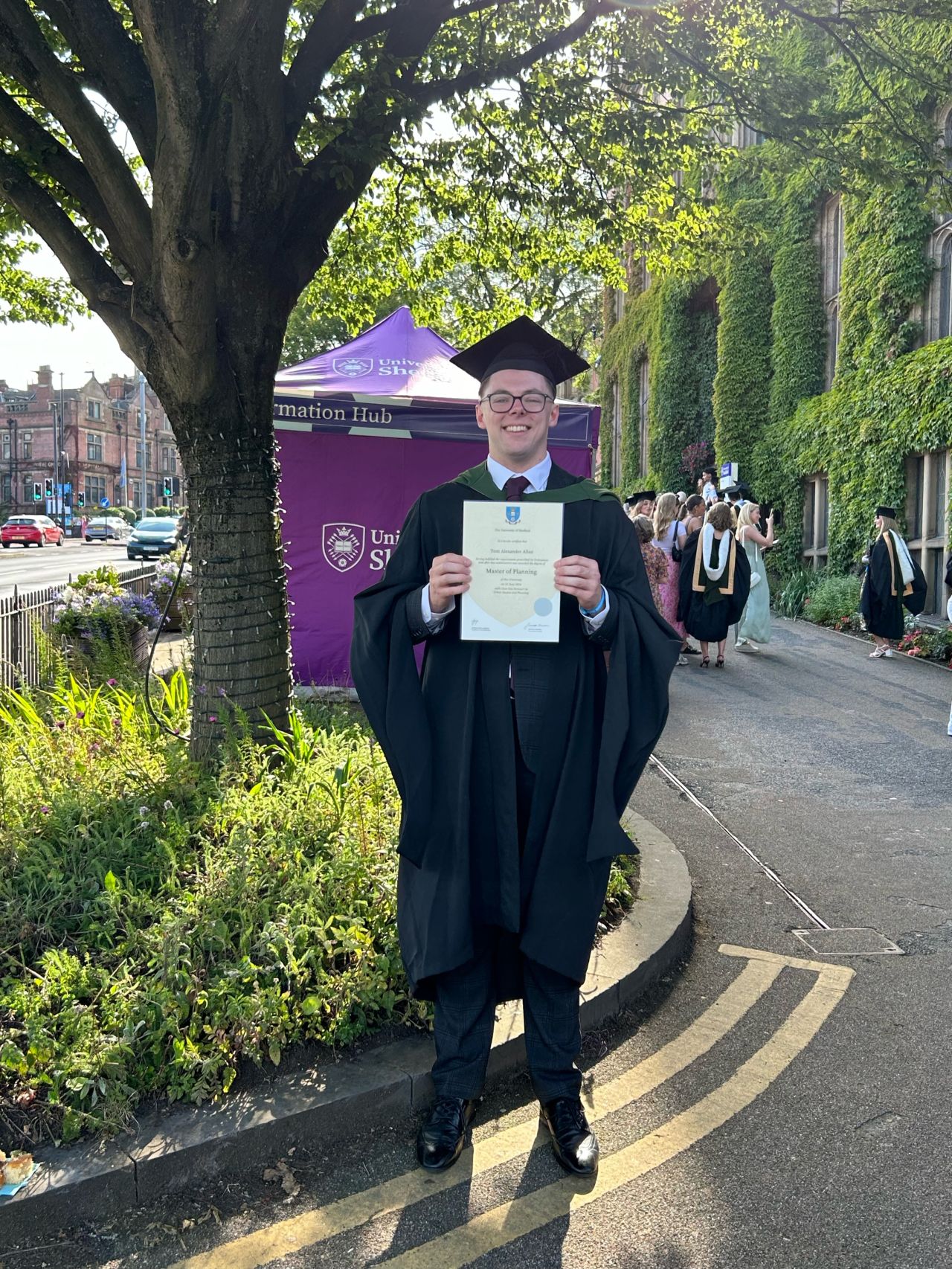
Tom graduated last year from the University of Sheffield as a Master of Planning with Class One Honours in Urban Studies and Planning. 

Tom Allan is a founder member of SPARK and has continued to actively support the project as SPARK Chair since December 2024; he is also a trustee for Million Minutes. 

Tom is now putting all his skills and knowledge to good use as Graduate Planner in York but still finds time to volunteer and support the causes he is passionate about. Central to his future work as a planner is his commitment to driving positive change and building a more sustainable future.

image006 Congratulations on your recent Graduation from the University of Cambridge
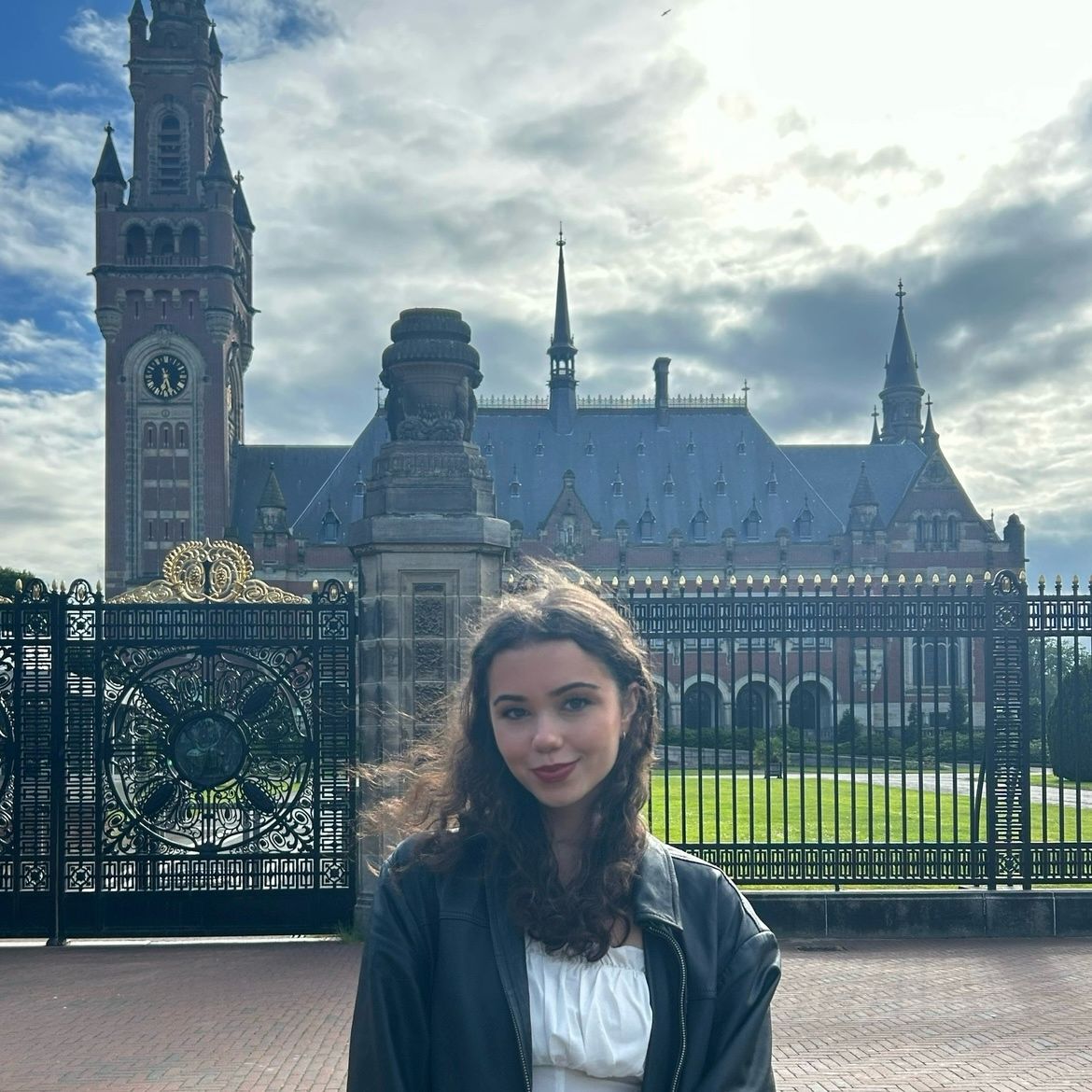
image007 Heather graduated this month with a Law BA; also completing an exchange at Utrecht University where she immersed herself in the issues of human rights and social justice. 

Despite the many challenges of a demanding academic schedule, Heather was also the Chair for the Amnesty International Student Group, working alongside other dedicated activists to advocate for justice and peace. 

Heather has also managed to find time to lead on SPARK social media and digital marketing, a really vital role in ensuring our public image reflects the target age group we are here to engage. 

Heather continues to contribute across many different spheres to reflect her passion and commitment to diversity, inclusion and justice in all its forms.

17 Feb – EXCAVATING HOPE – THE 2025 ROMERO LECTURE on 13 MARCH

By Joe Burns, Commission Member

We are delighted that SPARK Social Justice, our project working with younger Catholics, working in partnership with Leeds Trinity University, will support a Leeds presentation of the 2025 Romero Lecture. It will take place at the new city centre campus of the university, which is on Trevelyan Square, just off Boar Lane in central Leeds, on Thursday 13 March at 7pm.

excavating christian hope Luis Orlando Pérez Jiménez is a Mexican Jesuit currently studying for a PhD at University College, London. He has organised seminars on human rights advocacy strategies for sexual torture, extrajudicial executions, and enforced disappearances. He has conducted workshops on victims' rights and legal guidance for the Enlaces Nacionales network, which comprises 72 groups seeking missing persons in 25 states of Mexico. He has also provided assistance to indigenous communities in Chiapas and Oaxaca and peasant communities in Coahuila affected by resource dispossession.

In his talk he will relate all these experiences to the life of St Oscar Romero.

ALL are welcome.

BOOK NOW


Screenshot 2025-02-17 145451