Donate
Diocese of Leeds Justice and Peace Commission (1)

10 Sep – Walking and reflecting, as pilgrims of hope, in our world today

by Angela Powell, CAFOD community participation co-ordinator Leeds

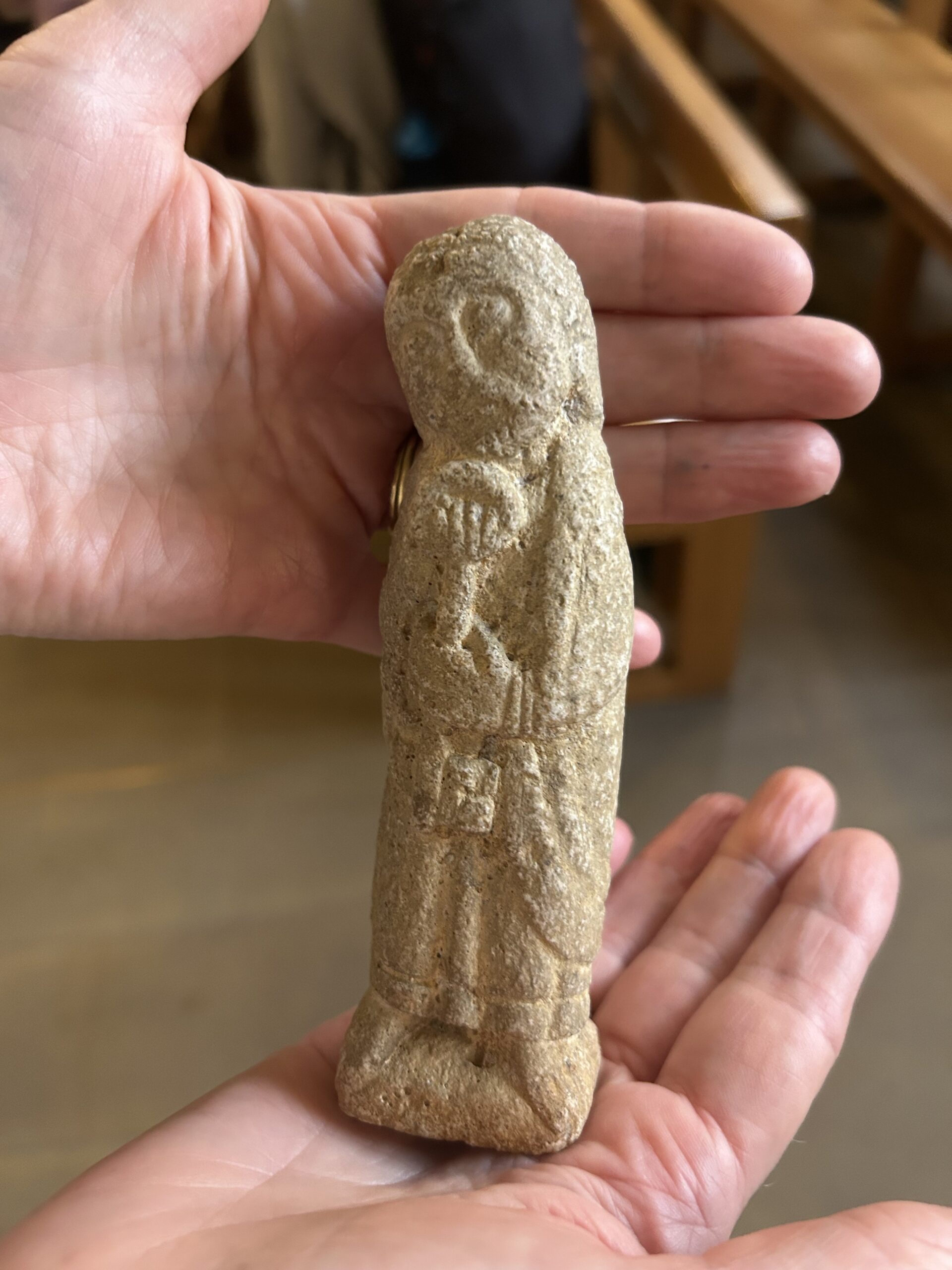
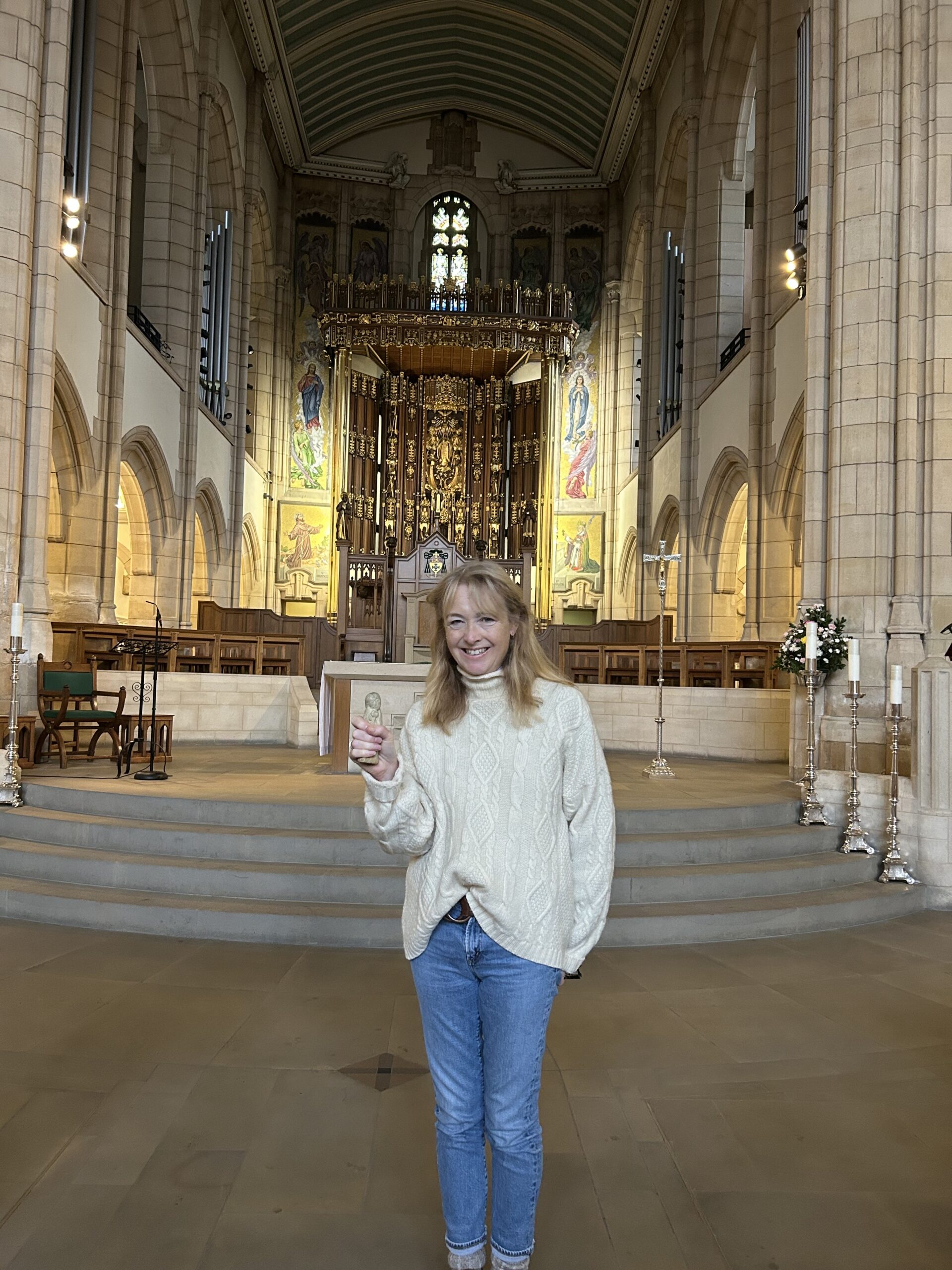
It was a privilege to walk with pilgrims from across Leeds diocese on the first leg of St Marks’ Way, part of the National Jubilee Pilgrimage of Hope in this holy year.  I joined volunteers and supporters, and at the pilgrims Mass at the Cathedral we were reminded of what it means to be a pilgrim. We carried with us an ancient statue of St Peter, who was born near the sea of Galilee and some of us began by reflecting on the suffering in the region and other parts of the world. 

We walked, reflected and talked about what we can do to be beacons of hope in our suffering world. St Peter was one of the first to be called to discipleship by Jesus, he became a charismatic leader, raising his voice and spreading the word widely. We may not all be leaders, but we can play our part by living our lives in ways that help others to see and become aware of God’s universal love. 
IMG_4452 IMG_4456 Jesus showed us how, and we can do this by showing special concern and solidarity for the vulnerable, marginalised and those who suffer.  This Harvest, CAFOD’s Family Fast Day Appeal is reminding us about the ways we can fund Life-Saving Water for those who are unable to access what they need to live dignified lives in a changing and challenging climate. In Southern Ethiopia, the climate crisis is threatening lives.

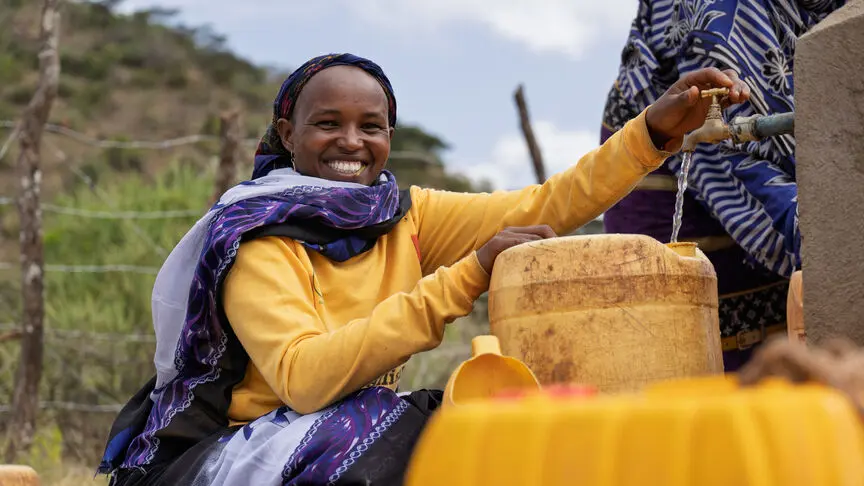
Once, rains fell reliably, fields were green, and water was close by. Now, the seasons are unpredictable, and long droughts are forcing women like Waré to walk for hours each day — even while pregnant — just to find water for drinking, washing, and livestock.
images (2)
“It was very traumatising,” Waré says. “When I was pregnant, I had to go fetch water in the mountains. Sometimes I felt so weak I could fall down, so I worried about my child.”

Yet, Waré refused to give up. Guided by her own faith and uniting with her neighbours, she took action. With support from CAFOD and local water expert Abbiott, they built an underground water tank to collect and store every precious drop of rain. Now, over 300 families have safe, clean water just a few steps from their homes.

This is the Gospel in action: love made real through compassion, courage, and community. As Catholics, we are called to be stewards of creation and stand alongside our sisters and brothers affected by climate change. Your prayers and generosity make this transformation possible.

But many more communities still walk miles for water.

CAFOD is very grateful for all the support it receives from the very generous communities in Leeds diocese.  Last Harvest the parishes raised more than £10,000 and we are sharing ideas and resources to help parishes respond in solidarity, again this year when the Family Fast Day falls on 3rd October 2025.

Untitled design - 2025-09-09T141852.343 Pope Leo XIV urges us to recognise those experiencing poverty as “witnesses to steadfast hope", precisely because they embody it in the midst of uncertainty, poverty, instability and marginalisation.

Can you help at this Family Fast Day? please give what you can so more families can access clean water, stay healthy, because a better world needs all of us.

Donate today at cafod.org.uk/envelope or call 0303 303 3030

5 Sep – Urgent Action Required for Graduate Employment Crisis

by Iesha Cowley, a recent graduate from Leeds Trinity University and SPARK member

Thousands of young people are graduating from UK universities every year full of skills, ambition, and energy to contribute to society. But instead of doors opening, they are walking straight into closed-off job markets, exploitative “entry-level” roles that require years of experience, and financial instability that threatens their futures.

At the very moment we most need graduates to contribute to our economy and communities, they are being pushed into despair, poverty, and long-term disadvantage.

Graduates throwing hats into the air The Crisis Facing Graduates

Graduates are applying for hundreds of jobs and getting nowhere, ghosted by recruiters, or told they can only access apprenticeships beneath their qualifications.

“Entry-level” postings often demand 2–3 years’ experience, creating a paradox where young people cannot start their careers because they have not already had one.

Exploitative unpaid or “voluntary” roles are being passed off as work, benefitting only those wealthy enough to survive without income.

The result? Thousands of capable, qualified graduates are stuck in limbo, unable to afford rent, unable to save, and relying on short-term work or struggling without any security.

And shockingly, many new graduates are not even eligible for Universal Credit, the UK’s basic safety net for those out of work. This means even after years of study, hard work, and debt, they are left without the financial support needed to cover essentials while they search for jobs.

This is not “character-building.” It is systemic failure!

2 Why It Matters

This is not just about individual graduates. It is a generational issue and an economic one.

When graduates cannot afford to live, they cannot take career-building opportunities.

When talent is wasted, productivity and innovation across the UK suffer.

When a whole generation is locked out of work and security, inequality deepens, mental health worsens, and society fractures.

What We’re Demanding

The Government must act now by:

  1. Ensuring all graduates are automatically eligible for Universal Credit if they are actively seeking work.
  2. Creating graduate-specific employment support routes within the Department for Work and Pensions, tailored to modern industries rather than directing degree-holders into underqualification schemes.
  3. Setting clear standards for recruiters and job boards to end misleading “entry-level” adverts demanding experience, expired listings, and exploitative unpaid work.
  4. Developing graduate employment programmes offering fairly paid roles that build careers in digital, creative, and emerging industries, where many young people are trained but opportunities are scarce.
4 A Voice from the Ground

I recently wrote to my MP explaining:

"I graduated with a First-Class Honours Degree in Digital Marketing, full of drive, determination, and ideas. Since then, I have applied for over 600 roles, and still find myself without stable employment, unable to afford rent, forced onto Universal Credit, and with no means of saving toward a deposit for a home, a basic aspiration that now feels completely out of reach.

Despite exploring every possible route into the job market, taking my CV door to door, contacting agencies, reaching out to companies on social media, speaking with university careers services, networking online and in-person, and even considering relocation, nothing has broken the cycle. I am met with ghosting, technical site errors, duplicate interviews, expired job posts, low-paid or unpaid "volunteering" positions, or entry-level jobs demanding 2–3 years’ experience. These are not isolated incidents, but part of a wider systemic failure that is hurting a generation of hard-working young people.

In addition to the career stagnation, I am now experiencing severe financial and mental health strain. Short-term contracts and temp work offer no security. The cost of commuting, especially without a car, narrows my opportunities further. National Insurance rises and a stagnant labour market have only worsened the situation, making employers hesitant to hire and damaging trade and mobility.

It is disheartening beyond words to walk into a Job Centre with a degree, only to be told about apprenticeships beneath my qualification level. Or to see "entry-level" jobs that demand years of experience, creating a paradox where we cannot begin a career because we have not already had one.

This is not just a personal crisis. It is a generational one.

And I speak with some personal history and pride. My great-grandfather once served as the local lead for Labour in Sunderland, fighting for fair work, dignity, and opportunity for his community. If he could see what his great-grandchild faces now, despite doing everything “right” he would be turning in his grave.

We were raised to believe that education and hard work would open doors. That has not been the reality.

There is a growing disconnect between what graduates are promised and what is actually attainable. A flood of qualified candidates, an influx of international workers and students (who should expand the job market, not compete for the same few roles),

and the loss of face-to-face hiring practices have created a bottleneck that is pushing capable individuals into despair.

What I ask from you is action and advocacy:

· Push for real entry-level opportunities, with accurate job descriptions and realistic experience requirements.

· Introduce measures to hold job boards and recruiters accountable for expired listings and ghosting.

· Support better pay transparency, minimum hours, and enforcement of the Real Living Wage.

· Advocate for graduate-specific employment programmes that offer paid, full-time roles matching modern skills and education.

· Fund or encourage local employment hubs where CVs can still be handed in, especially for those without a car or reliable transport.

· Increase public investment in digital and creative industries, where many of us have trained, but find no foothold.

This is not just about me. I represent thousands of others stuck in the same cycle. We want to work, we want to contribute, and we want to build a life. But we need help breaking through a gate that keeps getting higher and harder to access.

Please take this letter not just as a plea, but as a warning: the graduate crisis is a ticking time bomb. If left unaddressed, it will affect not only individuals but the fabric of our economy and society."

My voice is not unique. It represents a generation shouting for help, dignity, and opportunity.

Iesha graduating in front of a wall of flowers Call to Action

We were raised to believe that if we worked hard, studied, and earned qualifications, opportunity would follow. Instead, thousands face exclusion, instability, and exploitation.

It’s time to give graduates the safety net and support they deserve.

By signing this petition, you are calling on the UK Government to:

  • Guarantee Universal Credit access to all graduates seeking work
  • Stop exploitative job practices
  • Create pathways that match graduate skills to meaningful opportunities
This generation has done its part. Now the Government must do theirs!

Sign the petition!

02 Sep – Have a religious experience on the Leeds and Liverpool Canal!

By Joe Burns, Commission member

The Northern Dioceses Environment Group (NDEG) organise at least one in-person event every year. This year they are doing a mini-pilgrimage from Leeds City Station to Kirkstall Abbey in celebration of 10 years since the publication of Laudato Si. A similar mini-pilgrimage, organised by the Diocesan Communications Director, took place at the end of May.

The pilgrimage itself will take place on Saturday 20 September, with everyone meeting in the main concourse of Leeds City Station (near the public toilets) at 12:45pm for a short briefing and for a prompt 1pm start. NDEG welcome everyone to come and join them and take part in this opportunity to meet with people from across the Northern Dioceses and to find out how Laudato Si has inspired people in different dioceses to act.

Today, I did a trial of the walk with Paul Kelly, from Our Lady and St Boniface parish covering Settle and Bentham. He will be the walk leader on the day. With a little detour at the start, because of the work to improve the entrance to Leeds City Station, we set off along the towpath of the Leeds & Liverpool canal starting at the canal basin. The walking is on good paths throughout. The towpath is in good condition, which is more than can be said for the canal itself; if you come then don’t expect to see any narrowboats chugging along! There is a short stretch along roads when we leave the canal towpath at Hollybush farm in Kirkstall. However, after only a couple of hundred yards we join another good footpath that lead right into the grounds of the abbey itself.

The walk itself is just a little under 5 miles, on the level (apart from the locks) and along a good path. If you do not think you could walk that far then you would be very welcome to join us for a short prayer service in the abbey church itself. We will be setting off at 1pm promptly from the station, so we will probably arrive at the abbey church between 3pm and 3:15 pm.

There is a café at the abbey which stays open until 4pm and a good bus service back into Leeds to near the station from the main road outside the abbey.

If you think you might join us then please follow this link to give some contact details so we can send you a more detailed information leaflet and update you about any last minute changes.

September 2025 Newsletter

📄 Download PDF Newsletter

1 Sep – Why we have decided to talk about Interculturalism, Faith and Racial Justice in Leeds

by Dwayne Hutchinson – Faith and Racial Justice Lead at Leeds Church Institute

Recently, I have been learning more about interculturalism. A lot of my key learning comes from conversations with Paul Lancaster, MA in Global Leadership in Intercultural Context and Guest Lecturer at Leeds Trinity University, who has spent many years in this area of work.

During one of our conversations, he mentioned there is a difference between multiculturalism and interculturalism. Now, interculturalism was not a word or concept that I was familiar with, and I was interested in learning more.

As our conversations and meetings continue, I am gaining significant understanding about the concepts of interculturalism, which helps me to realise that interculturalism can be a beneficial approach that works alongside faith and racial justice, to challenge racism and racial discrimination in churches, local communities and across the city.

Interculturalism In recent months, I have seen interculturalism initiatives separated from racial justice and vice versa. However, from the conversations with Paul Lancaster, we began to explore the Venn diagram between interculturalism and racial justice, and how faith plays a part in both areas of work. Furthermore, during my further learning about Interculturalism with Phil Thomas and Laura Palmer from Transformations Leeds, a charity working in intercultural spaces with international students across the city, my learning about how interculturalism can work alongside racial justice continues to solidify as I understand how they can work together.

I have realised people can sometimes think they are doing interculturalism that works alongside racial justice. However, once I began to learn some of the practices that were thought to be intercultural, it was multiculturalism that was being practiced, not interculturalism. Although it could appear that multiculturalism is challenging racism and racial discrimination to many, there are essential insights and practices to draw from interculturalism that support racial justice in ways that multiculturalism does not.

Paul Lancaster explains the difference between multiculturalism and interculturalism in this way.

"Society in the UK has become increasingly multicultural/multiethnic and this is seen particularly in many churches. Multiculturalism not only describes this, but it has been government policy. However Western/European culture and mindsets still predominate, which at best have only produced co-existence. It has been stated by politicians in recent years that ‘multiculturalism has failed’.

Increasingly the term ‘intercultural’ has been adopted as a way forward. It is characterised by intentionally creating spaces where there is deep, meaningful contact and communication, with mutual exchange of ideas. No-one is left unchanged because everyone learns from each other, which opens the way for something new to emerge.”

Paul Lancaster While they may appear to be very similar in description, multiculturalism and interculturalism differ in their approach. Interculturalism provides a true feeling of belonging for people living in cultures that are different from their place of birth and upbringing.

After conversations with Paul Lancaster and the Leeds Church Institute’s Churches Against Racism Group, we began to wonder who else may want and need to learn about interculturalism and how it can serve alongside racial justice. During further conversations with people, it became clear to me that interculturalism was not a phrase or methodology they knew about. It was usually confused with multiculturalism. Additionally, due to them not knowing about interculturalism, this meant they did not know about how it is linked to racial justice.

Flags from around the world By deliberately bringing these two areas of work together for learning and discussions, alongside acknowledging their similarities and differences, people will have the opportunity to remove misconceptions and misunderstanding about interculturalism and multiculturalism, whilst learning about racial justice, and how to take appropriate action in this area.
Now, the faith element involves understanding how interculturalism and racial justice can serve churches and all denominations. For Christians to further understand about their brothers and sisters in Christ, and people in their local communities from different ethnicities and cultures, there must be a true understanding of their heritage and backgrounds, rather than just an acknowledgement of how their cultures differ. That’s multiculturalism.

As we continue to learn together about how we can continue to make our city a place of welcome for all ethnicities and challenge racism and racial discrimination, we must remain active in our learning about interculturalism, faith and racial justice. These three elements provide a solid foundation for creating unity in our city.

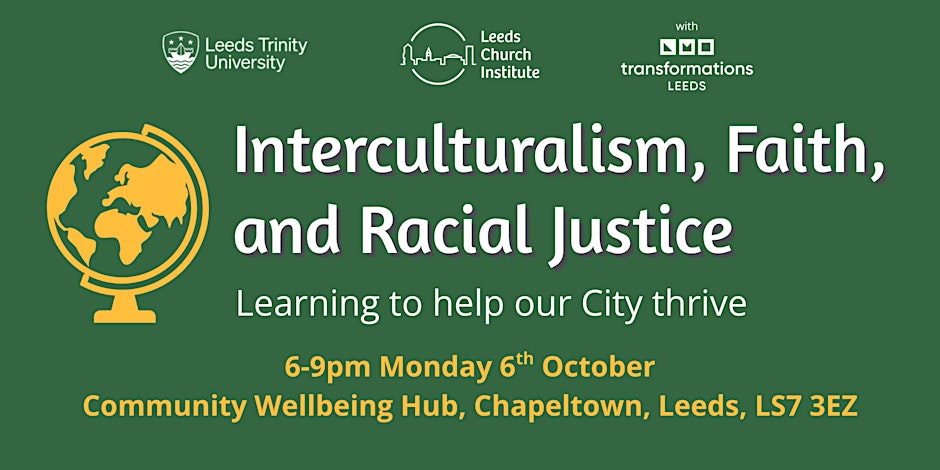
https___cdn.evbuc.com_images_1058473843_112446720455_1_original For those of you who would like to learn more about how interculturalism, faith and racial justice can help you and those within your local communities across your city, you are invited to attend the free Interculturalism, Faith and Racial Justice event on Monday 6th October, 6pm-9pm at the Chapeltown Community Wellbeing Hub, Leeds, in partnership with Leeds Trinity University and Transformations Leeds. Join us by signing up here.

Working for peace in a time of war – how do Christian peace and justice activists keep going?

by Sean Morris, Commission member

For anyone watching or reading the news, we are in one of the most worrying times since the end of the Cold War. Awful and destructive conflict in Gaza and the West Bank, along with regular attacks across the Middle East in the likes of Iran, Syria, Lebanon and Yemen. Then there is the ongoing nightmare of the Russian invasion of Ukraine with day after day of deadly drone attacks and grinding battles on a front across southern Ukraine.

And there are many conflicts elsewhere that rarely make the headlines in the likes of Myanmar, Sudan, Ethiopia and terrorist insurgencies across many countries, such as Christians regularly being killed in Nigeria by followers of the group Boko Haram, inevitably creating then revenge attacks.

At the same time, the threat of major conflict outside Ukraine has seen all NATO members, under significant American pressure, start raising their defence budgets markedly, most pledging that 5% of national GDP will go on defence expenditure. In the UK this sees billions planned for our Trident nuclear weapons programme, on developing other weapons of mass destruction such as drones, new warplanes and cyber warfare.

As a keen reader of history, I find this current period one of the most turbulent and scary, particularly as the ‘rules based order’ of diplomacy has been dumped by the likes of President Trump and President Putin.

On the other side of this, actively demonstrating opposition to such actions has become more difficult. The previous government brought in legislation making peaceful demonstration much more challenging – in an unnecessary kneejerk response to the likes of Extinction Rebellion and Just Stop Oil – and the current government have followed up in their recent ban of the group Palestine Action, prescribing them in the same manner as a terrorist group.

So, what should be our response as Christians to all of this pain and misery? An obvious response by many people is to try and ignore it in a feeling of hopelessness and powerlessness. It is immensely hard to watch the daily news and see all this thoughtless death and destruction.

But we need to ponder daily what Jesus would do, and I think he would want us always to stand up and be counted. But what to do?

I have some Catholic Christian friends who have got heavily involved in some non-violent direct action, some being arrested for supporting Palestine Action, or doing some more militant action as part of the campaign to tackle climate change. If your conscience allows that, and you can deal with any of the consequences that comes from that, then stand up for what you believe in.

Certainly, go on one of the regular demonstrations supporting the Palestinians, and do get involved in the climate change movement in many different ways, big and small. And join groups like Pax Christi, Sabeel International or the many local groups supporting Ukrainians living in the region.

Taking effective action reduces the feeling of hopelessness and powerlessness and you are actively standing up for peace and justice. But do be careful with yourself, take care with your mental health as these issues can really overwhelm you.

Just as important can be to write to your MP telling them that doing nothing is no option. Call them to stand up and be counted. Recent rebellions over welfare policy came about as MPs knew the high levels of public discontent, so it is a much more valuable tool than sometimes we think it is. And continue to get involved supporting foodbanks, assisting refugee and asylum seekers groups with practical aid and financial support.

Never be afraid to speak out either, it is again what Jesus would do. But do be aware not everyone is as clued in to these issues as other, and try and educate them with wisdom and kindness, even when that can feel very hard to do.

Every person is a child of God, who loves them infinitely
And above all, keep these people in your hearts, minds and prayers.

As Jesus says to the disciples:

“Ask and it will be given to you; seek and you will find, knock, and it will be opened to you. For everyone who asks receives, and the one who seeks finds, and to the one who knocks it will be opened.” (Luke 11:10 – 11).

As this lovely prayer from St Jane Frances de Chantal says:

“Every person is a child of God, who loves them infinitely: it is, therefore, impossible to want to love God, without loving human beings – the more one loves God, the more one loves people. The love of God, the love of people, is my whole life; it will be my whole life, I hope.”

That is the hope I hold on to in these challenging and hard times. Jesus insisted on saying blessed is the peacemaker, as we are true sons and daughters of God.

By loving our neighbour, challenging them where we need to, and standing up for those that ask for our help, we can make a difference, and do what our faith tells us to do.

16 Aug – October Day Retreat: Sustaining Hope in Today’s World

SPARK social justice Saturday October 11 2025

10:30am - 4pm


So many terrible things are happening in the world today.


How do we cope? Where do we look to find signs of Hope?


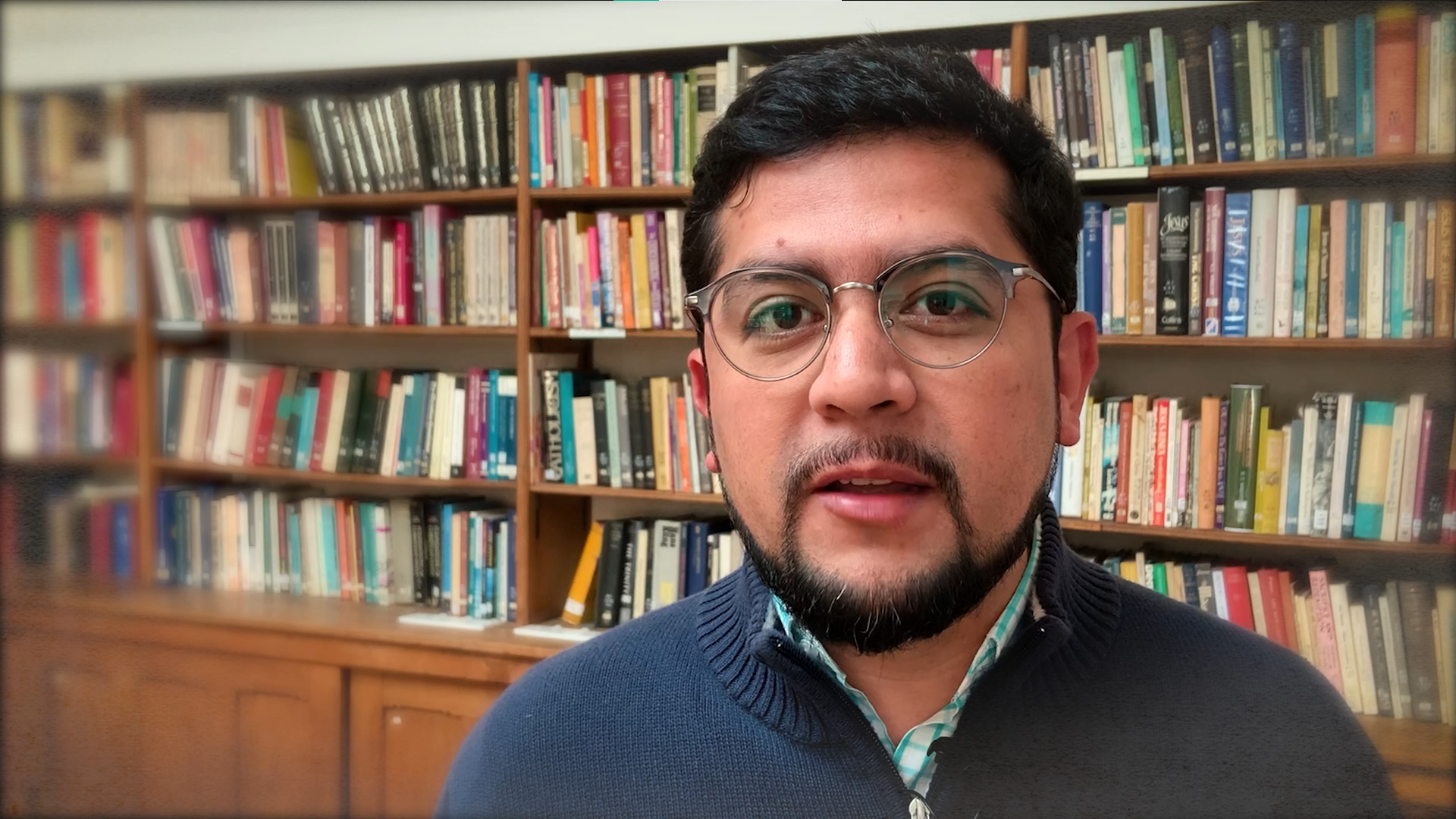
Earlier in 2025 we welcomed Fr Luis Orlando to give the Romero Lecture. People attending were moved by his descriptions of his work with the families of the disappeared in Mexico and with other marginalised groups. We are delighted that, with the financial support of the Jesuit Social Justice Fund, SPARK have been able to invite him to return to lead this day retreat.


As well as input from Fr Luis Orlando, there will be time for discussion and private reflection. This retreat day will also include mass.


The day will include a light buffet lunch and tea, coffee and water will be provided.

luis_orlando_perez_jimenez_sj  

We are using Hinsley Hall as the venue. However,  the room that we will be using will only accommodate up to a maximum of 25 people – places on this event are very limited.  So it is essential to book a place. 


It is a donation event – you will need to pay a minimum donation of £1 on the Eventbrite page in order to book a place.

Book on Eventbrite

Summer Reading

by Sara Forrest

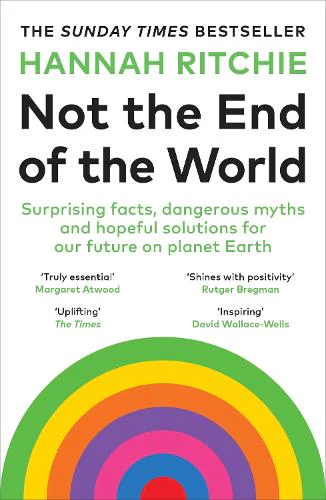
‘Not The End of The World’ by Hannah Ritchie

If your young ones are worried about Climate Change and you want to be able to reassure them then ‘Not The End of The World’ by Hannah Ritchie is a good read.

Remember how we succeeded in closing the ozone layer?

Talks about the importance of political will to make things happen and contains some surprising facts about the impact of our individual decisions.

We are bombarded by doomsday headlines that tell us the soil won't be able to support crops, fish will vanish from our oceans, that we should reconsider having children.

But in this bold, radically hopeful book, data scientist Hannah Ritchie argues that if we zoom out, a very different picture emerges. The data shows we've made so much progress on these problems, and so fast, that we could be on track to achieve true sustainability for the first time in history.

Packed with the latest research, practical guidance and enlightening graphics, this book will make you rethink almost everything you've been told about the environment, from the virtues of eating locally and living in the countryside, to the evils of overpopulation, plastic straws and palm oil. It will give you the tools to understand what works, what doesn't and what we urgently need to focus on so we can leave a sustainable planet for future generations.

These problems are big. But they are solvable. We are not doomed. We can build a better future for everyone. Let's turn that opportunity into reality.


‘Fluke’ by Brian Klaas

In ‘Fluke’ by Brian Klaas you get an explanation of why so many forecasts, predictions and polls don’t get it right. (The world is too complex.)

And that is why we should look behind the headlines and question data presented in a way that drives an emotional response (populism) to make better decisions and live better lives.

It’s not as dry as it sounds!

Fluke: Chance, Chaos, and Why Everything We Do Matters:
In Fluke, myth-shattering social scientist Brian Klaas deep-dives into the phenomenon of randomness, unpicking our neat and tidy storybook version of events to reveal a reality far wilder and more fascinating than we have dared to consider.

The bewildering truth is that but for a few incidental changes, our lives - and our societies - would be radically different. Offering an entirely new perspective, Fluke explores how our world really works, driven by strange interactions and random events.

How much difference does our decision to hit the snooze button make?

Did one couple's vacation really change the course of the twentieth century?

What are the smallest accidents that have tilted the course of history itself?


‘Great Britain? How We get Our Future Back’ by Torsten Bell

‘Great Britain? How We get Our Future Back’ by Torsten Bell is a readable explanation of how decades of under-investment by both UK Government and private organisations has stalled our economy.

A book for someone who is perhaps fed up with the Government.

The Generation Wars and Housing chapters are particularly thought provoking.

An essential blueprint for a better future, from the leading economist & Labour rising star

‘Stellar: brilliant, incredibly pragmatic’ Rory Stewart
‘Refreshingly optimistic’ The Times
‘No one has done more to re-inject sanity into our national policy’ Emily Maitlis

There are few who are better placed to investigate Britain’s plight than Torsten Bell, Labour MP for Swansea West and former Chief Executive of the Resolution Foundation.

In Great Britain? he offers both a clear-eyed diagnosis of the problems facing our country – a uniquely toxic combination of huge inequality and stagnant economic growth – and a bold vision for the alternative. This is a book bursting with ideas and infectious hope.

In his treasure trove of enlightening and original analysis, Torsten Bell argues that our era of chaos and cynicism needs neither utopianism nor nostalgia, but a practical patriotism to raise living standards and create a more equal country. He passionately points us towards a Britain that we can actually build – a future worth fighting for.

‘A roadmap to the new normal’ Observer
'Pretty cool … the think tank work I raved about on The Rest Is Politics has morphed into a book' Alastair Campbell
‘A dose of Torstenomics is the only thing that can give us hope’ Amol Rajan
‘Spiced with wit, masterful, fact-packed’ Polly Toynbee

**A FINANCIAL TIMES AND OBSERVER BEST BOOK OF 2024**

WHERE WILL THE YOUNG WORK?

by John Battle

I recently had the privilege as Pro Chancellor of Leeds Trinity University of presiding over the Graduation ceremonies, great occasions of celebrations of academic achievements by students and their families and friends and the university staff. Leeds Trinity University, a highly regarded Catholic teacher training established in the 1960's by the Cross and Passion Sisters, was upgraded to full independent university status in 2012.

logo for Leeds Trinity University
It now has a diverse range of courses including vocational in-service training for health and policing services and retains its reputation for pastoral care of students, again gaining the highest ranking among UK universities for this year.

Previously Leeds Trinity has held one of the highest ranking for "student employability" but today that, as in all universities, is under great pressure. Entry level job vacancies in the UK have slumped to their lowest since 2018. Last year there were an average of 100 applications per graduate job. Moreover, new technology hiring has dropped by 25% since 2023.

The traditional business route into accountancy has dropped off by 30% as AI is reported as replacing start
up repetitive tasks such as data cleansing, draft writing and administration. HR managers are no longer needing graduate starters. Over supply of higher educational qualifications is said by some to be depressing job market opportunities (30% of the population now have a degree up from 19% in the 1990's) and certainly the much wished for increase in economic growth has not yet taken off.

Robot doing job instead of human
Nor is the issue just one of rising graduate unemployment. The official UK unemployment rate rose to 4.7% in the three months to May and vacancy rates have fallen for 36 consecutive periods. The net impact is hitting prospects for young workers hardest.

There are currently 923,000 16- 24-year-old "not in education, employment or training” (known as " NEETS"). They make up 14.2% of the unemployed and represent not just unskilled and youngsters with no relevant qualifications but also years of underfunding of employment support services for young people. The long tail legacy of COVID lockdowns and a sharp rise in youth mental health problems are neglected parts of the picture.

However, increasing the challenge emerges "where will the young work in future?". It is not sufficient to complacently concede to the job reducing effects of new technologies. Recent figures demonstrated that more
people in West and South Yorkshire were working in the new warehouse and distribution centres along the MI and M62 motorway routes than ever worked in the Yorkshire coalfields at their peak.

But the age of warehousing replacing mining jobs is now moving in robotics are displacing warehouse workers, especially women packers. In other words, labour markets, from traditional manufacturing and production to service sector administration and management are undergoing profound restructuring and transformation and presently squeezing out opportunities for new young workers.

In his still much neglected social encyclical neglected "Caritas in Veritate" Pope Benedict reflected deeply on the economic and political challenges of our times and spelt out what has not become a new buzz word call
for a "reset".

"The complexity and gravity of the present economic situation causes us concern, but we must adopt a realistic attitude as we take up with confidence and hope the new responsibilities to which we are called by the prospect of a world in need of profound cultural renewal; a world that needs to rediscover fundamental values on which to build a better future. The current crisis obliges us to replan our journey, to set ourselves new rules, and to discover new forms of commitment, to build on positive experiences and to reject negative ones. The crisis this becomes an opportunity for discernment in which to shape a new vision for the future".

That vision should now include supporting initiatives for the development of an "Economics of Caring and Sharing" seminal to Catholic social and economic thinking. An elderly disabled woman alone in her flat in
Japan was offered a personal robot to help her as her companion coping with daily chores. She asked for it to be taken back and for a young person "whose eyes would smile with mine and who could give me a hug".
There is a desperate need for interpersonal service in caring for children, the sick and the elderly, perhaps taxing the heavy lifting by robots and AI will lead to the redistributing of wealth generated to care for each other and our planet.

Let no one disregard you because you are young
Meanwhile, as the young in our society worryingly become the "new poor", could we encourage them in the words of St Paul in his letter to Timothy

"Let no one disregard you because you are young ...you have in you a spiritual gift which was given to you when the prophets spoke and the body of elders laid their hands on you; do not neglect it"

7 Aug – Memorial for the Children of Gaza on 23 Aug

by Carol Burns, Leeds Diocese Pax Christi member

Untitled design - 2025-08-07T110417.393 There will be a Memorial for the Children of Gaza on Saturday August 23rd in Leeds City Centre (on Briggate - near to the entrance to Marks & Spencer's) from 9.00 am to 6.00 pm organised by an informal group of activists.

Over 17,000 children have been killed in Gaza since October 7th 2023 and many more injured. This is an average of 28 children killed every day. They are not just numbers but lives brutally stolen.

This memorial event is to honour their lives, ensuring they are not forgotten, a witness to this terrible suffering.

Along with other towns and cities in Yorkshire we will read out a proportion of the names of the children throughout the day.
This will be a respectful and sombre gathering with each, and every child honoured.

If you would like to gather with us at anytime during the day you will be very welcome, please save the date. 

We will need people to volunteer to read, to hold placards, give out leaflets and to steward. We will want to take photos and videos throughout the day too.
If you would like to be involved in this way, or to be kept updated about the event,  follow the link below to join a WhatsApp  group which will provide details of specific roles and times. A commitment of an hour would be helpful.

https://chat.whatsapp.com/CqJ833tycZo4zAa4QMV0gw
Please share with your friends and other contacts