We find ourselves at an interesting point in history.
The Russians, we are told, are coming. 12 years after Russian troops seized Crimea, and four years after the 2022 invasion of Ukraine, they are the number one threat they say. The Ukraine invasion of course is still ongoing. The solution given to this insecurity is, apparently, to buy more weapons.
The Americans, we hear, are like Schrodinger's cat: this was the cat that was both dead and alive until you opened the box in the physics thought experiment. They are both our long term partner on whom our defence depends: we therefore need to buy weapons to keep them happy. But also potentially unreliable, so we need to be ready: for which the answer is to buy more weapons.
The Chinese threaten the freedom of Taiwan, Taiwanese democracy is threatened by the Peoples Liberation Army! The solution to this, we hear, is to buy weapons.
But the Chinese are also arming their neighbours, some of whom need British components - like ejector seats - to make the planes work. In which case, we ask the neighbours to buy our weapons - but with the honest to goodness promise they won’t use them for bad things.
When they do use them for bad things - as they always do, heck, they did this week - that creates instability. And you know what the recipe is to solve this problem? I bet you do! It’s to buy weapons.
It’s like a multiple choice test where the answer is always the same, no matter what the question is. Buy more weapons.
So here we are. A billion pounds worth of weapons is on its way to, well, right here. Another couple of billion over the lifetime, just on the jets. Forget the basing costs, weapons costs, pilot costs.
We have been told a lot of things. But here is what we have not been told.
Are there American bombs down the road in Lakenheath?
Answer: No comment.
Does that increase the threat to local people.
Answer: No comment.
If there is a war: how will they be used?
No comment.
How much will all this cost? No comment.
How many will die? No comment.
How do we stop it escalating to a global conflict.
Again, silence.
Again, No comment.
The system which delights in telling us to buy and build more weapons is strangely silent when it comes to the harm and the costs of the weapons on this airbase..
Well if the Government won't answer, all of us here will!
We together will say there is no such thing as a limited nuclear war!
We will tell everyone that there are nuclear bombs and bombers here, and there shouldn't be.
And we will hold the Government to account for every pound it spends on death and destruction, while telling us there isn't the money for better schools, better hospitals, greener transport and a decarbonised power system.
Thank you for being here, thank you for getting the word out and thank you for helping to end the silence.
In February, PeaceJam UK hosted our first in-person Youth Leadership Training Weekend. We welcomed 13 members of our Youth Team, aged 14-26, to Bradford for three days of learning, creativity, and community building.
The PeaceJam UK Youth Team meets every month online, to discuss issue areas that members are passionate about. Together, we explore ways that members can create positive change in their own settings, be that at school, at home, or in their local community.
This year (academic year 2025/26), the topics our members are passionate about include:
Youth involvement in politics
Inadequate youth support services
Mental Health impacts of social media
Wellbeing in education
Disability awareness
Homelessness
Impacts of AI
Media misinformation
Over the course of three days, our members worked together to further develop their thinking on these issue areas into tangible Social Action Projects. With the help of facilitators, both internal to PeaceJam UK and external, they explored some key components of community-based social action.
We had the pleasure of hosting three incredible workshop leads:
Lauren Kelly ran a zine-making workshop, demonstrating how creative communication can increase the accessibility of information on topics that can often seem overwhelming. Some of our members are now planning to include sine-making in their own social action projects as a way of sparking conversations and brining people together.
Sudhir Selvaraj led us in a River of Life activity, shining light on the importance of making space for self-reflection when undertaking projects we care deeply about.
Josie Tothill ran a workshop exploring how to bring people together for a common cause, using values as the foundation of community building.
A highlight for many of our Youth Team members was our trip to CATCH (Community Action to Create Hope) in Leeds. Here our young people found inspiration in the responsibility they saw the CATCH volunteer undertaking. Seeing young people, their own age and younger, responsible for looking after the space, the farm animals, and welcoming visitors like ourselves, reshaped for many of them what 'youth empowerment' and 'youth-led' can mean. As one of our Youth Team reflected: "young people can have an impact, and not just negatively". When young people are able to claim agency, and are supported to enact meaningful change, the ripples are felt throughout the community.
Our Youth Leadership Training Weekend wasn't full of traditional Leadership skills workshops. Yet our Youth Team reflected they were feeling more confident and capable to undertake their projects when they returned home. Through a focus on creativity, play, and fun, they presented ideas to the group, curated a space where they each felt supported to be vulnerable, and made genuine connections with each other. As one member said, "we're a friendship group now".
This was our first Youth Leadership Training Weekend, and from the feedback of those who joined us, we're planning to make it a core part of our annual Youth Team. This year our meet-up was made possible by: the generosity of our workshop-leads volunteered their time and expertise; the University of Bradford and Bradford 2025 UK City of Culture for providing venues; Rotary Club of Jersey who funded travel for two of our attendees, and the Leeds Justice and Peace Commission’s SPARK Social JusticeProjectwho made a donation towards catering costs.
For over 100 years International Women’s Day has been celebrated on 8 March. This year’s theme is Give to Gain, a call to contribute to society. Its purpose is to advance gender equality and every year in support of that aim the UN hold a major Convention. I am old enough to have been offered a full time job at the shoe shop where I was a Saturday girl before they advertised the job for male applicants only. That was legal then.
As a Christian I follow Jesus who consistently reached out to those who were disadvantaged by the society in which he lived. He successfully challenged the unequal treatment of male and female adulterers by demonstrating the sinners of each of the men who had picked up stones to stone her with. He made it clear that he did not condone the adultery. He also helped widows and made sure that his own widowed mother would have a home after his death on the Cross.
The recent media reporting on Epstein, Al Fayed and Andrew Tate shows how easily those with power and money have sexually exploited girls and women. And have done so with impunity for years because the ‘elite’ were treated as above the law. The Right have been successful in turning the grooming gangs into an anti Muslim story when the real issue we as a society should be talking about is why we allowed so many girls in our Care System to have such low self esteem leading to them being vulnerable and then not listening when they told those in authority. I am glad that in the UK we have recognised that our organisations need to change to listen and believe. It is interesting to see the commentary on the recent UK arrests for Misconduct in Public Office and the questions now being asked in other jurisdictions.
Across the world, whatever you measure, the majority of women do less well than the majority of men. Sometimes the difference is significant.
I hope that the Catholic Church will soon speak out, as it did in Laudate Si, to advance the status of girls and women as possessing the same God Given dignity as boys and men. And address the need for structural change to advance girls and women towards equality with boys and men.
I also hope that the Vatican will challenge the powerful men of the Christian Right, especially in the Americas, who desire to exert greater control over society enhancing their own influence, wealth and status by reducing the dignity of others, especially girls and women and those who are different.
My faith in Jesus does not waver. I believe that girls and women will achieve equality as God intended. I do wish that my Church would speak out more loudly and be heard on behalf of girls and women throughout the world.
Our parish are donating to Aid to the Church in Need for their work in Pakistan. It upset me because when I lived in Pakistan 60 years ago it seemed to be a tolerant place. I didn’t feel threatened and wasn’t bullied or name called at school because I was different from the other pupils. I wondered what had changed.
As I pondered the situation I remembered that we didn’t stay for our allotted two years because, while we were enroute for a visit to UK, India shelled Karachi where we lived. I was 7 and was most worried that I was missing out on the excitement of hiding under the table like my school friends! I know better now.
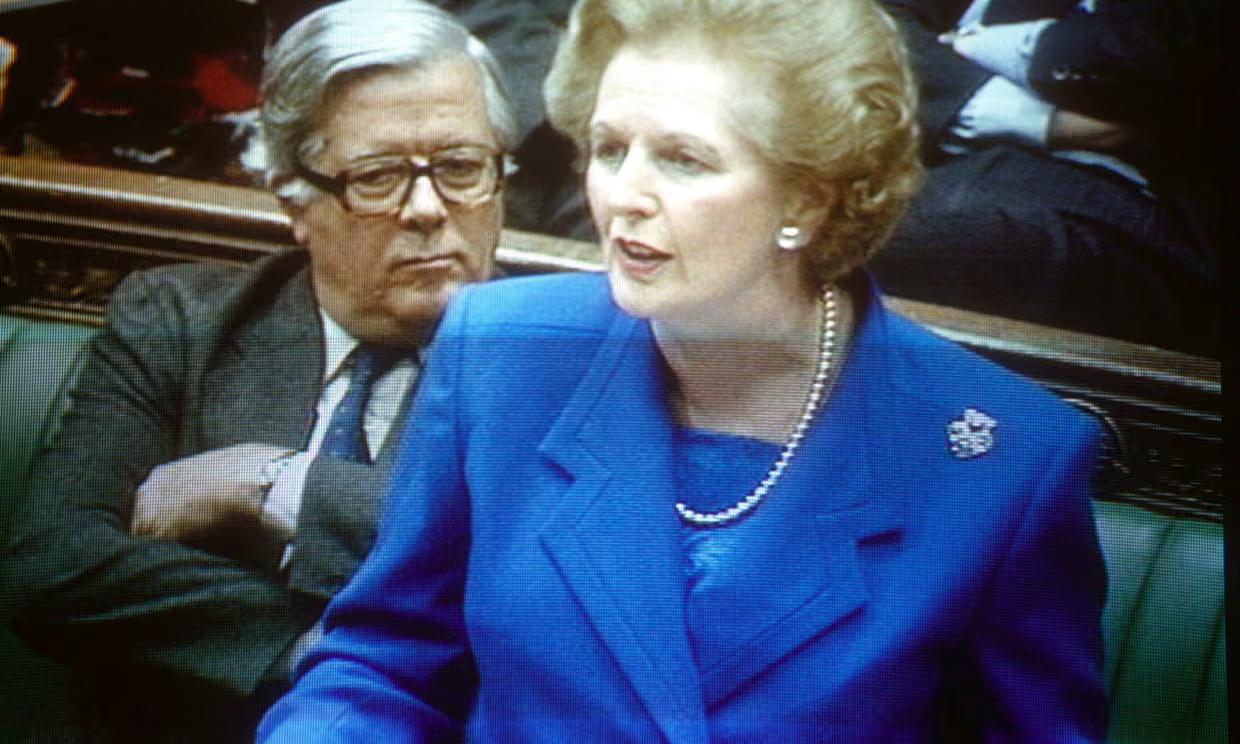
I then heard people talking about the introduction of TV into the House of Commons and the consensus seemed to be that people now speak there to get clips per their social media and the days of debates and MPs who spoke for long periods and successfully changed minds had gone. Then I read an article on how people who used to get ‘lost in a book’ have found it difficult to do so now that they’re used to short reads on the internet. The solution was to spend 20 minutes a day for a few weeks reading a book in order to redevelop the skill and engage deeply with the text.
Maybe those snap like/dislike judgements mean that we are used to snap judgements and to discount those who are different by appearance or behaviour? Maybe the fear of embarrassment, because of that difference, holds us back from finding out what we have in common?
Sadly the tension between India and Pakistan remains. Injustices from their Colonial past and a lack of political will to forge a more co-operative neighbourly relationship drive stories that feed fear. It is all too common for politicians to use fear of difference to create a cohesive force that increases their hold on power and the oppression of their people.
Perhaps this Lent we could carefully contemplate how we behave towards those who we perceive to be different and why that is so? If we all do that and develop our tolerance and perhaps curiosity, about those who are different we can improve the peace in our local community.
Perhaps when we se something that makes us angry on the internet we could take a step back and think about who might be influencing the post? Maybe they want to channel your anger to gain a bigger following? Who gains from the negative emotion they create?.
There are many Gospel stories about Jesus making a point of reaching out to those who were poor, or different and those who were in dire straits, we can follow his good example especially during Lent.
It was a select group of 14 people who gathered in Dortmund Square, just off the Headrow in Leeds, to hold an Ash Wednesday service of repentance for the continued possession of nuclear weapons. It was a very cold day, so it was not too surprising that there was not a large gathering. Nevertheless, sometimes faith propels us to do things when, otherwise, we might prefer to stay somewhere much warmer. Possession and possible use of nuclear weapons is something that successive popes have spoken out against and we wanted to express our solidarity with those views through our prayers.
The Leeds Diocese Pax Christi group had organised the service with prayers and readings from a variety of sources – including Pope Leo and Daniel Berrigan. Although held in central Leeds, people had come from Skipton, Bingley, Harrogate, Garforth and Birstall – as well as Leeds. As well as Pax Christi group members there were also 4 Commission members who took part in the service.
Pax Christi member, Tim Devereux, was interviewed the following day by Radio Maria. He was asked,
“You, Tim, are the prime minister. Peace negotiations with Russia have failed and Mr Putin has fired a nuclear weapon at Leeds. Do you fire back?”
Tim provided two answers!:
1. No - if Putin is lobbing nukes at us, the nuclear doctrine of Mutually Assured Destruction, MAD, has lived up to its acronym and clearly failed. Leeds, Yorkshire and the UK will be destroyed, but I can't see the point of joining the ranks of mass murderers myself, so I wouldn't unleash UK missiles.
2. Well if I'm PM, I would have already implemented Article 6 of the 56-year-old Non Proliferation Treaty, where all Parties undertook
"to pursue good-faith negotiations on effective measures relating to cessation of the nuclear arms race, to nuclear disarmament, and to general and complete disarmament."
Earlier this month I was invited to join a meeting with the Leeds Muslim Youth Forum to talk about our work and ways to counter the divisive messages our young adults receive on social media and elsewhere. This ties into our SPARK Conversations of Hope and also continues the themes of Pilgrims of Hope 2025.
I had a lively conversation with about 15 young people, topics such as responding to racism and challenging injustice and poverty. One member of the group gave me inspiration in her explanation about the best way to engage people in our target age group.
Respectfully, she assured me that older people are happy sitting round a table and talking about social justice issues, but the best way to catch interest with the under 30’s is to focus more on visual messaging.
The group gave me examples of effective TikTok reels and are in the process of completing a documentary and film project so are very tuned into this.
Following on from my visit, we are looking at inviting young adults and friends to an Iftar on 6th March. This is the evening meal at sunset that breaks the daily fast during Ramadan.
Lent and Ramadan will both begin on 18th February, a time to celebrate community and spiritual connection; the 6th March has been chosen as a date near to International Women’s Day.
I am old enough to receive pensions from both private sector and public sector pensions. I was lucky in that I always worked for organisations with good pensions. I also worked full time through my working life. In addition I receive a non means tested state pension which is set higher than basic working age benefits and is tripled locked, with a promise that that will last until the next election.
I went to university without paying tuition and with a maintenance grant. I learnt to budget and between finals and results I could afford to go to Paris by train, staying in a small hotel. We could afford a baguette each and cheese or pate for our meals, breakfast was provided in the hotel. We visited the Louvre, Impressionist Museum and Versailles. My first holiday abroad.
We rented for 12 months before we bought our first house. Apparently our mortgage costs with the higher interest rate took roughly the same amount from average salaries as the average mortgage costs now. But the price of houses has increased by far more than the rate of inflation and salary growth so deposits take longer to save for now.
My daughter is paying off her student debt and is likely to do so for maybe 20 years yet. Her mortgage is affordable, on a longer term, on two salaries. If she became unemployed many of the benefits she could claim are means tested. Her family would have to down size if she didn’t get another job quickly.
I reckon I was born at the right time.
I do voluntary work (like many women of my generation) we see how much harder it is for our children and their generation who are 'doing well'. We also see how much worse off the poorest in our society are than they were when we were young.
The biggest Government spend is on the NHS. Better health care means we, on average, live longer than our grandparents. Pensioners are politically powerful because we vote. State Pension is the next highest spend after NHS. State Pension costs significantly more than total Working Age Benefits. Yet successive Governments have cut Working Age benefit levels.
Younger people tend to vote less so they are less politically powerful. Is that why their benefits are lower? To me that isn’t fair and just.
I have already spoken and emailed my MP about the non sustainability of current pension spending and the inequality of the benefits paid to unemployed/under employed working age people and pensioners. I would like to live in a society that meets the living costs of all those in need without a preference based on age.
I am privileged because I would accept means testing and a reduction of my state pension if it meant that the poorest people in our society did not have to struggle so much to stay in safe, warm housing, eat enough healthy food and participate in their community.
If you feel the same why not email your own MP to ask the Government to address the sustainability in pension costs and the age bias in benefits?
And maybe make them think more carefully about the factors that drive who we pensioners vote for……..
The word Lent finds its roots in the Old English word lencten, meaning "spring." It describes that quiet, persistent season when the days begin to lengthen and the earth slowly wakes from its winter sleep.
We began this journey with a stark reminder: "Remember that you are dust." While these words can feel bleak, they contain an invitation to wonder. We are intimately connected with the earth and everything on it – we are all members of one human family sharing one common home, all beloved creations of God. As we acknowledge our interconnectedness and reliance on God, we create space for new growth.
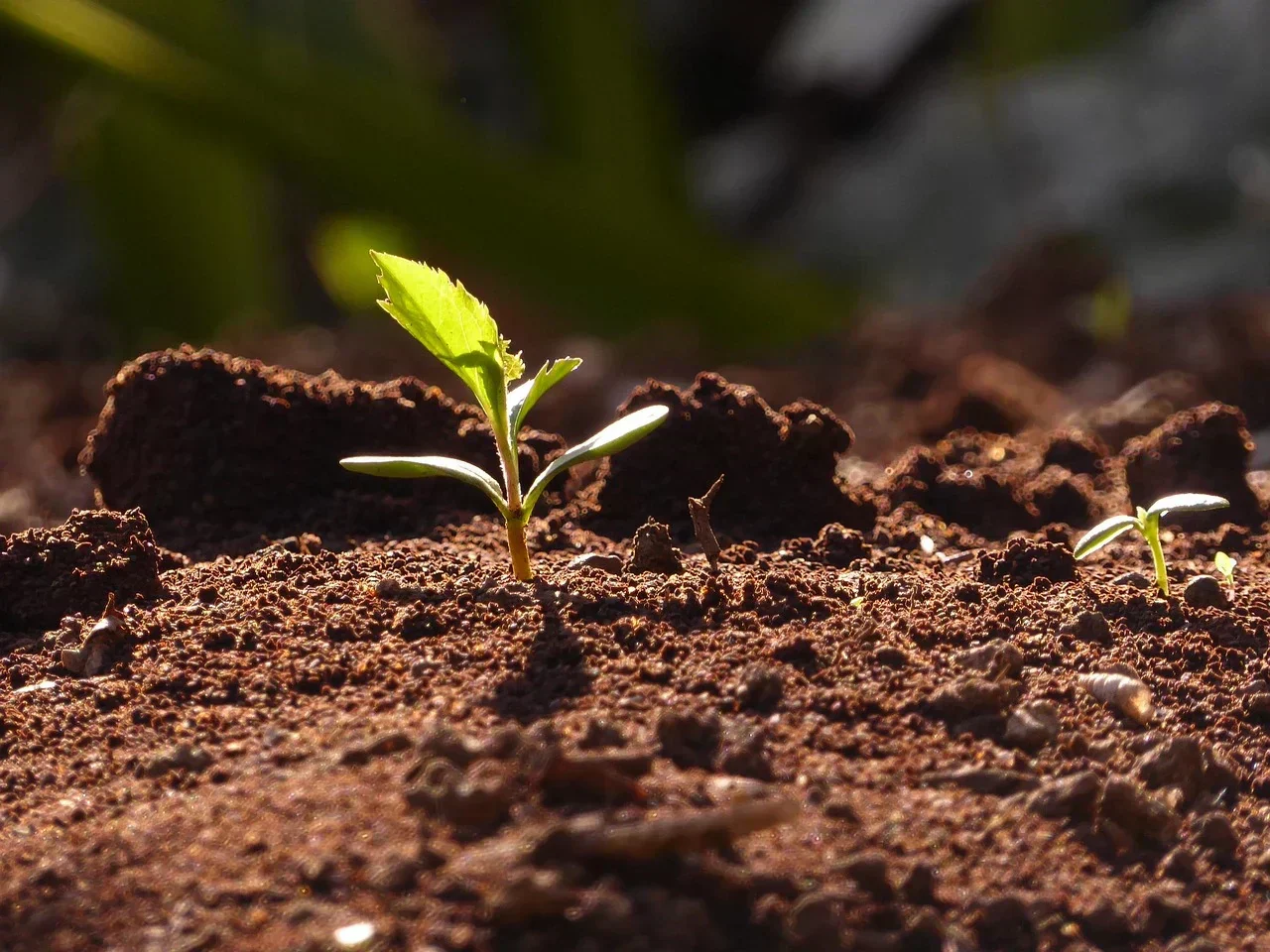
In the field and garden, this is a vulnerable, expectant time. Seeds are sown in an act of quiet trust—that a tiny grain, buried in the cold, dark earth, carries within it the potential for new life. Our Lent springtime calls us to such faith: that the seeds of hope and love that we plant even in the hardest soil will take root and blossom.
Across the world our neighbours are also planting seeds. Yet climate change is making it harder for them to grow enough to eat. In parts of Zimbabwe there is too little rain. In parts of Bangladesh and South Sudan, there is too much. The result is the same – seeds fail to grow, plants die, and families go hungry.
Our fasting, giving and prayer in this season remind us of our dependence on God and our longing for a world in which all people flourish. This Lent, as the light lengthens, may we stand in solidarity with our sisters and brothers throughout the world, knowing that God can work through us to bring new life.
Find out more about CAFOD’s Lent appeal is helping our global neighbours grow food in climate-resilient gardens: https://cafod.org.uk/lent
Looking forward to the start of Lent, I thought I would suggest some ideas for reflection and prayer. The first is a book, by James Martin SJ. My other suggestions are musical, music can engage us on a deeper level and there is a long tradition of folk music voicing the concerns and feelings of the ordinary people. Such songs can give us knowledge and help us gain new insight strengthening our contemplation and prayer.
This long book tells the story of Jesus' life using the four Gospels and overlays the story with the tale of James’ pilgrimage to the Holy Land visiting the places where it happened. His reflections on the Gospels are thought provoking. I especially liked his views on Martha and Mary because as a strong believer in Christianity being about both prayer and reaching out and helping the marginalised I have often heard homilies that talk about prayer only.
The Vietnam War inspired many American writers in in 60s and 70s. Tom Paxton’s "Peace Will Come" is itself a prayer. Other Paxton tracks that may inspire are "The Thought Stayed Free", "When Princes Meet", "There Goes The Mountain", "The Death of Stephen Biko". Last year he wrote "No Kings Here"
The Gospel tradition has produced many tracks and Edwin Starr's "War" was a soul hit in the 60s. I was given Mica Paris and the Soul Sanctuary Gospel Choir CD Gospel and can recommend that. My favourite tracks are "Oh Happy Day", "Something Inside So Strong" and "Mamma Said".
More recent tracks could be: ‘One Voice’ by The Waillin’ Jennies. This has been covered in support of causes like Me Too.
UK tracks include: Coope, Boyes and Simpson: "If We Were Them", "Children of Palestine", "Anthem for a Planet’s Children" and "The Avenging Angel" . "PET Song" is a light-hearted take on the serious issue of plastic water bottle waste.
"Canaan’s Land" a traditional English folk song recorded by Kate Rusby
Kathryn Roberts & Sean Lakeman recorded "Tomorrow Will Follow Today", "52 Hertz" on the overfishing of Wales, and "Fear Not the Mountain" a song of hope.
Sadly the 2001 BBC Radio 2 ballads looking at social issues of the day are not available through BBC Sounds but may be available through some streaming services. Topics included: de-industrialisation, homelessness & travellers, Northern Ireland Troubles, HIV Aids. "Different Drums" by Cara Dillon is my favourite.
Choral fans will have their own favourites but "Ubi Caritas" is my favourite. There is plenty to choose from.
So this Lent why not listen and reflect on something different?
Manage Consent
To provide the best experiences, we use technologies like cookies to store and/or access device information. Consenting to these technologies will allow us to process data such as browsing behaviour or unique IDs on this site. Not consenting or withdrawing consent, may adversely affect certain features and functions.
Functional
Always active
The technical storage or access is strictly necessary for the legitimate purpose of enabling the use of a specific service explicitly requested by the subscriber or user, or for the sole purpose of carrying out the transmission of a communication over an electronic communications network.
Preferences
The technical storage or access is necessary for the legitimate purpose of storing preferences that are not requested by the subscriber or user.
Statistics
The technical storage or access that is used exclusively for statistical purposes.The technical storage or access that is used exclusively for anonymous statistical purposes. Without a subpoena, voluntary compliance on the part of your Internet Service Provider, or additional records from a third party, information stored or retrieved for this purpose alone cannot usually be used to identify you.
Marketing
The technical storage or access is required to create user profiles to send advertising, or to track the user on a website or across several websites for similar marketing purposes.


 We had the pleasure of hosting three incredible workshop leads:
 A highlight for many of our Youth Team members was our trip to
  Our Youth Leadership Training Weekend wasn't full of traditional Leadership skills workshops. Yet our Youth Team reflected they were feeling more confident and capable to undertake their projects when they returned home. Through a focus on creativity, play, and fun, they presented ideas to the group, curated a space where they each felt supported to be vulnerable, and made genuine connections with each other. As one member said, "we're a friendship group now".
 This was our first Youth Leadership Training Weekend, and from the feedback of those who joined us, we're planning to make it a core part of our annual Youth Team. This year our meet-up was made possible by: the generosity of our workshop-leads volunteered their time and expertise; the University of Bradford and Bradford 2025 UK City of Culture for providing venues; Rotary Club of Jersey who funded travel for two of our attendees, and the Leeds Justice and Peace Commission’s




 Find out more about CAFOD’s Lent appeal is helping our global neighbours grow food in climate-resilient gardens:
