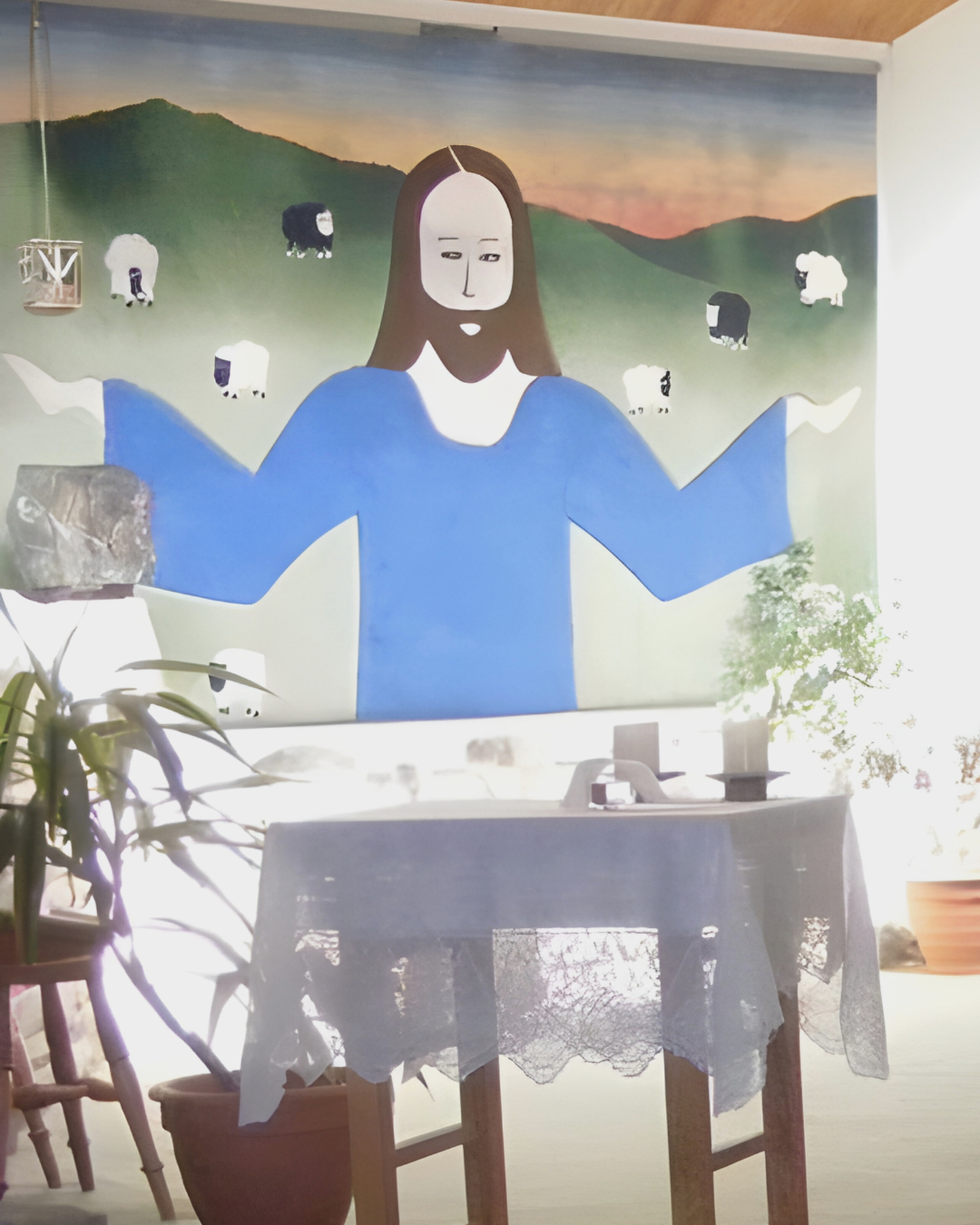
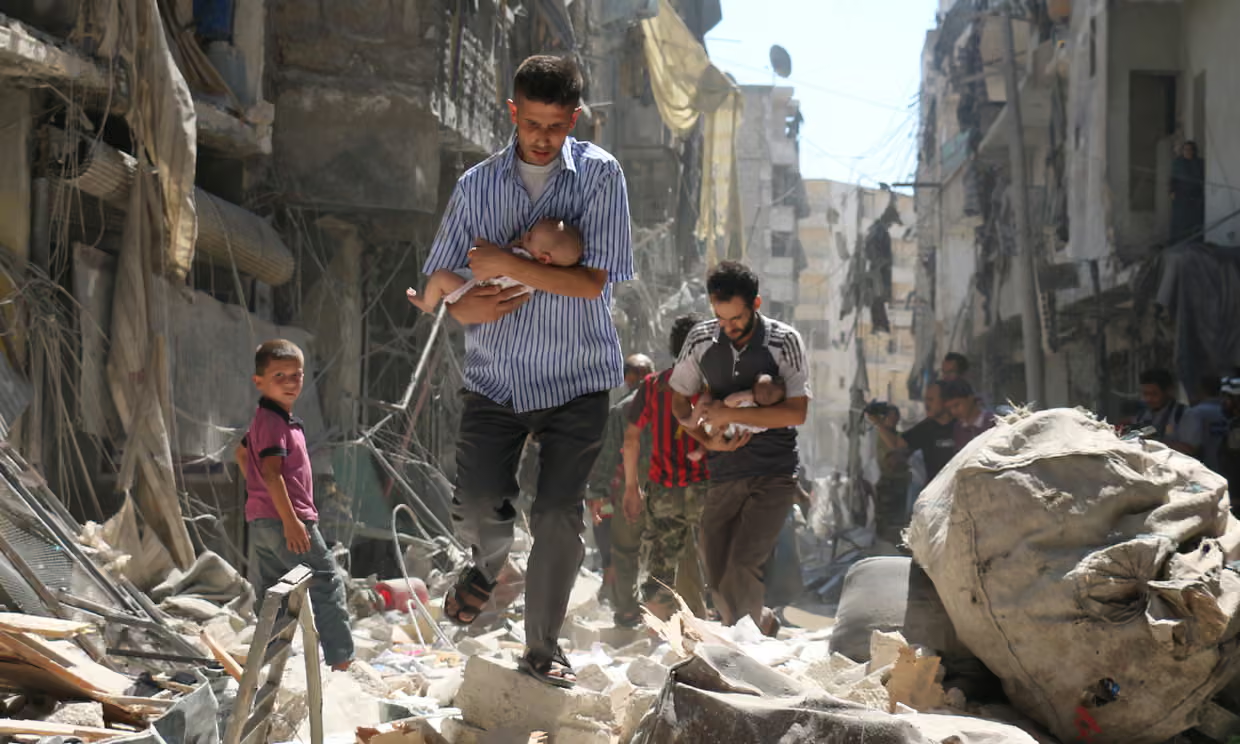
The government has just announced its Defence Investment Plan in advance of the Nato summit in Ankara. How should we respond as Christians faithful to the non-violent Jesus? Perhaps what we need to do is find a different starting point.
Yes, the government needs to ensure that its population is secure, but why does that have to be military security with ever increasing spending on high status hardware? Why do we need to keep investing in nuclear weapons?
UK military spending stands at £90 billion, and the government have pledged an increase of 2.5% of GDP by 2027 and 3% in the next parliament.
Yet we rarely hear a challenge to this model of security, the wastage and inefficiency in defence procurement and the impact on the climate.
In a BBC radio interview on 15 June, the World Health Organisation’s Director Dr Tedros Adhanom Ghebreyesus said
“There is more spending in defence and less spending in global health or in public health or health security, which makes us vulnerable...Because the invisible enemy could be more impactful. Imagine, have you ever seen a war in recent memory that killed 20 million people? Why can't we come to our senses?”
He accused world leaders of approaching geo-political problems with might rather than investment in preventing poverty and disease.
By contrast, the UK government has been cutting UK aid spending since 2021. In February further planned cuts were announced from 0.5% to 0.3% of GDP by 2027. There are also cuts in the ‘soft power’ approaches to security: diplomacy, advocacy, education and information sharing, dialogue, and the involvement of civil society networks in conflict prevention. The British Council and the BBC World Service have had their budgets cut despite the valuable social and cultural relations they have created between the UK and the global community
The real threats we face as a nation and as a global community are climate change, climate migration and destruction of natural ecosystems; an increase in poverty both within and between countries and a lack of investment in national and global health and disease prevention.
These arguments are the substance of a letter sent by 50 Aid NGOs, climate change organisations and peace organisations. However, it’s not easy to convince doubters that we should change our approach. The threat from Russia is visible and real! Yet it is possible to argue a case for less spending on defence that some military strategists would agree with.
His is not a pacificist standpoint but makes a case for defence rather than offence
Some key ideas
The UK is not a global power anymore, it’s a regional power and can’t play a global military role.
There is no indication of how to pay for the increased spending and what social expenditure will be sacrificed. It is well known that defence spending is one of the most inefficient modes of economic stimulus.
Much of the proposed spend is on expensive high tech weapons including nuclear weapons. Are they defensive weapons?
Professor Heathershaw goes on to detail what a realistic, hopeful and ‘Christian’ Strategic Defence Review would look like.
He gives a realistic and pragmatic outline of an alternative defence strategy - whilst not being naive about the threat of despots like Putin. Balancing political realism with eschatological hope, he outlines three areas
Step back from a global role, and abandon a role in the Indo- Pacific and handover contested territories to international administration
Focus on civil defence such as cyber, antisabotage and policing territorial waters. Counter espionage, addressing state linked organized crime and countering the threat of kleptocracy to the rule of law are also non military approaches
Focus our security on being more Europeanised, this means cost can be shared.
He concludes,
‘our call is not to turn swords into ploughshares but one where nation shall not lift sword against nation, neither shall they learn war anymore’ (Isaiah 2:4)
(My thanks to Pat Gaffney and Women in Black, London for sharing their latest leaflet, elements of which is included in this text.)
I’ve been told more than once that this is the most frequent saying of Jesus.
I once read a book called Feel The Fear And Do It Anyway. It helped me to think more deeply about what held me back from new experiences. There were different trend stories my fears, often embarrassment, sometimes rejection or failure. Thinking about the worst thing that could happen if someone did laugh, say no or I didn’t get the result I wanted helped me to find a bigger perspective and motivated me to Do It Anyway. I have made good friends and happy experiences when I have taken a more adventurous path.
However, in a world of quick thinking, reading and reacting to the next post we focus on the superficial and may not have the time, or inclination, to invest in thinking more deeply. But humans have evolved to learn through experience, we tend to repeat actions that lead us to feel good and algorithms can trigger rapid emotional responses that keep us on line (being advertised to) and do not engage our brain capacity.
I read an article about older people who had been book readers but had stopped in favour of screen time and then found that they couldn’t settle to relax and read books on their holidays. A psychologist had developed a programme of re-introducing the reading habit by recommending reading a book for 20 minutes per day for a couple of weeks and then gradually lengthening the reading period they were comfortable with.
It strikes me that too much screen time may also be reducing healthy spiritual habits, such as examining our conscience and praying. If we don’t take time to think about how our behaviour may be impacting the people around us we risk damaging relationships with them and if we don't think about our actions and thoughts we can turn away from God.
Since hot weather tends to make us drowsy and holidays give us more free time why not invest in some deeper thinking about what we’re would do if we weren’t frightened of things like rejection, failure or embarrassment and a wider range of options for reducing our fear and doing what will make us a better person.
The Catholic Church’s commitment to racial justice and the dignity of refugees flows from its core belief that every human person is created in the image and likeness of God (Genesis 1:27). This truth underpins Catholic social teaching and has been consistently affirmed across generations—from Pope Leo XIII to Pope Leo XIV. Together, their teachings call the faithful to confront racism, defend the vulnerable, and respond to migration with compassion, justice, and solidarity.
Leo XIII, often regarded as the father of Catholic social teaching, laid the foundation in his 1891 encyclical Rerum Novarum. Although written in response to the challenges of the industrial revolution, it emphasized a universal principle: every person possesses inherent dignity that must be upheld in social structures. This teaching implicitly rejects racism and exploitation by insisting that no one can be reduced to a tool of profit or power. His vision of the common good continues to shape Catholic responses to inequality, discrimination, and displacement.
Later popes made this teaching more explicit. St. John Paul II repeatedly condemned racism as a grave sin that contradicts the Gospel and fractures the unity of the human family. He urged both personal conversion and systemic reform to overcome discrimination. For him, the Church must reflect the universality of Christ’s love, becoming a place where all peoples are welcomed and valued equally.
Benedict XVI developed this vision further in his reflections on migration. He stressed that migrants and refugees are not merely social or political issues, but persons endowed with rights and dignity. He called on nations to balance border control with moral responsibility. Migration, he argued, can be an opportunity for encounter and mutual enrichment when approached with respect and solidarity.
Pope Francis placed renewed urgency on these concerns. In Fratelli Tutti (2020), he famously described racism as a “virus” that persists in hidden forms and continues to wound society. He has also made the plight of refugees central to his papacy, urging the global community to “welcome, protect, promote, and integrate” migrants. His visit to Lampedusa in 2013 highlighted what he called the “globalization of indifference,” challenging the world to recognize and respond to the suffering of displaced people.
Leo XIV, has continued and deepened this trajectory, particularly emphasizing the dignity of migrants and the moral duty to respond. He has repeatedly stressed that refugees are not threats but brothers and sisters in need, insisting that “there is no justice without compassion”. He has appealed to world leaders to ensure that those fleeing persecution are given a “humane and dignified welcome” and reminded the faithful that “no one can turn a blind eye to those who are seeking protection and safety”.
In his broader teaching, Leo XIV connects migration with the Church’s mission and identity. He has described migrants and refugees as “missionaries of hope,” witnesses who reveal the resilience of the human spirit and the importance of trust in God. He also emphasizes that indifference is one of the greatest obstacles to justice, warning against a “globalization of powerlessness” in which people resign themselves to suffering instead of acting to alleviate it.
This echoes and develops Pope Francis’ earlier call to overcome indifference with a “culture of encounter.”
Racial justice and the defence of refugees are deeply interconnected in Catholic teaching. Refugees often face discrimination based on ‘race’, ethnicity, or religion, compounding their vulnerability. The Church insists that such exclusion is incompatible with the Gospel. Solidarity, a key principle of Catholic social thought, calls all people to recognize their shared humanity. As St. John Paul II explained, it is a firm commitment to the common good and the well-being of all, especially the most vulnerable.
Catholic teaching also insists that justice must address not only personal attitudes but also structural causes. War, poverty, environmental degradation, and inequalities, all contribute to forced migration. Pope Francis, in Laudato Si’, and Leo XIV in Magnifica Humanitas, both highlight the need to safeguard human dignity in the face of modern challenges, calling for systems that prioritize people over profit or power. These teachings reinforce the idea that lasting solutions require both moral transformation and institutional change.
The Church emphasizes the responsibility of every Christian. Supporting refugees, opposing racism, and advocating for just policies are not optional acts but essential expressions of faith. As Leo XIV teaches, the credibility of the Gospel depends on concrete acts of welcome and compassion toward those who are excluded.
In conclusion, from Leo XIII to Leo XIV, Catholic social teaching presents a consistent and evolving vision rooted in human dignity, solidarity, and love. The call to racial justice and the protection of refugees is central to this vision. In a world marked by division and displacement, the Church calls all people to recognize one another as brothers and sisters and to build a society grounded in compassion, justice, and the common good.
by David Jackson, former Laudato Si Animator for the Leeds Diocese
The subtitle of Pope Leo’s latest encyclical: ‘Magnifica Humanitas’ reads: ‘On Safeguarding the Human Person in the time of Artificial Intelligence.’ Pope Leo bases his critique and ‘disarming’ of AI on the solid foundation of the Church’s Social Teaching. It is some 50 years since the Synod of Bishops declared: ‘the work of justice and peace is a constitutive element in the preaching of the Gospel.’ A group of us set up a parish J&P Group soon after – inspired by those who pioneered the present Diocesan J&P Commission. The remnant of our parish group still exists – as does the need for parishes of mission and service in the name of justice.
The Church has come a long way! From the time when an anonymous parishioner scrawled the word ‘Communists’ on a notice in our Church porch advertising an early meeting of the new J&P Group to Pope Leo using the Church’s social teaching as the basis for judging Artificial Intelligence. But how have times changed?
For over 30 years I have received the daily meditation from the Centre for Action and Contemplation – headed until recently by Fr Richard Rohr OFM. A recent meditation was entitled: ‘Re-Enlivening Ministries’. He turns to St Paul’s advice to the early Christians to re-envision renewal today. For Paul faith is a ‘loving, communal’ way of life. Can a parish be the same?
‘We must begin to validate Paul’s original teaching on “many gifts and many ministries” (1 Corinthians 12:4–11) that together “make a unity in the work of service” (Ephesians 4:12–13). We need Christian people who are trained in, validated for, and encouraged to make home and hospital visits; do hospice work and jail ministry; support immigrants and refugees; help with soup kitchens; counsel couples before, during, and after marriage; teach classes in parenting; offer ministries of emotional, sexual, and relational healing; help with financial counselling; build low-cost housing; take care of the elderly; run thrift centres—all of which put Christian people in immediate touch with other people.’
A question?
How far does my parish mandate parishioners to these ministries of service? Answers will vary. We ‘do liturgy’ and ‘build loving communities’ fairly or even very well! But mission? Many parishioners may well be involved in such work – in schools, hospitals, care homes and social services, but do they feel they have been ‘mandated’ by parish leadership or the community so as to regard these roles as ‘ministries’? Much depends on the sort of leadership we experience in our parish. Is it in any way synodal – shared, or does it remain more ‘command and control’? Richard ends his meditation with a short description of the kind required:
‘Authentic leadership, I think, implies people who can spot, affirm, train, support, finance, and validate gifts and leadership wherever they see them in actual practice (think multipliers instead of monarchs). Then we are not all striving toward the top but striving toward supporting the supreme work of love flowing into the world.’
The conviction grows that as one day there was a danger that the work of justice and peace – we can add now care of creation – heeding the voices of the poor and of the earth our common home – could be safely left to a small group – now that work is beginning to be seen to take the form of ministries open to all the baptised – not the charism of a few but something that defines and is the DNA of a parish community. Thus it was in St Paul’s day. The work of ‘authentic leadership’ in any parish is to identify, nurture, support and celebrate the ministries of service and of mission.
Richard Rohr was once asked why the title of his Centre was ‘Centre for Action and Contemplation’. And which word was the most important. He said ‘And’ was the important word! Either lead to and define the other. Faith defined with St Paul as a ‘communal, loving way of life’ – a parish working for justice and peace – has to be embedded in experiences of union with the Divine – achieved by the steady conscious practice of some form of silent, contemplative prayer!
Surprised?
Contemplation always leads to action – both to build communities engaged in the Church’s mission of justice, peace and care for our common home.
SOURCES for action – in J&P and in contemplative prayer
I was very pleased to be alerted by a friend to a webinar hosted by the Canonesses of the Holy Sepulchre led by Father David Newhaus SJ.
Born into a German Jewish family in South Africa, who had fled the Holocaust, he was sent to Jerusalem aged 15 by his parents so he could avoid military service in South Africa. His parents opposed the apartheid regime and thought he was safer in Israel. He became an Israeli citizen at the age of 17 and has lived most of his life in Israel. After obtaining his Ph. D. in political science from the Hebrew University in Jerusalem, he decided to become a Catholic and entered the Society of Jesus in 1992.
He now teaches Scripture in several institutions including in Israel and Palestine.
It was a thoughtful and very engaging session from someone with a unique perspective.
The title of Father David’s talk was:
Must we still hope? Is it right to continue hoping despite Gaza?
Perhaps there comes a time for despair.
Father David put the Palestine situation in the context of his own heritage and the struggle against apartheid in South Africa.
He referenced those who had resisted the Nazis such as Irena Sendler and the Ulma family, a Polish Catholic family living in Markowa, who hid Polish Jewish families in their own home. The whole family including 6 children were executed by the Nazis for this bravery.
A reminder of those who resisted in South Africa, Archbishop Dennis Hurley, Desmond Tutu, Steve Biko and of course Nelson Mandela.
Resistance is vital but can we continue hoping after the devastating events of October 7th and all that followed with the genocide in Gaza.
Father David invites us to go through a number of stages that might bring us to the possibility of Hope.
Awakening to pain
A sober look around
A cry (lament)
It is ok to lament for all the suffering around us
Stepping into the breach, in other words speaking out, being prophetic
A prophetic imagination ( citing Walter Breugmann) this is our chance to look for our vision for fulfilling God’s Plan
Remembering, how God has worked in history
Hoping because we have the hope of the resurrection
He shared that in April 2025 an ecumenical group including himself, members of Sabeel and Michael Sabah Latin Patriarch emeritus issued a statement, offering specific support to Palestinians in Gaza and the West Bank.
We refuse to simply pass you by. We not only do not forget you, but commit ourselves to solidarity with you. We carry you in our prayers. We cry with you. We seek to make your cries heard in a world which needs to be shaken out of its complacency.
Finally, to those Jews and Christians who have been led to believe that God wants Israel to annex our homeland:
We want to state clearly that you have been misguided. All, Palestinians and Israelis, are created in the image and likeness of God. They are all equal in dignity and rights. Furthermore, our God is a God of love who abhors violence and loves all God’s children. The Palestinians are your “neighbor”. The inviolable commandment in the word of God we share is this: “Love your neighbor as yourself” (Leviticus 19:18, Matthew 22:39, Mark 12:31, Luke 10:27, Roman 13:9). To expel the Palestinians from their homeland is not only an act of violence; it is sacrilege.
Father David ended his talk with this: we can be hopeful even in the most difficult times because of the Resurrection.
“The experience of Easter obliges us to proclaim: The Risen Lord has triumphed over death and evil and we are witnesses to this. (…) The resurrection is not our response to violence; it is our very identity as Christians, called to preach hope when hope seems impossible, to witness to life when our day-to-day reality seems to promise only death. This hope, in our smallness, in mustard seeds, leaven in bread, translates into our stubborn insistence on continuing to imagine a better common future and then setting out the work of living it now.”
Justice and Peace Commission, Message for Easter 2024.
Father David shared a whole range of resources, encouraging us to listen to Jewish writers who support justice for Palestine.
https://www.youtube.com/watch?v=nHOoz6z4P8E
Rev Prof Mitri Raheb - Decolonising Palestine
In a brilliant webinar in November 2023, he describes life and Bethlehem at that time (it is worse now), Christian Zionism, and then discusses his book.
https://www.youtube.com/watch?v=JjXi6wyTjGM
Omar Bartov – Israel: What went wrong?
Video discussion
https://www.youtube.com/watch?v=qkPTwB58FpI
Peter Beinart – Being Jewish After the Destruction of Gaza
Video discussion
+972, Palestinians and Israelis working together
Independent, online, nonprofit magazine
Links to other talks/articles by Fr David include:
Catholic priest ‘writes what he lives’ in new book on Palestine/Israel
A new book written by Fr David Neuhaus SJ and titled ‘Conquest or Leaven: Reflections of a Catholic Priest in Palestine/Israel’, has been published by the Jesuit Institute South Africa.
One of the things I do at my local Catholic church in Mytholmroyd on a regular basis is be a bidding prayers leader. We have a resilient rota and the people that do it put lots of effort into it, always including prayers from our prayer tree, and allowing all to speak out with a personal prayer for us as a church community to join in.
I too, think a lot about this, reading beforehand the Sunday readings so that I can link my prayers to the thoughts of Jesus or Paul or an Old Testament prophet of the day. I must admit though the world I see out there makes it ever more difficult to think of prayers that can adequately explain the concerns I, and I am sure many of you, have of the state of the world.
As I write this, the Middle East remains in turmoil. It’s not clear Iran’s and the United States conflict will move into a full peace process. Israel and Hezbollah in Lebanon are seething with hatred of each other. Gaza remains one of the greatest miseries of any conflict there has ever been. The West Bank sees settler domination of the Palestinian population.
Then there is the Ukraine and Russia conflict. A battle line that has hardly moved at the expense of tens, if not hundreds of thousands of men, while innocent Ukrainian and Russian civilians fear the next drone attack on their house or flat. And conflicts abound elsewhere, whether it’s Sudan, Myanmar, and, according to the International Committee of the Red Cross over 130-armed conflicts of some kind, most of which rarely get onto our TV screens, or smartphones or our newspapers. That’s not without thinking of the impact of climate change as we start another punishing heatwave with record temperatures everywhere.
Here in the UK, I am an electoral administrator, and I am on my third election this year. I see in them lots of rancour, a highly divided country, and many people disillusioned with their position in life and the cost of living of that life. I am 54 in July, and I must admit to feeling a sense of great unease about the state of the world, and of my country, despite me living through the dread of nuclear conflict during the last decades of the Cold War.
So how do we deal with all of this pain and human suffering? As a Catholic, I do something all members of the Commission must do, which is to go back to our Catholic Social Teaching, that life-affirming body of moral and ethical doctrine developed by the church, rooted in scripture, of the sacrifice of the saints and the writings of the church, turning to our God for guidance in life.
Whether that is holding that every human life is sacred and made in the image of God, or our belief that we are inherently social and we have a right or duty to seek the well-being of all, we know that we have rights and responsibilities that we must stand up for, truly believe in and advocate to all. We have a moral call to stand up for the poor and vulnerable, to ensure the dignity of workers and to know we are all one human family, regardless of all the differences which often lay at the heart of the conflicts noted above. By caring for God’s creation, we also stand up for our children and future generations.
I delight in the wonderful work of Pope Francis, and now Pope Leo, to remind us that, as Catholics, we must care for all of us, whether by supporting a food bank, advocating for fair change and calling for peace. Unlike many of our politicians, Pope Leo does stand up for those who the world so often ignores. We all need to be brave and follow that example in our own communities. So, using scripture and the love of God, my bidding prayers seek solidarity and a call for change, and they always will.
The Assisted Dying Bill will again be presented to Parliament. It raises many issues about life, death and the choices we make.
I remember my grandad coming home to die when there was no treatment for his cancer. I was about 15. We ate our meals listening to his laboured breathing via an intercom and we could tell when his pain was particularly bad. I was at home when my mum asked the GP about increasing his pain medication. He was a fellow parishioner. He quietly explained that doing would take the pain away but it would also depress his breathing and probably hasten his death. Mum was upset and asked for time to talk with him about what he wanted. She cried after the doctor left. A couple of days later grandad was prescribed the medication. He died peacefully at home with family around him.
As my mum approached her own death her regret was about grandad. As a child she (and younger her sisters) had rejected any lady friends he brought home after her mother’s death. She felt that she might have taken away his chance for a second marriage and happiness. She had no regrets about decreasing his pain when he was dying. My grandad was very kind and lived for his family, I suspect that his choice to take the medication was influenced by both a wish for the pain relief and his not wanting to be a burden.
The Madness of Crowds is a novel by Louise Penny set in the aftermath of Covid in Canada.
At its heart it is a murder mystery but through the characters she develops deep emotional and rational themes about assisted dying and the right to life. It even touches on the horror in Sudan and our Western responses, which are from a position of privilege. Having said that, it is engaging and not a heavy read.
It challenges us to think of how acting out of love for someone might influence a choice. Murder is not always done from a position of hate. I thoroughly enjoyed reading it.
It helped me to think more deeply about the circumstances in which I might prefer to receive medication to relieve physical pain and thus reduce the emotional pain of the people I love.
Thankfully that seems like a long way away!
I hope and pray that whatever happens to this Bill the NHS will improve access to palliative care that supports people who are close to death in whatever setting they choose.
The news is full of commentary with regard to the Equality Act 2010 which established the Public Sector Equality Duty.I worked in Human Resources and my understanding of it is very different from what I have heard this week.
The Duty recognises that certain groups of people are, and have been, historically disadvantaged by our policies and laws. It states that it is a State responsibility to reduce the factors that have given rise to the disadvantaged so that we become a fairer country. The Duty says that Public Sector management must consider the different impacts of any changes in policy or practice to make sure that such disadvantages are reduced (or at worst maintained) if they cannot be proportionately and reasonably reduced.
The legal frameworks in the UK and USA are very different.
UK legislation (excluding Northern Ireland) focuses on equality of opportunity e.g. every job is advertised openly and the best person appointed via a fair process which is altered to enable disabled candidates, for example, to compete effectively.
In the USA the legislation creates targets. which can mean that a disadvantaged applicant who does not have the best match of skills and knowledge required to do the job well may be appointed in order to meet a target. This no doubt contributes to so much anti Diversity rhetoric spreading here from the USA.
For example, many years ago, when I worked in the private sector, I was concerned that the few recruits every year, in a city that had a high ethnic minority population, were white. Research showed that all our applicants had been white which indicated that the issue related to what our adverts said and/or where they were placed.
So I looked at why our office jobs may not be attractive to ethnic minority applicants. At that time the first level, non mandatory, professional qualification in our industry required 2 A levels or 5 GCSEs. So the next time we had an entry level vacancy we included that as a minimum academic requirement.
We got a more representative range of applicants. Within a few years our office was more respresentative of the area within which it was based.
Here is an example of how targets can alter discussions around equality.
In my first public sector HR role I remember a discussion about meeting the self imposed target of 10% ethnic minority staff (a political policy requirement before the 2010 Public Sector Equality Duty). I suggested that given the age profile of the local workforce (most employees over 35) we should be moving towards a policy that those appointed to our entry level jobs - i.e. school leavers and new graduates , should reflect the proportion of that age group who were from an ethnic minority in the area. At that time any age based target for such jobs would have been significantly more than the 10%. The rest of the HR team said it was hard enough to get the 10% across the whole workforce and any change from that would not be acceptable to our political masters. So the disadvantage of our local, young ethnic minority population was not addressed.
The ACAS website is good at explaining best practice for employers. Privilege persists where the selection process for recruits, training or promotion favours one group of candidates over others. In the UK employers must be able to demonstrate that a fair competitive process has been followed, that is not the case in the USA.
In both UK and USA political appointments do not follow the same rules which is a great shame. It’s still a ‘who you know’ environment of opportunity.
I am glad that we have at last identified that many young people are disengaged. In part due to State policies and systems which do not support them to flourish within our society. Alan Milburn’s report is an excellent example of the Public Sector Equality Duty in action. I look forward to reading his cross Departmental recommendations in the autumn. Though my niece and nephew who are long term unemployed are now too old to benefit from changes.
Very early in my HR career, I remember being advised not to tell anyone outside the HR team that I did not think the Graduate Scheme Fast Track we were launching was unfair since our performance manage system was not as effective at identifying talented individuals within the current workforce as it could be. The HR Director’s advice - senior staff often paid private school fees to give their children an academic advantage and support their getting degrees, they naturally wanted to maintain that privilege for their children by reducing the number of competitors for such jobs. Luckily I was assigned responsibility for updating our performance management system and improving manager skills.
As Christians we need to carefully consider what we hear/read/see and think about situations in all their complexity. The world is a complicated place. Solutions are rarely either/or.
Like many, I find the damage done to residential blocks of flats and attacks on energy and water infrastructure wrong. The civilians in war zones rarely have the power to stop their rulers fighting neighbouring states or distant states, regardless of who ‘started it’. Of course civilians have always been hurt or killed in war, in collateral damage. I think that since WW2 the number of civilian casualties is a higher proportion of the total casualties.
Sadly, now it seems that it is accepted by some significant powers that direct attacks on civilians and their mass displacement is OK.
It isn’t.
I’m even sadder that the UN Security Council, thanks in a large part to the veto power of some states to quash resolutions of condemnation, gives the appearance that this behaviour is OK.
It isn’t.
Over the past few weeks, I have read three books about women in war. The Bookbinder of Jericho (Pip Williams) is set in WW1 Oxford and Women of Steel (Michelle Rowbotham) is factual and tells many stories of the women who volunteered or were conscripted to work in the forges and metalworks in the Sheffield area during WW2.
What struck me about both was how the feeling of being threatened by external forces bound local communities together and led to people stepping up and doing things they wouldn’t normally consider. For example, women who could sew took work dungarees up and in to fit the women who wore them. Their main fear was what the war was doing to those who were fighting on their behalf. There was a sense of ‘it is what it is’ and we just need to make the best of it.
The third book, City of Women (David Gilliam) is set in WW2 Berlin and was bleak and dark. In that book the women feared Nazi neighbours as much, if not more than the enemy. Civilians disappeared into prisons on the basis of accusations without trial. The same community spirit was not evident. It was each one for themselves.
I therefore applaud our politicians who regularly speak out for tolerance and remind us that we are a people who have welcomed so many others to live here over thousands of centuries. They abhor those who seek to spread division and hatred in our country.
I hope that each of us, in our own way, finds the confidence to quietly tell any friend and family member who veers towards supporting divisive views that we disagree with them because we are Christian and we follow the example of Jesus who welcomed the stranger and helped the marginalised.
We are many, the Pope is one, if we are all seen and heard talking about tolerance and living in diverse communities the world will be a better place.
-----------
As an aside, a result of the Sheffield Star newspaper collecting the stories of the women of steel was a collection and now there is a bronze statue of two women dressed as steel workers in Sheffield city centre. Personally I wonder how much their acceptance that they lost their jobs when the men returned from fighting underpinned the Women’s Lib movement in the 60s leading to Equality Acts in the mid 70s. I’m old enough to have joined the workforce knowing I could be sacked for getting engaged, married or pregnant!
Manage Consent
To provide the best experiences, we use technologies like cookies to store and/or access device information. Consenting to these technologies will allow us to process data such as browsing behaviour or unique IDs on this site. Not consenting or withdrawing consent, may adversely affect certain features and functions.
Functional
Always active
The technical storage or access is strictly necessary for the legitimate purpose of enabling the use of a specific service explicitly requested by the subscriber or user, or for the sole purpose of carrying out the transmission of a communication over an electronic communications network.
Preferences
The technical storage or access is necessary for the legitimate purpose of storing preferences that are not requested by the subscriber or user.
Statistics
The technical storage or access that is used exclusively for statistical purposes.The technical storage or access that is used exclusively for anonymous statistical purposes. Without a subpoena, voluntary compliance on the part of your Internet Service Provider, or additional records from a third party, information stored or retrieved for this purpose alone cannot usually be used to identify you.
Marketing
The technical storage or access is required to create user profiles to send advertising, or to track the user on a website or across several websites for similar marketing purposes.